

Scallions Vs Garlic Scapes: How Big Of A Difference Is There?
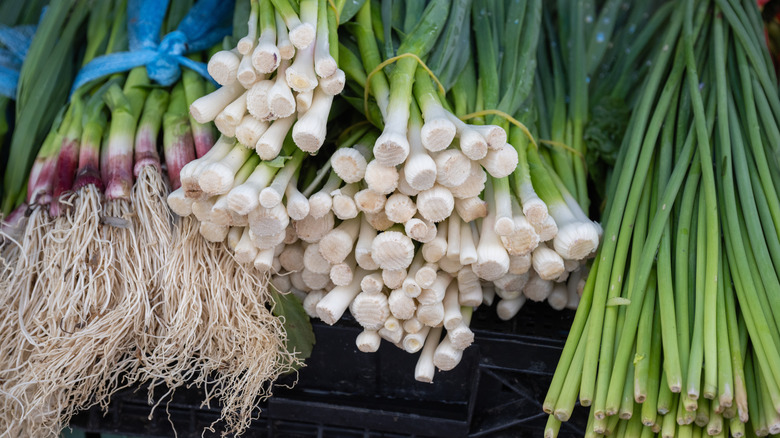
Onions and garlic are two of the most fundamental flavoring agents in cooking. You find them utilized in nearly every cuisine on the planet because they impart irreplaceable flavor. Of course, there isn't just one kind of onion and garlic; there are even types of each allium that resemble each other, like scallions and garlic scapes. While they both belong to the same plant family, and are long, green, and stalky, the two are plenty different in flavor and texture.
Scallions are also referred to as green or spring onions, and they are a type of onion. Indeed, they have an unmistakable onion flavor, but they are much more mild in flavor than, say, red, white, or yellow onions. Like other onions, they're crisp and tender when raw, but get pleasantly soft when cooked. Meanwhile garlic scapes taste more like — you guessed it — garlic, because they are not only a type of garlic, but they grow out of garlic bulbs. They aren't as potent as garlic cloves so they can be eaten raw without giving you a bomb of pungent flavor. Still, they're often sauteed and incorporated into recipes as well, since they are flavorful enough to infuse dishes with their essence. Garlic scapes are often described as having a texture similar to asparagus or raw green beans, but they soften up when cooked.
All about scallions
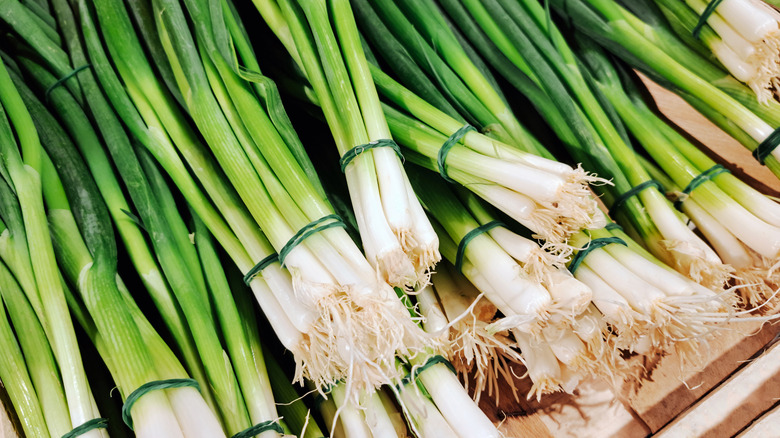
Scallions are long and straight, and are both white and green in color. The bottom is white, with a small bunch of root threads protruding out. The white color transitions to pale green and finally to a dark green at the top of the harvested plant. The onion flavor is much more pronounced at the white section with the flavor getting more mild the further up the stalk you go. The dark green sections taste similar to chives, which are also part of the onion family.
All parts of scallions can be enjoyed raw or cooked (although you'll want to trim off the root end first). Even those stronger-flavored white bottoms are milder than larger onions so, while they give some oniony heat, it isn't overwhelming. Sliced up, they're great in salads, and as a garnish to soups, potato dishes, Asian stir fries, and dips like ginger scallion salmon dip. You can also use them as a replacement for other onions in recipes. One delicious way to prepare whole green onions is to grill them. Just brush them with a little oil, season with salt and pepper, and place them on a hot grill until they're slightly browned and softened. They become so sweet and delicious that you can eat them whole. Scallions are commonly found in supermarkets, farmers markets, and are easy to grow at home from the root ends of the veggie.
All about garlic scapes
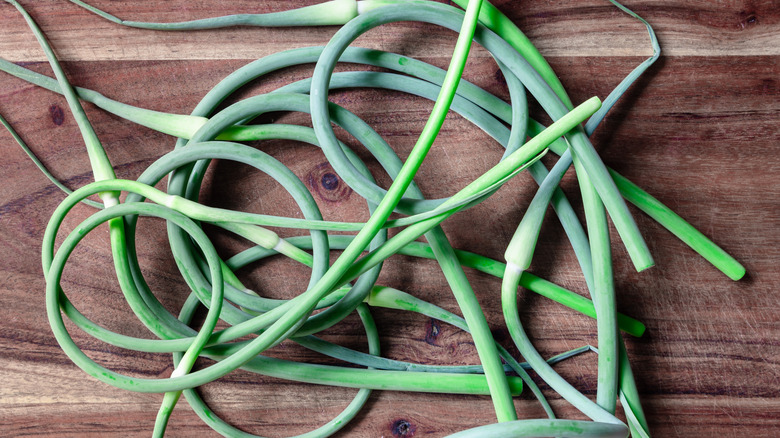
At first glance, you might think a garlic scape is the green part of a scallion, but there are some telltale differences between the two. Garlic scapes lack the white bottom and they tend to curl at the top. And before you mistake them for green garlic, these are also different plants. Green garlic is young, immature garlic harvested before the garlic bulbs are mature. Garlic scapes grow directly out of the top of garlic bulbs. They form buds if they are left on the plant for long enough, but growers will often trim the scapes before this happens so that the garlic cloves underground can grow larger.
These fragrant stalks can be used in substitution for garlic cloves, but remember that they have a much more mild flavor, so you may need to use more garlic scapes than cloves to match the potency you're looking for. If you are going for a milder garlic flavor anyway, they're perfect. Try them in things like pestos, hummus, and in compound butter for spreading on bread or melting on steak. Alternately, roast garlic scapes whole and they will become soft and creamy. You can then spread them on anything you want a touch of garlic goodness on. Unlike scallions, scapes are not as easy to find in any given grocery store. Look for them at farmer's markets anywhere from early summer to mid summer depending on where you live.