

What Lewis & Clark Ate On Their Trek Across The US
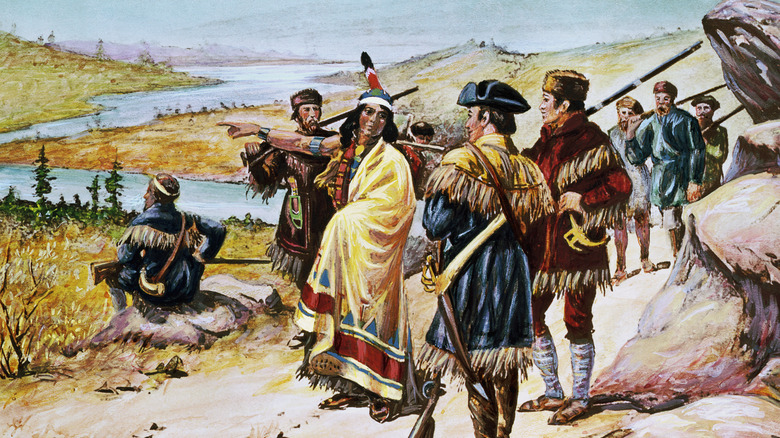
The trans-continental journey of Captain Meriwether Lewis and Lieutenant William Clark is one of the most famous expeditions in American history. The two led a group who set out in 1804 to explore the vast, recently-acquired Louisiana Purchase territory, which sprawled northwest from the Gulf Coast all the way to the northern plains and Pacific northwest. Their two-year trek provided some of the best early knowledge on previously unexplored parts of America, but also faced a variety of serious logistical challenges along the way.
Among the most profound was feeding the group, which ranged in number from the 33 who made the full journey to as many as 45 on early legs. Supplying the men with the vast amount of calories they needed to cross long distances in difficult conditions required an innovative mix of living off the plentiful bounty of the land and parceling out a diverse collection of supplies brought along with them. Fortunately, expedition members kept extensive records of what they were chowing down on. Some of the biggest building blocks of the "Lewis and Clark diet", as it might be called, include big game, fish, and berries in the former group, and salt pork and so-called "portable soup" in the latter.
Big game was a big part of their diet
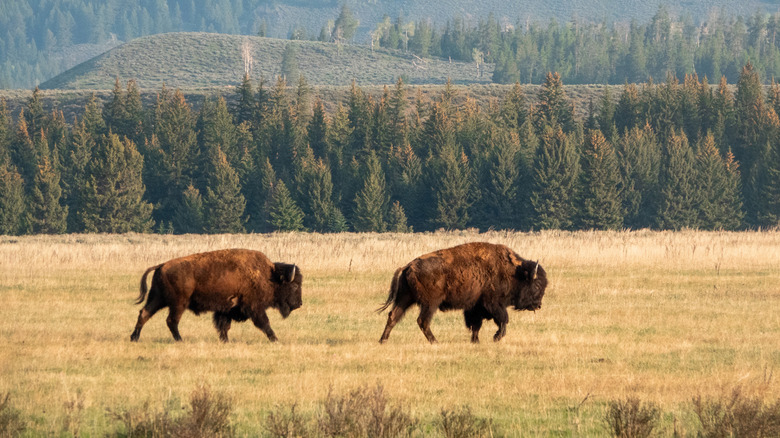
One of the ways we have such a good idea of what the men on Meriwether Lewis and William Clark's expedition were chowing down on is through the careful records of the participants. The big game of the American west comes up time and again in this writings. For example, Clark wrote in 1805 that it "it requires 4 deer, or an elk and a deer, or one [buffalo] to supply us plentifully 24 hours" (via PBS). Other records have suggested the amazing amount of meat eaten on the expedition reached roughly 9 pounds per person per day when wild game was easily available. Somewhat surprisingly, there was even a bit of sophistication to some meals. Lewis, for instance, consumed suet dumplings and boudin blanc, a French-inspired dish of stuffed buffalo intestine.
Although big game was plentiful, expedition members tended to eat whatever meat they could find. They were fond of beaver tail and liver, while other animals on the menu included turkeys, pronghorns, and even bears. Another common source of meat for the group (other than Clark) may disturb some modern readers: dog, which was frequently consumed by Native Americans the party encountered.
Portable soup: unusual, but a literal life-saver
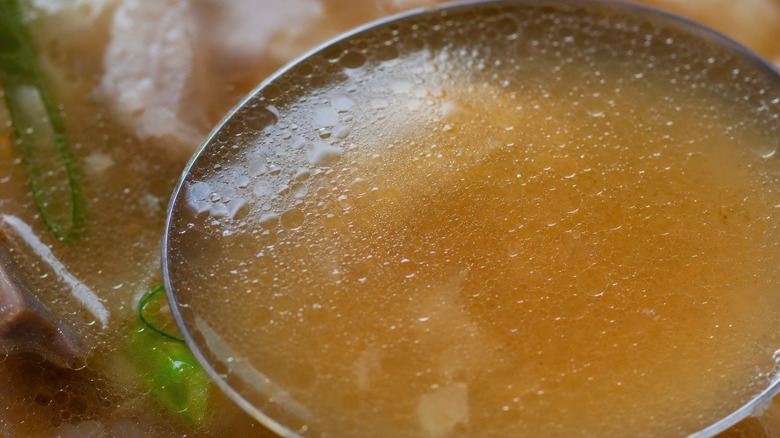
One of the least familiar items that was a regular part of the expedition's rations is known as "portable soup." A precursor to bouillon, it was prepared by boiling down animal parts to produce a jelly-like substance and drying that out until only a small, hard portion remained. It worked as a survival food as it contained vital nutrients like salt in a form that could be easily transported and rehydrated with whatever water was on-hand.
The explorers could even eat the portable soup straight if water wasn't available or for when a quick bit of sustenance was needed. Unfortunately, it had relatively little nutritional value and was typically viewed by the men as a last resort. However, it was also at the forefront of the era's understanding of food preservation and reportedly kept the men alive during lean times.
Abundant fish in American waterways
Much of the Lewis and Clark expedition either used or followed major rivers, such as the Missouri, and eventually reached the Pacific coast. Therefore, it only makes sense that these skilled explorers and outdoorsmen would look to the water to fill their stomachs at the end of a long day of traveling.
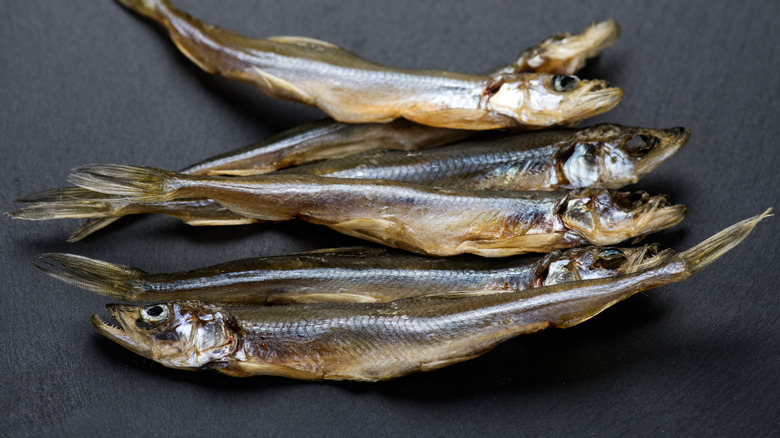
Lewis spoke particularly highly of the eulachon or candlefish, an oily, medium-sized fish found in the waters of the Pacific Northwest, where it served as a keystone species for Native cultures. He called it better than any fish he'd ever tasted. Additionally, the party reportedly caught enormous catfish, ranging from 30 pounds up to 128 pounds, along the Ohio and Missouri Rivers. The group also obtained salmon from Natives whom they encountered upon reaching the West Coast, the first time Lewis had seen such a fish.
Berries for a sweet, survival-friendly treat
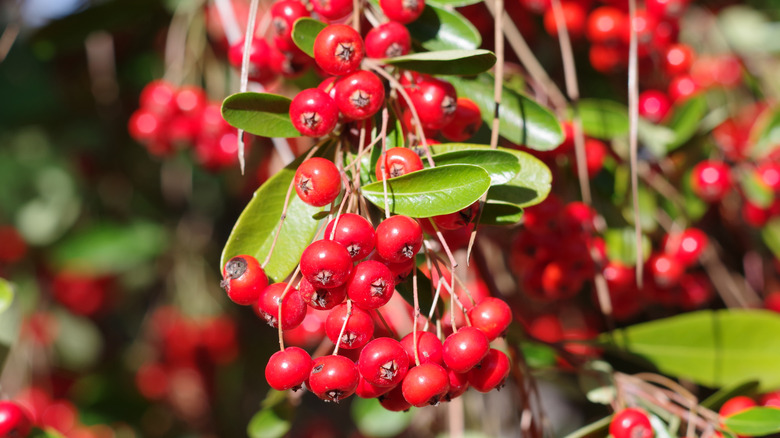
Although the party consumed a variety of naturally growing items along their trek, one appears particularly prominent: berries. It's likely the group encountered a wide variety of berries and similar fruits during their journey, but noted buffaloberry, currants, and gooseberries in particular.
Berries also appeared to have a role as a true survival food when other options weren't available. Lewis detailed a meal of cooked flour and berries that was served during a food shortage. These fruits provided much-needed fiber, vitamins, and other nutrients to the weary, malnourished explorers.
Pork — in kegs
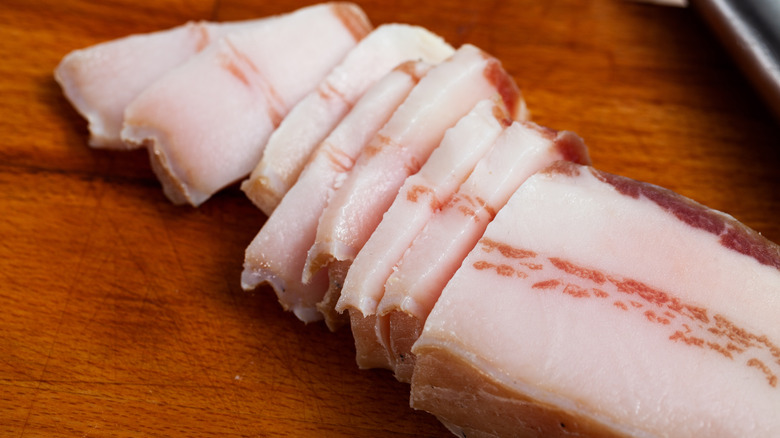
Another common food among Meriwether Lewis and William Clark's group came with them from their departure point in Illinois: salt pork. Made by simply packing cuts of pig meat in salt until fully cured, it allowed people to keep the food from going bad in an era long before refrigeration or freezing. (In fact, this preserved meat would later help sustain cowboys and served as a food staple for pioneers on the Oregon Trail.)
Lewis and Clark took 44 "kegs" of salt pork with them on their expedition, weighing in at 3,115 pounds total. That's just 69-94 pounds per person for the entire multi-year expedition. This may indicate that it was primarily meant to supplement rather than underpin the diet of the party.
Of course, these aren't the only things these intrepid explorers consumed. A full list of provisions includes staples like flour and sugar, dried beans and corn, and even coffee.