

Why Eggs In Britain Aren't Stored In The Refrigerator
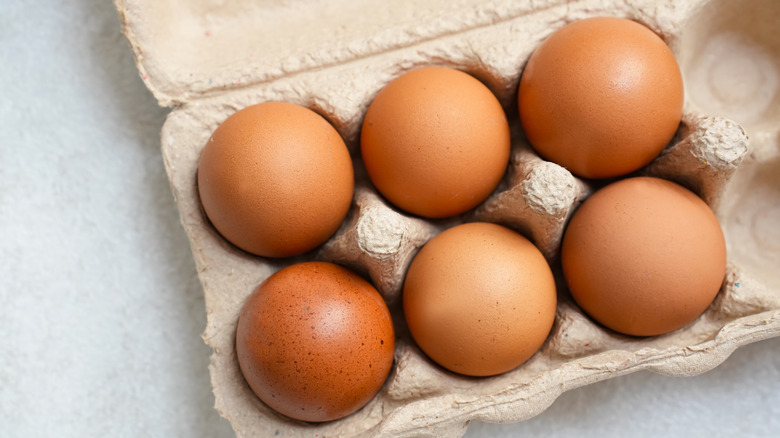
On a search for eggs in England, Americans might get lost in a British grocery store. Instead of keeping them in the refrigerated section, United Kingdom markets store their eggs on room-temperature shelves along with the canned foods and other non-perishable items. That's because the Brits tackle the risk of salmonella differently than regulators do in the United States.
When you crack some shells to make light and fluffy scrambled eggs, you could come in contact with the bacteria that causes food poisoning. To try to avoid that, U.S. officials require a power-washing process at commercial poultry farms. But egg washing can strip away the cuticle, a thin outer membrane around the shell. That leaves egg shells more porous and makes refrigeration necessary to avoid any further contamination.
On the other hand, U.K. regulators believe its safer to keep the cuticle, so they don't wash eggs at the farm and avoid the cost of refrigeration at the store. Instead, they choose to fight against salmonella by vaccinating hens. Because vaccination protects the eggs on the inside and the outside, U.K. officials claim that it's safe to eat runny eggs. But about 10 percent of eggs sold in the U.K. are imported, so shoppers are encouraged to look for the stamp of a British lion on their eggs to make sure they are safe.
The world is divided on refrigerating eggs in stores
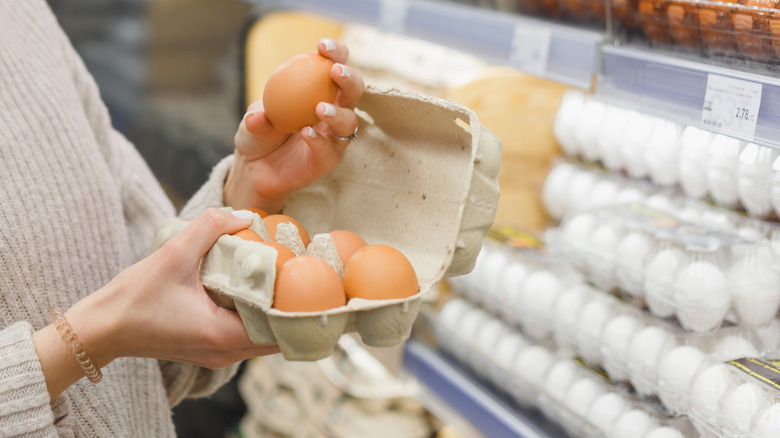
Similar to how people in other parts of the world prepare their eggs in different ways, the world is divided on the best practices for avoiding salmonella in eggs. Regulators in Australia, Japan, and Scandinavian countries follow the U.S.'s lead by washing and refrigerating, while other parts of Europe and Asia side with the British in making hen vaccination mandatory. In addition to the cuticle debate, cultural considerations and the high cost of refrigeration from farm to store are factors in each country's decision.
"They're different approaches to basically achieve the same result," veterinarian Vincent Guyonnet, an International Egg Commission adviser, told NPR. "We don't have massive [food safety] issues on either side of the Atlantic. Both methods seem to work."
Despite protective measures, salmonella is still responsible for occasional egg recalls and food poisoning outbreaks. In the U.S., regulators warn that eggs are one of the foods you should never eat raw, since salmonella can get inside the shell if a hen contracted the bacteria prior to laying. In the U.K., you should be sure to fully cook your eggs if you buy ones without the British lion stamp.
And there is another bonus to the U.S. process and its refrigeration mandate besides keeping you safe from salmonella. It also makes your eggs last longer. The shelf life of eggs expands from about 21 days to up to 15 weeks with U.S. washing and refrigeration.