

Are Your Scallops Fake? Here Are 5 Warning Signs To Watch For
When you buy scallops, you're probably focused on not making all the beginner mistakes you can make when cooking this delicate seafood. It probably never crossed your mind that you might actually be buying something totally different. Those fried scallops served at your favorite seaside restaurant? It's possible that they may not contain a trace of actual scallop. According to an Inside Edition video report with Dr. David Friedman, a seafood expert and author, scallops are one of the most frequently substituted types of seafood.
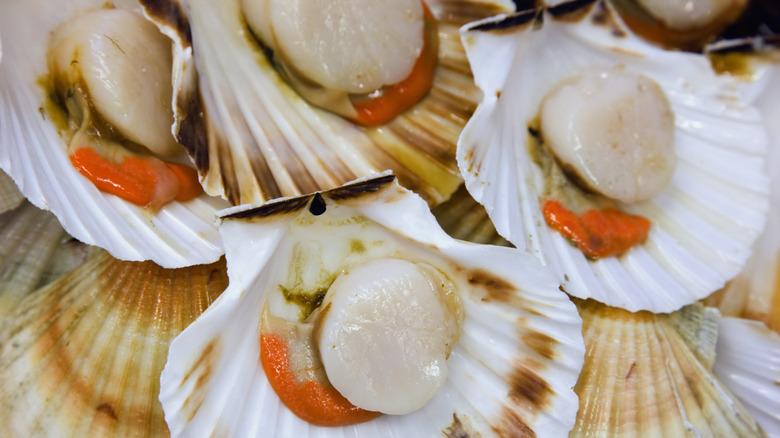
Scallops are bivalve mollusks, and the part that we eat is the circular, firm muscle that connects the two shells together. These shellfish are enjoyed for their delicate texture and slightly sweet, briny flavor. However, it's not always a guarantee that you'll get this when you buy scallops at a market or order them in a restaurant. The most common substitute for scallops is a blend of white fish called surimi, which is also used in imitation crab products.
Seafood mislabeling is considered fraud and is illegal in the United States, yet it remains a rampant issue. The Vermont Law School's Center for Agriculture and Food Systems estimates that between 16% and 75% of seafood in the United States is mislabeled. While every market and restaurant might not be caught for scallop fraud, there are a few signs you can look out for to make sure you're getting the real deal.
The scallops are too circular
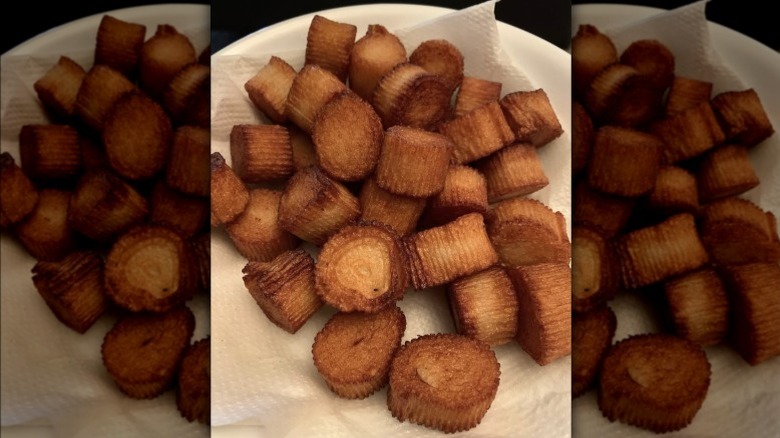
Imitation scallops are typically made by mincing and mixing inexpensive white fish (like pollock and whiting) together. Sometimes, these fakes are even made of shark meat or stingray. This mixture results in a thick paste that can be molded into the desired shape. For scallops, the paste is pressed into a cylinder, then sliced into perfect rounds — and this is one of the giveaways that they're not true scallops.
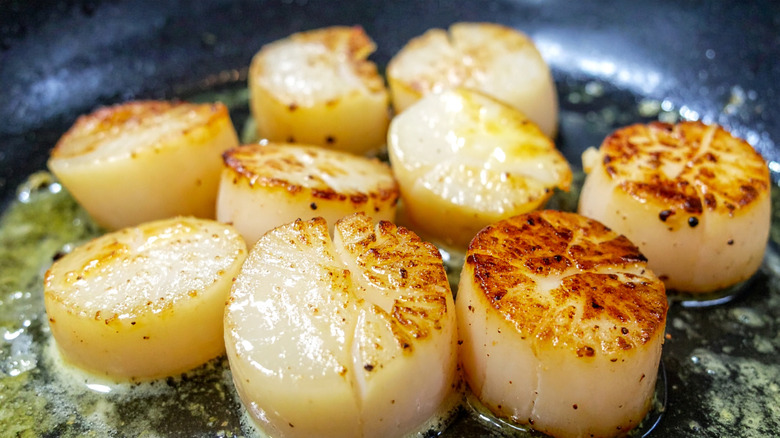
Real scallops, on the other hand, don't look identical to one another and are never perfectly round. While they do have a somewhat circular shape, they are often uneven and lopsided. Each scallop will slightly vary in size, as they come from different sizes of bivalves.
Texture will also come into play. Circular slices of surimi paste are solid and somewhat rubbery, similar to what you encounter with crab sticks or the fish cakes seen in ramen or udon soups. The texture of actual scallops is softer and more pliable.
The flavor is bland or too fishy
If your scallops taste fishy, then they are likely fish! It's difficult to disguise the strong ocean flavor of pollock and other white fish. Real scallops have a slightly briny, seaweed flavor that is much more delicate than that of fish. This seafood is also known for its slightly sweet, rich finish. Keep in mind that different types of scallops will vary in flavor, with some being more intense and others more delicate. Some varieties, like the Calico scallop, even have nutty notes, but no true scallop should be outwardly fishy in taste or smell.
Producers of imitation scallops will sometimes add alkaline compounds to mask the fishiness, which may result in a bland taste. Others use scallop flavoring. It is much more difficult to notice nuances in the flavor when scallops are breaded and fried, so taste can't always be the best indicator. Deep frying is one way restaurants get away with using imitations more easily.
They have layered or stringy texture and pure white color
Overall, texture may be the biggest indicator of whether or not you're eating real scallops. If the scallop flakes apart as fish does, chances are that it's made from surimi. Scallops shouldn't have obvious striated layers but rather, a cross-hatched muscle texture.
Textural discrepancies might not be so apparent when buying raw scallops. Once imitation scallops have been cooked, and you cut them or take a bite, the incorrect texture will be more obvious. However, if the scallops have been minced and added to dishes like pasta or soup, it may be trickier to discern. When cooked, scallops will be succulent and buttery, while imitations may be more fibrous and chewier, depending on what they're made of.
The color of scallops can vary by variety, but most are not a pure white color. A creamy white, light beige, or even pale pink are the most common colors of real scallops. Fake scallops will have a bright and uniform white hue due to processing and being made from white fish.
Price point and establishment
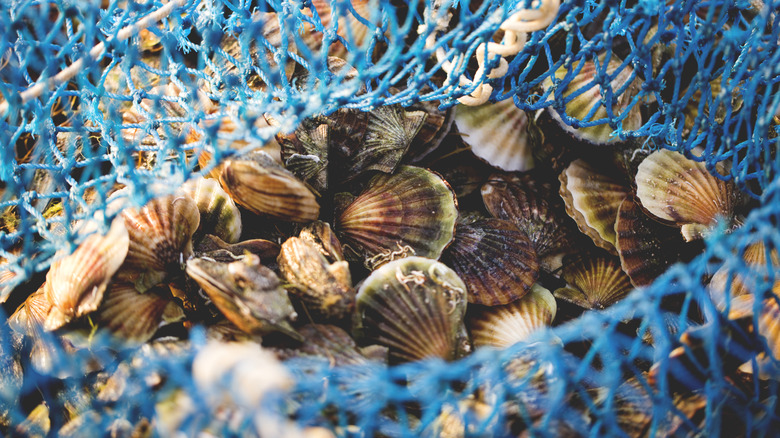
Scallops are on the expensive side and for good reason. This seafood isn't commonly cultivated, so most sea scallops are wild-harvested from deep ocean waters. (Smaller bay scallops are fished from shallow waters along the Atlantic coast.) This means that the availability of scallops can fluctuate based on the season and abundance of harvests. These factors influence the cost. In 2024, the average price of a pound of scallops was around $45 in the United States. A deal on scallops that seems too good to be true, probably is.
Scallops offered for a few dollars on a casual restaurant's menu or listed at a considerably lower price per pound at the market may be red flags for imitations. If you want to be absolutely sure you're spending your money on scallops sourced from nature, buy them from a reputable seafood market or counter while they're still in the shell.