

4 Food & Drinks Strictly Prohibited From The ISS
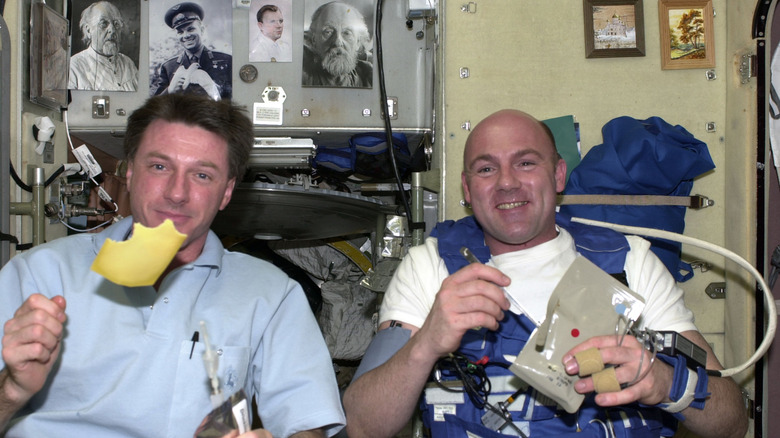
The path to becoming an astronaut is very difficult and requires intensive training, both physical and mental. Once a candidate succeeds, an astronaut travelling to the International Space Station has to bid a brief farewell to friends and family — and some of their favorite foods and drinks, too. This is because the ISS prohibits various foods and drinks that might be dangerous to consume in space or may present possible health hazards.
Considering that the first space pioneers consumed their meals from tubes, the current variety of meals astronauts have access to has come leaps and bounds. From pizza, chili, and Lobster Newburg to international dishes like kimchi and satay (and even desserts like maple leaf cookies and chocolate pudding cake), astronauts enjoy all kinds of foods on the ISS. In fact, unmanned cargo ships also supply fresh produce like fruits and vegetables to the station at regular intervals. All in all, there are over 200 items on the standard ISS menu, though the crew can make special requests, too.
There's an astonishingly large selection of food, including coffee and tortillas, that can be made space-friendly. However, some items don't get a pass on the ISS. Here are four food items that do not get clearance to make it to space — and why.
Bread
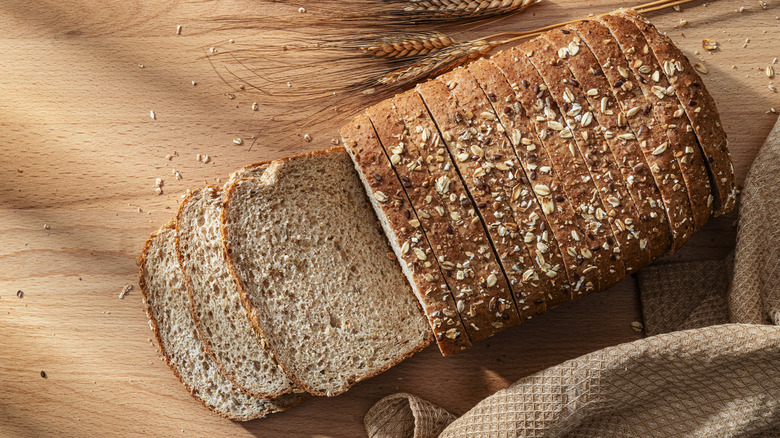
Bread doesn't get a pass in space. This everyday staple is prohibited on the ISS. Sandwiches were tested during the Apollo missions in the 1960s. However, it turned out that bread didn't fare well in space in terms of freshness. More importantly, bread leads to a lot of crumbs, and that can be very dangerous in space. These crumbs can float around and enter fragile equipment or even into the eyes and lungs of astronauts.
Thankfully, scientists and astronauts found a workaround during NASA's 23rd space shuttle mission in 1985. Rodolfo Neri Vela, a crew member and payload specialist from Mexico, made a special request for tortillas. The crew soon noticed that the lack of crumbs made tortillas a worthy bread substitute that wouldn't create a ruckus in space. Tortillas also stay fresh longer. Since then, tortillas have been used on the ISS in place of bread to make everything from peanut butter and jelly sandwiches to pizzas and even burgers. Tortillas have become such a go-to staple in space that, in 2024, crew members ate over 3,000 of them.
Alcohol

You might think that alcohol is not allowed on the ISS perhaps due to its inebriating qualities. The truth has more to do with alcohol's effect on the station rather than the human body. Johnson Space Center spokesperson Daniel G Huot told the BBC, "Use of alcohol and other volatile compounds are controlled on ISS due to impacts their compounds can have on the station's water recovery system." Simply put, alcohol messes with the recycling systems of the spacecraft. But it's not just straight alcoholic beverages that are prohibited in space. Even everyday items like mouthwash and perfumes that contain traces of alcohol are deemed potentially risky substances and prohibited.
Interestingly, Russian and even European astronauts did partake in tiny amounts of vodka and cognac in the 1980s and '90s on the Mir space station. Although, these drinks were officially banned by the Russian Federation, the crew famously managed to smuggle some on board regularly. During a joint space mission between the U.S. and Russia, American astronauts were shocked to discover that their Russians counterparts had alcohol on board. The issue was even brought up to government officials, but that didn't amount to much, as the Russian and European policy regarding alcohol and space was more lenient.
Soda

Soda is another beverage astronauts have to forget about. The main reason is microgravity. Soda fizzes when it is opened, and those tiny bubbles of gas quickly float to the top and escape. However, carbonated beverages don't behave the same way in space due to the lack of gravity. The bubbles responsible for fizzing do not move, and the soda becomes a slush-like foam, floating around in space. While the astronauts might technically still be able to consume this foamy "beverage," it might not be the best for their health.
Because the fizzy bubbles don't move and remain trapped within the soda, astronauts would be drinking a beverage filled with gas. This could lead to digestive issues, wet burps (yes, burps are wet in space, thanks to the same microgravity), and a general sense of unease. Despite the tricky nature of soda, in the '80s, Coca-Cola and Pepsi tried to design a unique dispenser to minimize the bubbles. Unfortunately, they weren't particularly effective and were quickly discontinued by NASA after a short stint in space.
Salt and pepper granules

Salt and pepper are the most important and fundamental seasonings out there. So, imagining life without them can be a bit difficult. Thankfully, astronauts are not denied salt and pepper all together; they just can't consume them in their original, granular form. The ISS prohibits salt and pepper for reasons similar to bread. In microgravity, tiny particles float. Much like crumbs, salt and pepper can float around and clog up equipment and systems like air vents, and potentially the eyes and lungs of astronauts.
The risk of consuming salt in space was addressed by NASA astronaut Scott Kelly in a Reddit AMA in which he was asked about sprinkling salt on his dinner and what would happen if he did so. "It would be a disaster to have something powder like that. Depending on how much it was, we would possibly consider shutting down the ventilation to stop it from spreading," he said. Instead, salt and pepper is allowed on the ISS in a liquid form. Salt is dissolved in water, while pepper is packed in oil. Both are stored in polyethylene bottles with droppers to ensure safety.