

Is American Kraft Mac & Cheese Banned In Other Countries?
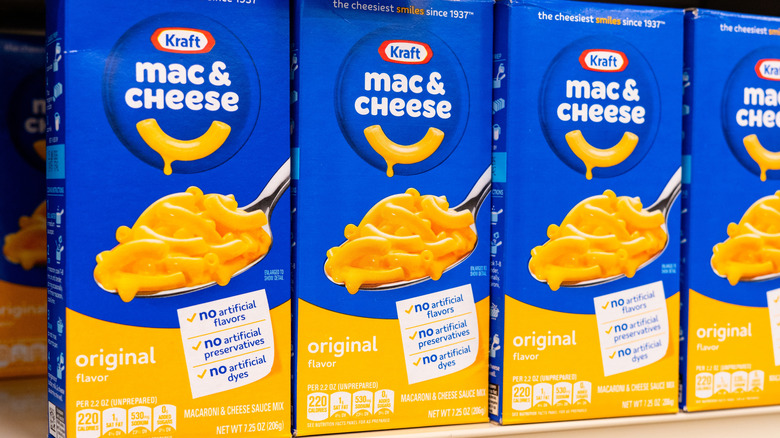
You've probably stumbled upon the occasional infographic from a wellness influencer claiming legions of United States foods are banned in other countries. One dish frequently demonized is the childhood comfort food, Kraft mac & cheese. Before you toss the Kraft boxes, examine the facts. Kraft mac & cheese is sometimes sold under a different name outside the U.S., but it is not banned. Two ingredients once found in American Kraft are heavily regulated in certain countries: yellow dyes #5 and #6.
For many years, yellow dyes #5 and #6 food dyes were used in most U.S. varieties of Kraft. In the past, Norway and Finland placed bans on the use of yellow dye #6 in food, while Norway and Austria banned the use of yellow dye #5. Across the EU, foods containing these dyes are required to carry a warning label stating they may have a negative impact on young children's attention spans. These artificial dyes aren't the reason why certain types of bread, meat, and soft drinks are American foods that other countries have banned, nor does the core of the issue lie with Kraft mac & cheese itself.
In European countries, Kraft mac & cheese may be sold under names like Cheesy Pasta and uses alternative ingredients, such as paprika and turmeric, to yield that vibrant yellow shade. Among the untold truths of Kraft macaroni and cheese is that yellow dyes #5 and #6 are no longer used in the U.S. version either. As of 2014, Kraft began omitting artificial colors and replacing them with a blend of spices. Today, there's little difference between U.S. Kraft mac & cheese and European varieties.
Have some countries banned artificial food dyes?
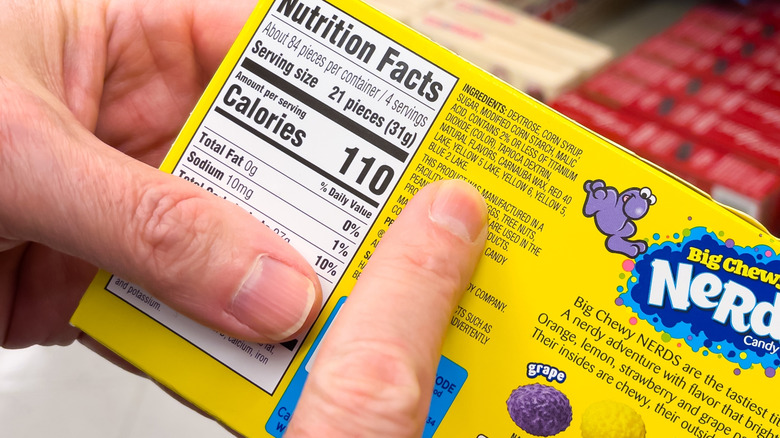
Yellow dyes in general have been a source of controversy, with #5 and #6 frequently cited as culprits for a range of health problems. Some studies have associated hyperactivity in children with their consumption. In 2009, the European Food Safety Authority linked yellow dye #6 to potential negative impacts on testicular health. Yellow dye #5 can cause mutations in white blood cells over long periods of time, potentially increasing consumers' cancer risk. These are just a few examples of the problems associated with these types of artificial colors, hence why their inclusion in Kraft mac & cheese and many other processed foods is so heavily restricted in other nations.
In 2025, the United States also began to crack down more on artificial ingredients. Yellow dye #5 was a big target. The Food and Drug Administration (FDA) plans to phase it out, along with other petroleum-based dyes, over the next few years. Although no definitive timeline has been given for yellow dyes specifically, the FDA is requiring food companies to remove red dye #3 from commercial goods by 2027. As the U.S. administration continues to solidify its game plan, yellow dyes may face a similarly aggressive deadline.