

Don't Ignore This Red Flag When Entering A Pizza Shop
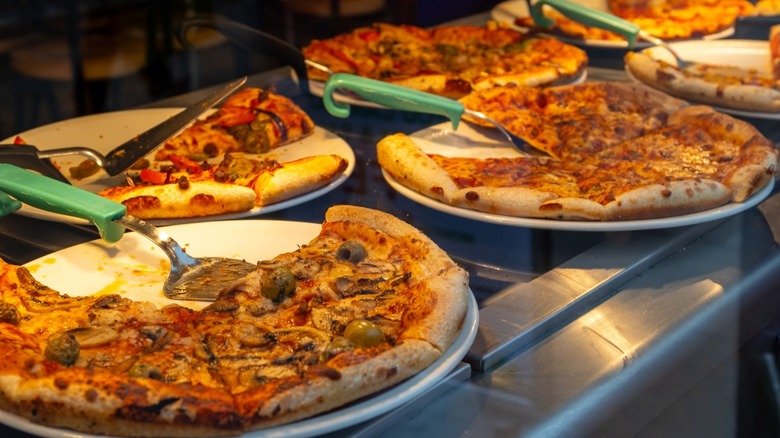
When you visit a new pizzeria for the first time, you may be extra attentive to how busy or clean it is, the prices, the quality of ingredients, or the menu offerings—and you should be. (You should also look out for the sneaky tactics some pizza chains use to scam customers.) But according to pros, there's a foolproof way of knowing a shop isn't up to par: If the pizza on display looks old or dry rather than tasty, you should think twice about eating it.
"Pizza should be turning over fast enough that the pies never have a chance to dry out," award-winning pizza chef and pizzeria owner Glenn Cybulski told us. This is a red flag that restaurant health inspectors always look for; if food is losing color or moisture, it's been left out too long and may pose a potential danger to diners. You can also look at the very tip of the slice. If it's curling up instead of laying flat, the 'za has been sitting out for some time (via Scott's Pizza Tours).
When we spoke to food safety expert and Westchester Community College instructor Elisa Bremner about red flags to look for at a pizza place, she said pizzas in a display case are typically in the "temperature danger zone." That describes a range between 40 and 140 degrees Fahrenheit, where bacteria can grow most rapidly (via USDA). So, if the pies aren't sold quickly enough, you have a greater chance of getting sick.
How to tell if display pizza is old
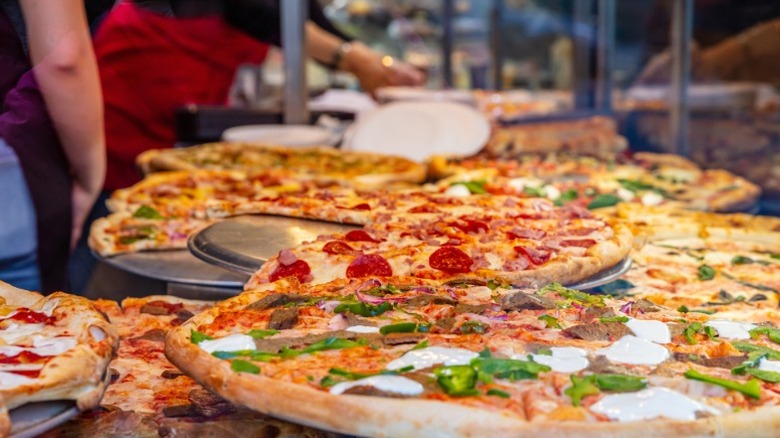
At most pizzerias, you'll get a reheated slice, which isn't a bad thing. Just be sure your order hasn't been languishing for hours before going back in the oven. Glenn Cybulski says that a display pie should ideally be slightly undercooked. If it is already cooked through, "it's going to be cardboard when it's reheated," he explains. Pizza with crust that's already charred is going to cook even more once it's reheated, so you might not enjoy that 'za.
You can also analyze the crust, as experts like Cybulski swear it's the key to a successful pizza business. Look at it from the side, so you can see the interior. If it's bubbly and airy, as opposed to doughy and dense, it'll be crisp and enjoyable to eat when reheated. This observation was made by Felice Colucci, pizzaiolo and culinary director of Pizza University & Culinary Arts Center. Colucci explained in an article for the academy that a heavy crust reflects improperly leavened dough.
Check for condensation on the display case, too, as this signals that a fresh pizza was recently placed inside. Avoiding half-and-half pies in favor of single varieties, which tend to sell faster, is another solid rule of thumb. Finally, keep an eye out for pizza that hasn't been sliced yet; an uncut pie likely just came out of the oven.