

Forget Cooking Oil — Season Your Cast Iron With This Instead
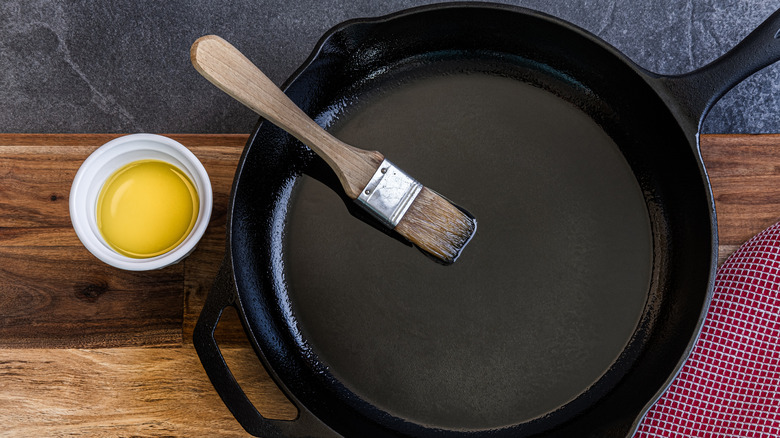
Cast iron cookware is as versatile as cookware can be. When treated and used properly, this hardy kitchen stalwart can fry, sear, bake, saute, or even gently cook a fluffy frittata. To unlock its culinary potential, however, you first need to properly season your cast-iron skillet. This essential step helps form a protective layer over the iron, keeping it free from rust while ensuring food doesn't stick to the pan. While you may have used one of any number of high smoke point oils for the task, seasoning cookware seems to be just one more avenue where beef tallow is making a comeback. Even if you're not convinced about its skincare properties, its ability to upkeep cast iron cookware has been well known since the days of yore. Along with clarified butter, which also works well for seasoning, beef tallow can subtly elevate the flavor of your food, giving it an edge over other vegetable and seed oils that are otherwise used for seasoning.
Charlie McKenna, chef and founder of Lillie's Q, gave Mashed exclusive insights seasoning cast iron to get the best out of your cookware. McKenna's company specializes in regional Southern barbecues, rubs, and more, offering sit-down experiences at its restaurants and off-the-shelf food products. "I really love to use clarified butter or beef tallow, as they are natural products that have a high smoke point," McKenna explains. "Because you season cast iron at very high temps, it's nice to not have the seasoning product burn off too early in the process," says McKenna. Both beef tallow and clarified butter have similar smoke points of over 400 degrees Fahrenheit.
Season your cast iron with the high-heat oil you most cook with
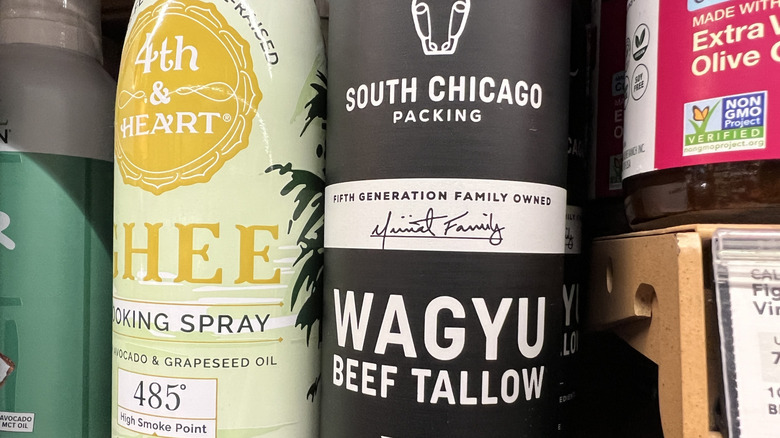
Beef tallow's resurgence as a popular cooking fat is partly due to its rich, meaty flavor. Some types, like Wagyu beef tallow, offer a delicious alternative to bacon fat, and since seasoning oil can sometimes impart notes to food cooked in the pan, tallow's rich, beefy flavor can also be embedded into your cast-iron cookware. While there's nothing wrong with using a neutral, high-quality seed oil, a pan seasoned with a suitable naturally flavorful high-smoke point fat can elevate even simple dishes with rich tasting notes.
McKenna also cooks exclusively with the fats he seasons his cast iron with. Thus, use an oil or fat that you also regularly use in the kitchen. If you tend to cook with clarified butter or ghee more often, using the former to season your cookware will add subtle, deeper notes that complement your dishes. Similarly, if your pan is used for frying and searing in rendered fat, seasoning the cookware with beef tallow will impart more of its deep, meaty flavor. The additional flavors are subtle, so don't expect them to revolutionize your cooking. However, they do add those extra notes. Furthermore, every time you cook, say, a fatty piece of steak on your cast iron, some of that rendered tallow will add to the tough polymerized layer of fat that's protecting your pan.