

Meet The Italian Cheese Guinness Called The World's Most Dangerous
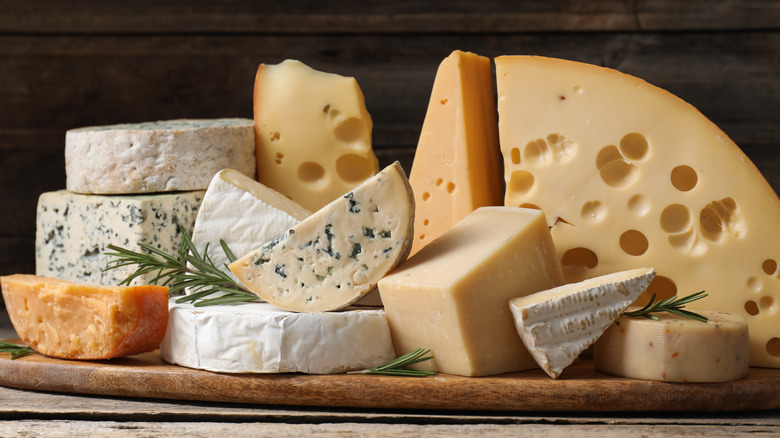
Cheese is a global institution that comes in many forms — creamy cheeses, nutty cheeses, soft cheeses, hard cheeses, some with herbs, some with mold, some that are white, some that are gold. One thing that cheeses aren't often called is dangerous, but that's exactly what casu marzu is; in fact, it holds the Guinness World Record for the most dangerous cheese. The most obvious candidate for adding a danger factor into cheese would be mold, but casu marzu isn't quite that. Sardinian for "rotting cheese", casu marzu is filled with live maggots.
A single wheel of casu marzu can host thousands of live maggots, and that's by design. Cheese skipper flies are invited to lay eggs inside the cracks of an aged pecorino, with the hatched larvae then digesting the milk proteins and breaking the cheese down into something soft and creamy. This extremely expensive contraband delicacy earns its reputation for danger in a few ways. The maggots produce cadaverine and putrescine, toxic compounds that can cause severe allergic reactions, and if the maggots aren't digested properly, vomiting, diarrhea, and even internal bleeding can be added to the menu.
There's also the act of eating the maggots themselves: it's recommended to close your eyes when taking a bite, not just to avoid the rotting mess you're about to put into your mouth, but to prevent maggots jumping into your eyes. We'll take Guinness' word on how dangerous this all is.
Casu marzu supposedly tastes like gorgonzola
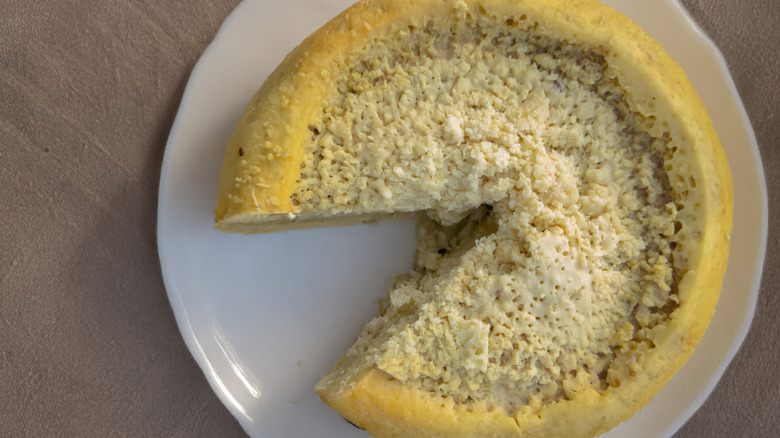
So, this Sardinian specialty is super dangerous, super gross, and super expensive at nearly $100 per pound. Casu marzu might even cost you much more if you're caught buying it, since regulators made it illegal throughout the European Union in 2002, People can incur fines of up to $60,000 for selling the cheese commercially, though Sardinians continue to quietly do so. As such, we don't exactly recommend you even bother trying casu marzu, though it's natural to still be curious about it. What does it actually taste like, and why do people spend so much for a maggoty meal?
According to brave Sardinians and even braver outsiders who have tried it, casu marzu is similar to a very ripe gorgonzola, and is smooth and creamy thanks to the acid from the wriggling maggots. In case you still have your appetite, its important that the maggots are alive when the cheese is ready for consumption, because if those little monsters are dead, it means the cheese has spoiled. However, cheese expert Julia Birnbaum told How Stuff Works that you could technically refrigerate some of the casu marzu or seal it in a paper bag to suffocate and kill the maggots. At least that way, they won't jump around.
Still, Sardinians reserve casu marzu for special occasions, and it is a common gift for a somewhat unusual reason: a metaphor. Tradition has it that the maggots appears spontaneously, making this stinky wheel of cheese a grand metaphor for the circle of life. We'll stick to parmesan in the meantime.