

Why Timing Matters When Adding Herbs To Slow Cooker Meals
We may receive a commission on purchases made from links.
Busy adults and parents turn to the slow cooker time and again for its sheer convenience. It can facilitate a wide range of meals, like these 64 slow cooker recipes that make our lives easier. We love the slow cooker for everything from game-day chili to a good mashed potato recipe, but if we had to pick one thing we don't love about it, it's that the food that emerges from it can sometimes turn out bland and flavorless compared to other cooking methods.
How do we reap the slow cooker's benefits without serving up tasteless fare? To learn more, we spoke to Clare Andrews, the U.K.'s top authority on air fryers and author of four cookbooks, including "The Ultimate Slow Cooker Cookbook." Andrews offered some simple yet crucial advice for producing slow cooker meals packed with flavor: know when it's the appropriate time to add herbs to the dish — and when to choose dried versus fresh.
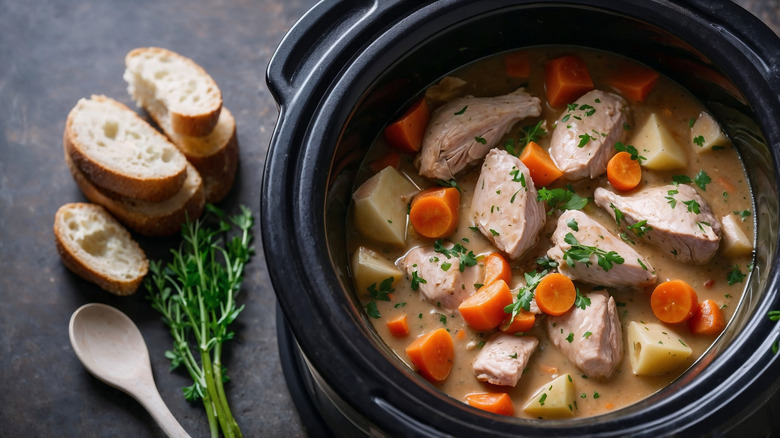
Adding fresh herbs too early is one of the common mistakes everyone makes when using the slow cooker. As Andrews explained, "Herbs like fresh parsley, basil, and coriander can lose their freshness and become dull or slightly bitter after hours of cooking." If the herbs are fresh, she suggests adding them toward the end of cooking or right before serving. Dried herbs, on the other hand, release flavor over time and are best added to the slow cooker at the start.
Use the slow cooker like a pro with these expert-approved tips
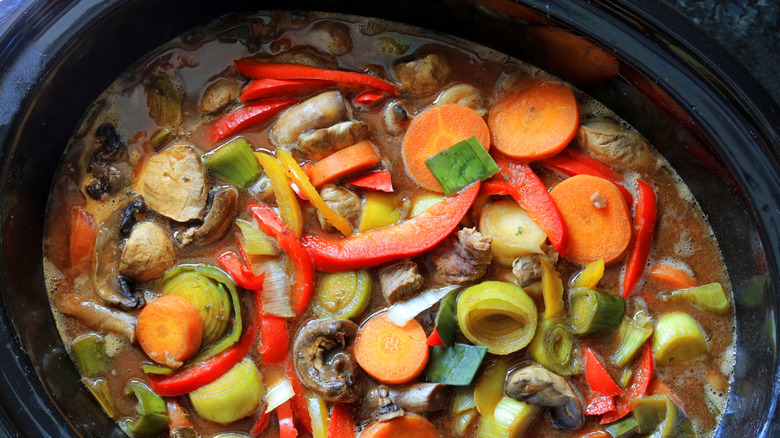
Knowing which herbs to incorporate and when to add them can set us on the right path, but mastery of the slow cooker is a learned skill that requires trial, error, and practice. According to cookbook author Clare Andrews, there are easy tricks we can reach for if we find ourselves with a slow cooker meal that's either too bland or over-seasoned.
For bland dishes, Andrews advised adding a touch of salt or an acidic component (such as lemon juice or vinegar). "Acid can wake up dull flavors instantly," she noted. Soy sauce, miso, and grated Parmesan are other options she recommended for extra flavor, depending on the dish. Andrews said cream, rice, beans, or other vegetables can help dilute over-seasoned dishes, but to "Always adjust gradually and taste as you go."
As for the herbs that shine in slow cooker meals, she mentioned, "Rosemary, thyme, bay leaf, oregano, smoked paprika, cumin, chili flakes, and star anise. These stand up well to long cooking times and deepen rather than fade." Her list of "delicate" herbs to avoid includes basil, parsley, chives, and dill. A slow cooker traps water and allows for little evaporation, so flavors don't develop the same way they would on the stovetop or in the oven. When there's meat in the dish, Andrews said browning it first will deepen its flavor. "Great slow cooker food usually needs layers of flavor, some aromatics, [and] spices."