

You've Heard Of The 'Blue Light Special,' But The Store Behind It Is Nearly Extinct
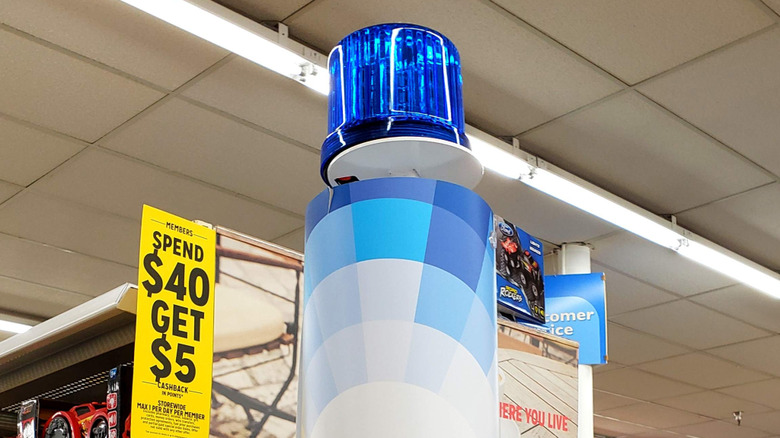
When speaking of retail history, the legendary "Blue Light Special" is likely to be mentioned. Even for those unfamiliar with the exciting sight of those flashing blue strobe lights, it's likely you've at least heard those three iconic words, "Attention Kmart Shoppers." The fame of the store and those words, which were announced with the sale on the overhead speakers, was enough to warrant reference in mainstream movies like Tim Burton's "Beetlejuice" and as inspiration by media personality Ayesha Curry. After decades as a retail powerhouse, Kmart descended to a shadow of its former self.
Following its beginnings as the S.S. Krege Company, the first Kmart store opened in San Fernando, California, circa 1962. In addition to the blue light special, Kmart was a retail leader in many ways. Though the food courts of Costco and Sam's Club are a major part of their shopping experience, Kmart was among the first to adopt the concept, at one point crossing into a chapter of Little Caesar's story as its pizza was once served at Kmart Cafes.
In fact, the popularity of Kmart's food courts inspired the company to open Kmart Chef, a line of spin-off restaurants. In the spirit of Kmart's purpose of making shopping affordable for its patrons, it was one of the major chains, like Walmart, with layaway programs as a core of its revenue strategy, which lasted until at least 2015.
Kmart's fall resulted from many factors and only a handful of stores remain
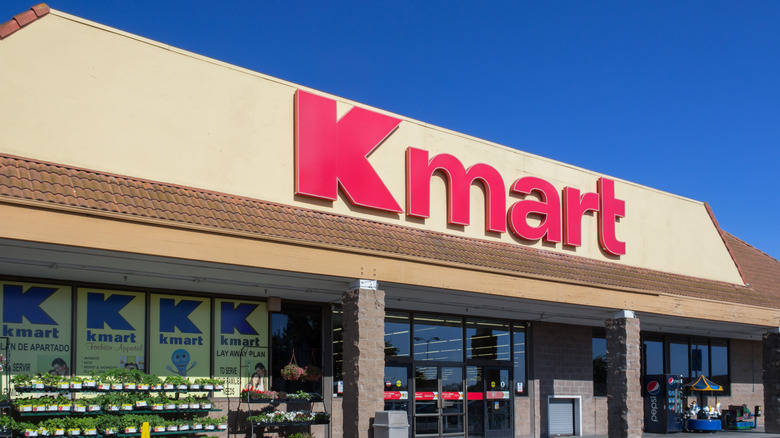
At its peak, Kmart had 2,400 stores with revenue worth $37 billion, and was powerful enough to acquire other retailers like Walden Books and Borders bookstores. Unfortunately, this was undone by a cascade of ill-fated events. Though it expanded its store sizes and inventory to include groceries under the Big K and Super Kmart formats, it was unable to compete with Target and Walmart's more consistently low prices and fashionable products. By 2002, Kmart filed for Chapter 11 bankruptcy, a move caused by then-CEO Charles Conaway, who'd lied to investors about Kmart's financial crisis and that the company had been withholding payments to suppliers.
The following year, Kmart restructured, closing 326 stores with plans to emerge from bankruptcy by April 2003. However, Kmart still needed to survive the success of big box stores like Walmart as well as the rise of Amazon and e-commerce. This led to a 2005 merger with Sears, and though the newly minted Sears Holding Corporation was ambitious, the competition and the 2007 recession proved to be too much, causing the company to once again file for bankruptcy by 2018.
Throughout its attempt to revitalize its business, Kmart's blue light special returned in the early aughts and 2015, even integrating into its online sales to no avail. Today, Kmart consists of a handful of locations throughout the U.S. and its territories, including Guam. Though it's uncertain when its iconic blue light will ultimately go out, there's no question its former shoppers still look back on it fondly.