

The Frontier Stew Cowboys Loved But Modern Diners Left Behind
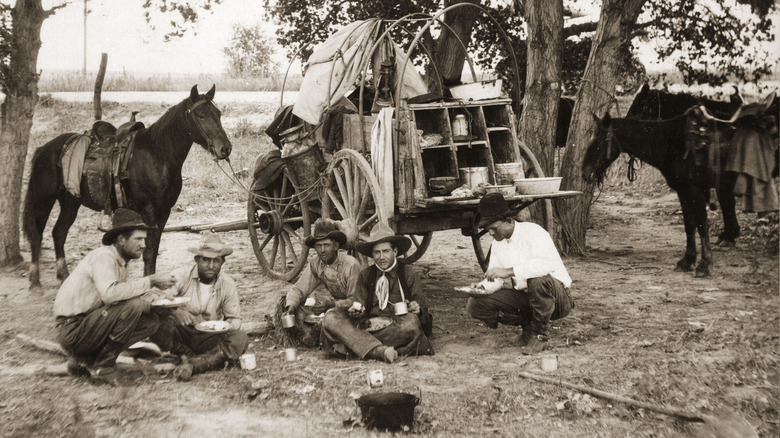
Cowboy culture is often romanticized with visions of riding horses and sleeping under the stars. In reality, life on the wild frontier after the Civil War wasn't easy, and it certainly wasn't a place for city slickers. It meant long working hours, dealing with wild animals, and spending months away from family and home. When it came to meals, they were more concerned about sustenance and survival than getting a gourmet dish. And yet, modern cowboy cuisine certainly has a culinary legacy in chili, beans, cornbread, and cowboy coffee. One dish was largely left behind on the wide open ranges: It was called rascal stew.
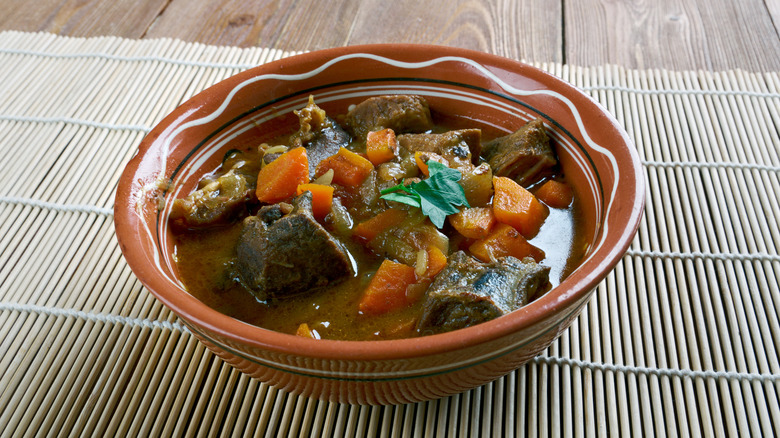
Also known as son-of-a-gun stew, or the more crude, sonofab***h stew, the hearty dish's main ingredient was the offal of a slaughtered calf or steer that had died during a cattle drive. In a pot of rascal stew, you could find the animal's heart, brain, liver, tongue, thymus gland, kidney, and marrow gut, suggesting that absolutely nothing went to waste in the cowboy kitchen. The stew is a nutrient powerhouse, and it offered something different from the plethora of beans and bread these hard workers were largely surviving on. All in all, we think rascal stew is one dish from the wild west that needs to make a comeback.
If you can even find rascal stew today, it will probably look different
Cattle drives in the late 1800s were long and arduous, and the journeys' supplies, including food, were meticulously selected. There was no refrigeration at the time, so when fresh meat was available, it was taken advantage of. Rascal stew's nose-to-tail approach to cooking was born out of the 19th-century ranching lifestyle. By the 1920s, refrigeration, as well as expanded railway and road systems, made the distribution of fresh meat much more widespread. These advancements caused a significant decline in the popularity of traditional rascal stew, but it wasn't gone for good.
Reenactments of historical cattle drives and ranch life brought exposure of the dish to new generations, and you can sometimes find it at these events or at chuckwagon cook-offs. However, you'll probably encounter more meat and less offal in modern versions, along with aromatic vegetables, liquor, and wine to enhance the flavor. Modern tastes have largely shifted away from offal, which means some of these organs and other innards can prove elusive in today's meat markets. Specialty and international markets or online purveyors may sell items like beef marrow bones, heart, and tongue, but traditional rascal stew ingredients like brains, kidneys, and sweetbreads may be more difficult to track down.