

Where Is The East Coast's True Oyster Capital?
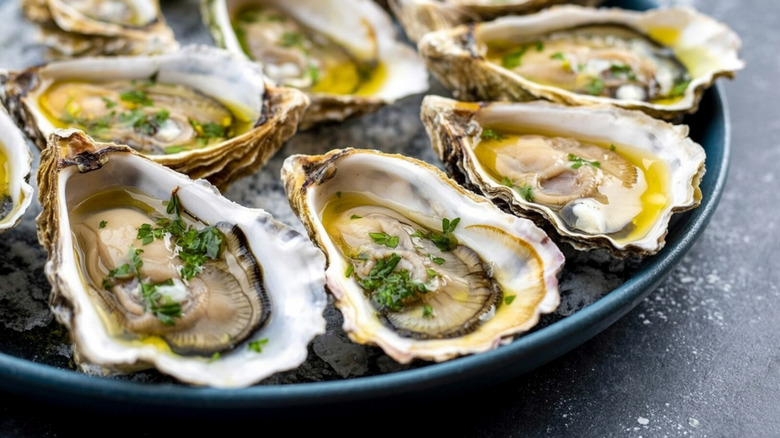
From the Gulf Coast to New England, oysters are big business. While extremely unappealing to some, others go bonkers for the delicacy. The variety grown and harvested off the East Coast of the United States is the Eastern Oyster. So if you're an fan of this mollusk, do you know where to find the East Coast oyster capital?
We can help, but it's a bit complicated. Every state harvesting oysters reports their oyster production slightly differently, but Virginia makes a bold statement, calling itself the oyster capital of the East Coast. Virginia's tourism authority says that over 40 million oysters have been sold in the state each year since 2016, and eight different regions are known for oyster production. Virginia has long been associated with great oysters, too — they're even listed as the top thing to eat in the commonwealth in our list of the best food in every state.
But, shucks, before you pack your bags and head down below the Mason-Dixon Line, Virginia isn't the only East Coast state that has a booming oyster business. Massachusetts also lands millions of oysters annually. Their Division of Marine Fisheries reports that, in 2023, nearly 48 million oysters were landed in the state, and in 2024 (the most recent year available), that number was over 53 million, with a value of over $31 million.
Massachusetts and Virginia both have long histories in oyster production
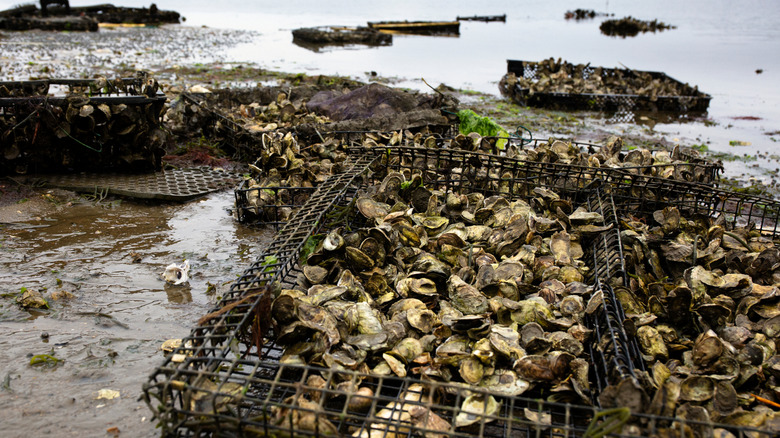
Shellfish aquaculture today is one of the largest seafood industries in Massachusetts (after lobster and scallops), but cultivating oysters goes back to the Native American communities of New England. The Nauset tribe, who lived on Cape Cod, harvested oysters from the area that's now Wellfleet, Massachusetts. Pollution and overharvesting almost depleted the Wellfleet oyster, but multiple recent restoration projects have brought back the abundant oysters of the Massachusetts coast.
Virginia's oyster harvesting also goes back centuries, and has beginnings with indigenous communities around the Chesapeake Bay. Similarly to New England, pollution and population growth in the 1800s and 1900s rendered oysters all but impossible to find in the once-bountiful waters. (But Massachusetts' oyster supply ran dry a bit before Virginia's — to the point that Chesapeake oysters were actually brought up to Wellfleet to supplement the dwindling local population in the 1800s.) Once again, conservation efforts have brought a resurgence of oysters to Virginia.
Various regional oyster dishes have sprouted up anywhere oysters are harvested, and while you might not want to order them raw at a restaurant, if you're eating them at home, it's the best way to enjoy them. That way, the crisp, briny flavor of the oyster itself shines through, and adding lemon juice or hot sauce will deepen the oyster's natural flavor.