

Do You Need To Refrigerate Vinegar?
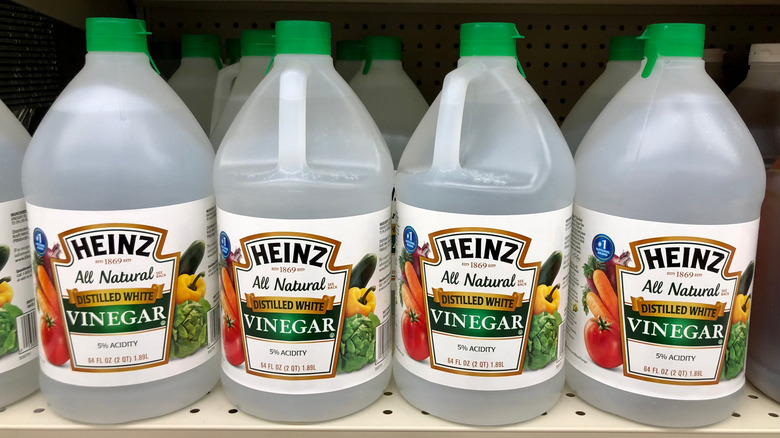
Vinegar has been around for millennia, as early as 5000 B.C. Ancient Babylonian records indicate they used vinegar as a food preservative to slowdown the spoiling of food. So, the simple answer to the question of whether vinegar is one of the condiments that need to be refrigerated is "no." Since vinegar itself is used as a preservative, it stands to reason that it lasts longer than most food items at room temperature.
Vinegar is made by the fermentation of alcohol (which itself is made via fermentation). Plain distilled white vinegar is made from distilled alcohol and never expires, as it contains nothing but about 5 to to 8% acetic acid diluted with 92 to 95% water. This pure vinegar is sharp and clean-tasting, bringing with it none of the nuances of traditionally fermented vinegars that contain natural flavor compounds of the original ingredients they were fermented from. This lack of nuance is exactly what makes it perfect to ferment other types of food, like hot sauce and mustard, so it does not muddle the flavor of the thing it is preserving. This also makes plain distilled white vinegar last indefinitely at room temperature, especially if it is stored properly in a bottle with a tight-fitting cap.
Do you need to refrigerate vinegars other than plain distilled white vinegar?
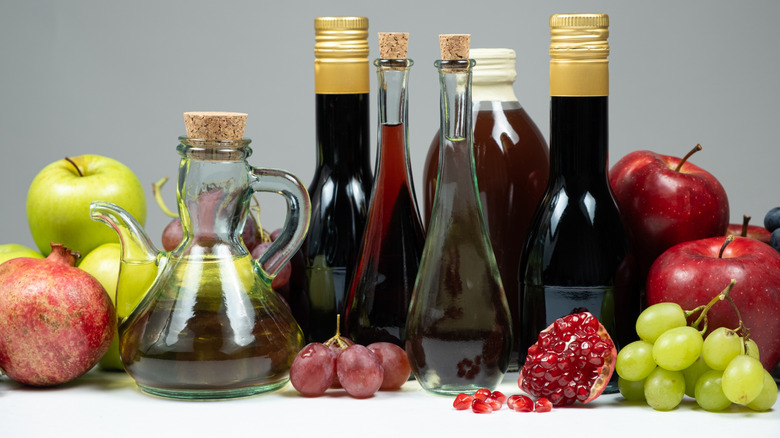
However, as with any food item, the longer answer to the refrigeration question around vinegar is "it depends." There are at least 16 types of vinegars, and ones like balsamic or apple cider will naturally darken over time at room temperature due to the oxidation of those natural original ingredients, namely grape must or apple pulp. The good news, though, is that the flavor will likely be just fine. But if color change is a concern, then you should either use up the vinegar before its "best-by" date or prolong its aesthetic by storing it in the fridge.
According to the USDA, product dating is not required on food items other than infant formula. So if vinegar does not expire, why does it have a "best-by" date then? This is because many manufacturers have a timespan in which they can guarantee that the food item will taste and appear as intended. After that date, various factors play into its spoilage. According to America's Test Kitchen, volatile compounds can evaporate over time, and in the case of unpasteurized raw vinegars, there may be a slime floating at the bottom of the bottle. But do not panic because this is simply the mother of the vinegar, and can easily be strained out. As a bonus, you can use this strained mother to make a batch of homemade vinegar.