

What Jesus Probably Would've Eaten, Historically Speaking
We may receive a commission on purchases made from links.
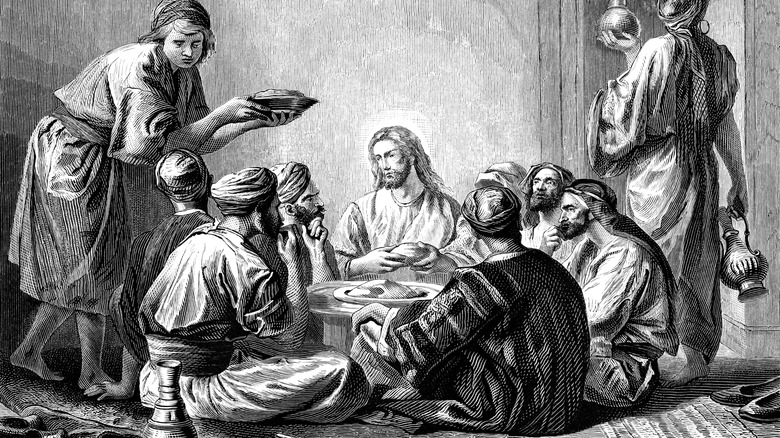
One of the most widely known historical figures is Jesus of Nazareth, a man who many scholars believe was born between the years 6 and 4 BCE, and who is considered the Messiah of the Christian faith. He is the central figure in the New Testament section of the Christian Bible, whose story and ministry were written of extensively. Even some of the things he ate are noted in these books. For example, the book of Matthew describes the famous story of Jesus feeding 5,000 men plus women and children by miraculously multiplying two fish and five loaves of bread. He, too, may have partaken in this humble feast. We can also deduce that he enjoyed nutrient-dense figs. In the gospel of Mark, it's written that one day Jesus was hungry, spotted a fig tree, and went to pick some of the fruit, though it ended up being fruitless.
Based on descriptions of his birth, life, and ministry in the Bible, we know Jesus practiced Judaism. Therefore, we can assume he abstained from certain foods based on kosher laws, such as pork and shellfish. The specifics of his diet remain undiscovered. However, historians have taken into account the time period in which he lived (around 2,000 years ago), his social status, and the foods in the places he inhabited and ministered to get a good idea of what Jesus ate.
Fava beans
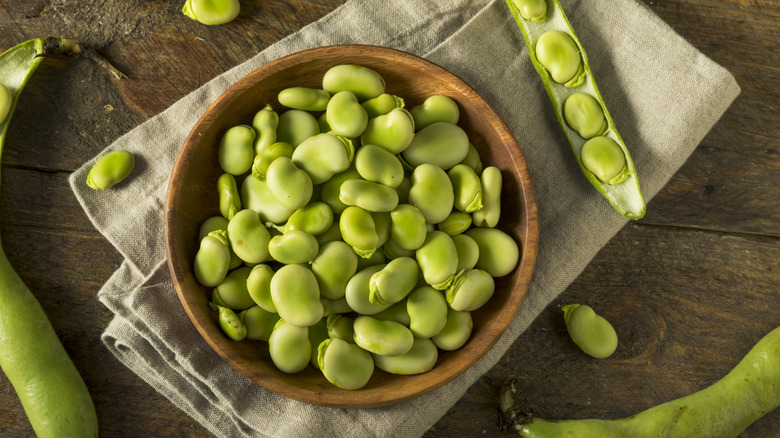
Israel is often described as a land "flowing with milk and honey" because its central region is incredibly fertile. Wonderful and abundant produce grows there, like grapes, pomegranates, and citrus fruits. Equally plentiful are beans, which were being harvested and eaten by inhabitants as far back as 10,000 years ago. Excavations throughout Galilee uncovered the ancient seeds of fava beans, which are a powerhouse of protein and carbohydrates and, undoubtedly, an important source of nutrients for a person like Jesus who spent much of his time traveling on foot from city to city. Fava beans would have also been affordable, which is significant, as Jesus was not among the upper class of society.
Two Jewish texts, the Talmud and the Mishna, make note of the existence of broad beans (another name for fava beans), suggesting that they were certainly part of the Israeli and Jewish diet before and during the time of Jesus. In the Mishna, there is a reference to a porridge made of broad beans, olive oil, and garlic. It sounds similar to a dish still widely enjoyed today in the Middle East called Ful Mudammas.
Lamb
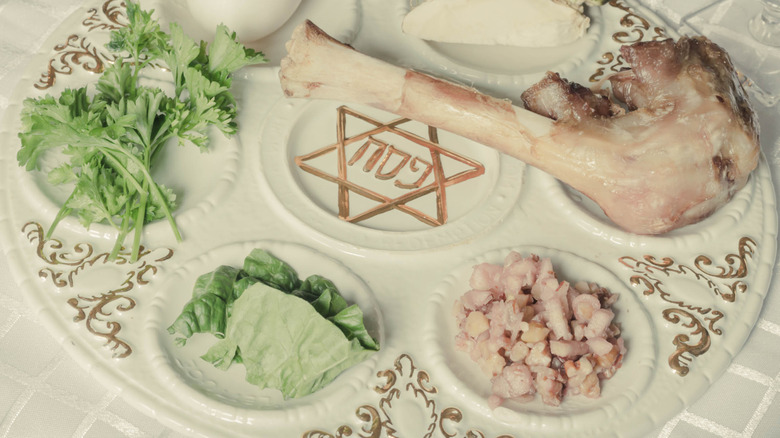
Lambs were a very significant animal during the time that Jesus lived. Not only were they a food source, but lambs were deeply symbolic. The Old Testament of the Hebrew Bible and the Torah have several descriptions of sacrificial lambs. In the book of Numbers, it is indicated that the Israelites were commanded to offer daily lamb sacrifices. Dr. Tova Dickstein, who is an expert on biblical foods, suggests that while meat was definitely eaten by biblical figures, it was a rare treat for most Israelites because it was expensive (via Travelujah). Perhaps the most recognized occasion to eat lamb was the Feast of Passover, which Jesus would have most definitely partaken in. In fact, the famous "Last Supper" that's described in multiple books of the Bible's New Testament makes reference to this feast.
Lamb is served as part of Passover in remembrance of the Exodus, when Moses led the enslaved Israelites out of Egypt. According to Exodus, chapter 12, before they fled from the power grip of Pharaoh, they were instructed to sacrifice a lamb and place its blood over the doorframes of their homes. This would cause the angel of death to pass over their dwelling, sparing the life of the firstborn son inside. Because Jesus was Jewish, it's understood that he likely would have eaten lamb during Passover every year during his lifetime. Along with the meat, other symbolic foods Jesus probably ate at the Last Supper included bitter herbs, unleavened bread, and olives.
Pancakes (Ashishot)
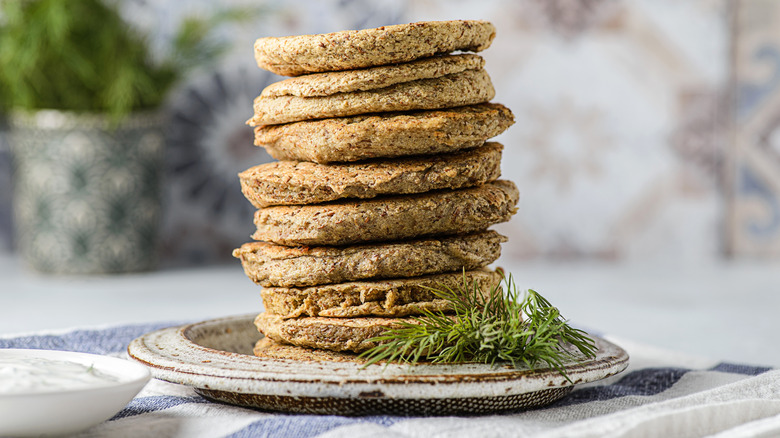
Biblical food historian Dr. Tova Dickstein discussed a dish called ashishot with i24 News. According to the expert, ashishot is first mentioned in the Old Testament book Song of Solomon as a food eaten for sustenance, however, the main ingredient to make it is not specified. She did explain, however, "The Mishnah hints that it may be lentils." Much later, a passage in the Talmud hinted that ashishot was a type of lentil pancake.
In the book, "Food at the Time of the Bible," author Miriam Feinberg Vamosh includes a recipe for ashishot that combines ground red lentils (which give the pancakes a beautiful, bright color), flour, olive oil, honey, and cinnamon. The batter is spooned into hot olive oil, fried on both sides, and served with honey. Considering that historians believe Song of Solomon was written centuries before the gospel books that outlined Jesus' life, it's plausible that the Jewish people (and Jesus himself) in Israel were familiar with such a dish and, perhaps, made it themselves when they had access to the ingredients. It's also reasonable to believe that ashishot could have been flavored with fruits and nuts that were in season at any given time. Just like we mix up our pancake recipes with blueberries or chocolate chips, perhaps Jesus enjoyed dried raisins or dates in his ashishot.