

Raw Vs Regular Honey: How Do They Differ?
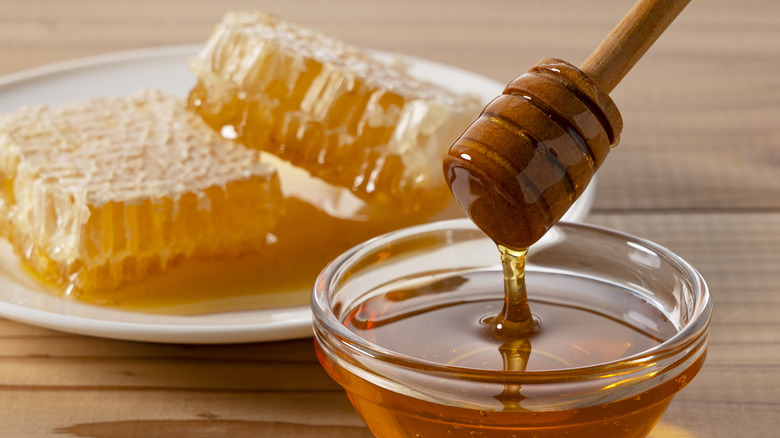
When it comes to food ingredients we don't recommend sleeping on, honey tops the list. Honey can strengthen a main dish (like honey walnut shrimp), or it can add a subtle sweetness to baked goods (we're eyeing these chewy honey cookies). Honey is known for being rich in nutrients and antioxidants, and it keeps for a long time — even centuries if sealed and stored properly. In fact, the oldest known depiction of a human harvesting honey is a cave painting dating back 8,000 years (via National Honey Board). So now that we've captured your attention with honey, you may be asking, which type should you buy, raw or regular? The difference between the two lies in the production process.
The bottled honey most commonly found in grocery stores (aka regular honey) is heated (or pasteurized) to kill bacteria. This gives it a longer shelf life and helps to slow down crystallization — the hardening of the sugar enzymes that naturally occurs over time (when this happens you can reverse it by sitting the bottle in warm water though). Raw honey is not heated and therefore it maintains more pollen, antioxidants, and vitamins. When selecting raw vs. regular honey, things to consider are flavor, taste, and health benefits. Both raw and regular honey are effective at fighting sore throats, suppressing coughs, and combatting harmful microbes with beneficial bacteria. We break down the pros and cons of each to help you determine which is best for your recipes and home remedies.
Raw honey
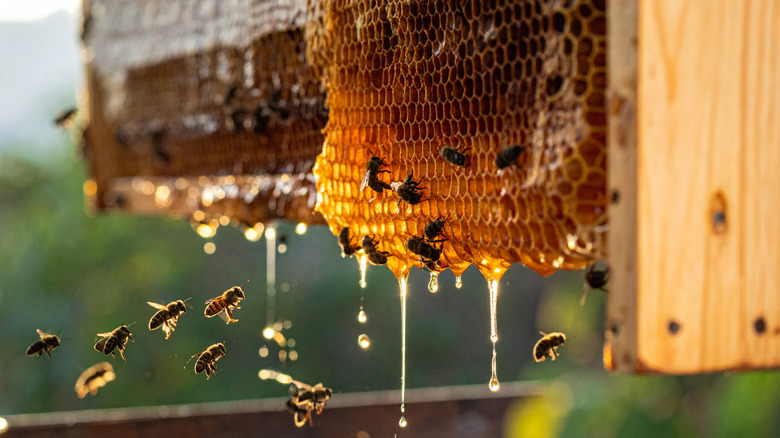
So, "what is raw honey and is it safe to eat?" According to the National Honey Board, there is no official definition of raw honey in the U.S., but the board defines it as, "honey as it exists in the beehive or as obtained by extraction, settling, or straining without adding heat." Raw honey is safe to eat, and it's generally considered the most nutritious type because it's the least processed and most nutrient dense. However both raw and regular honey are considered dangerous for children younger than one year old, due to a bacteria called Clostridium that can cause infant botulism.
A Reddit user at r/parenting named raw honey as a key ingredient they use for an at-home cough and cold suppressant (along with apple cider vinegar, grated ginger and a hint of cayenne pepper). "I'm pregnant and kicked the holiday cold that my dear husband and 17 month old daughter gave me with this homemade throat syrup," they said.
While it's less common than pasteurized honey, you'll sometimes find raw honey in the grocery store aisles. You can also purchase it from farmer's markets or directly from bee keepers and producers. Because it's not heated or filtered, raw honey tends to have a more cloudy appearance and a stronger floral flavor.
Regular honey
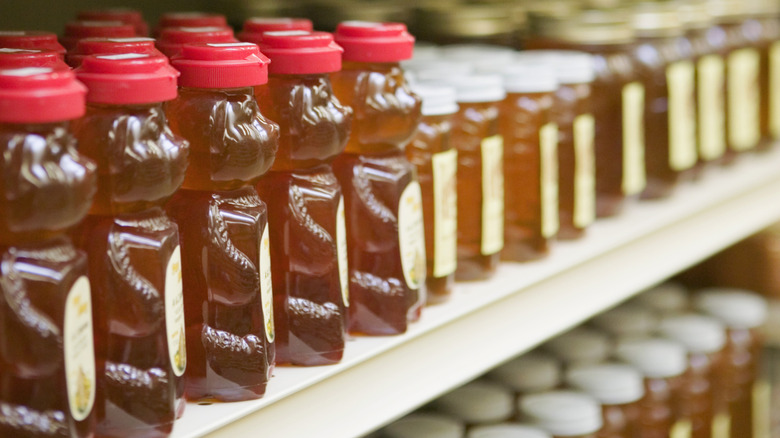
More often than not, the honey you buy from the grocery store — including the kind in those adorable bear-shaped bottles — is pasteurized. Pasteurized honey has a clearer appearance and a smoother, more subtle taste, and can typically last longer without hardening and becoming crusty. It often comes at a lower price point, but experts warn it can sometimes be mixed with high fructose corn syrup or rice syrup, so check the label and be look for the bottles that say "honey" not "honey blend." "Manufacturers will end up diluting down honey," explained dietitian Beth Czerwony in an interview with Newsweek. "So its a cheaper product, and when you taste the sweetness, you get fooled."
Redditors are all over the spectrum with their opinions on processed honey. A user at r/Baking said the low-cost store option works for them. "If it's for cooking or baking, [I use] whatever is cheap and only contains honey," they said, adding, "The flavor complexity can be lost when heated." At another thread, a user denounced a bottle of honey they purchased at Walmart. "It tastes like corn syrup, despite saying 100% honey on the bottle," they said. "I doubt it was corn syrup, but I can imagine beehives with sugar feeders or something. Store honey is garbage."