

What Are The Tiny Hairs On Raspberries (And Are They Safe To Eat)?
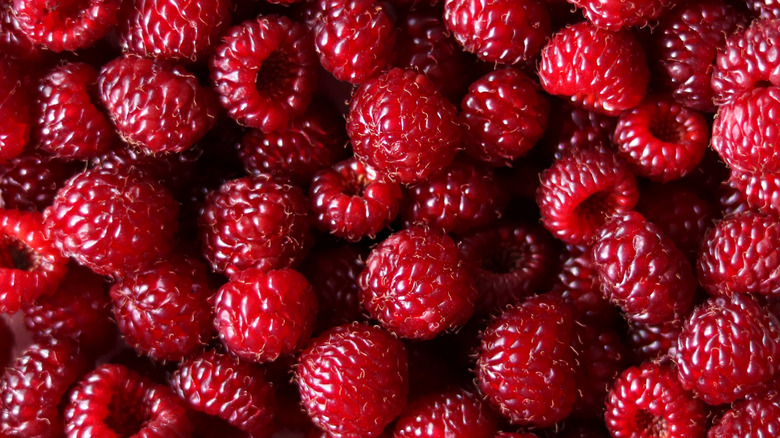
Who can resist an enticing bowl of plump, gorgeous raspberries? The first thing you likely notice when you see a pile of them on a platter or in a grocery store package is their stunning color. But if you've ever given a raspberry a closer look, you may have noticed its covering of teeny-tiny hairs. Look even closer, and there's a coating of very delicate-looking fuzz covering each drupelet (the hundreds of tiny orbs that form a single raspberry). These aren't mold, dirt, or bugs, but are instead two types of hairs called styles and trichomes, both of which protect the delicate berry underneath.
The longer hairs are the styles, which are present on each raspberry from the time it develops. They're remnants of raspberry flowers that help pollinate the plant's egg cell. They remain on the raspberry during its growth and after it's ripened to minimize mold-causing moisture on its surface, and to prevent insects from damaging the fruit.
Trichomes are much smaller and appear almost like a light fuzz. Because white mold can grow on raspberries, it's worth differentiating the two: Mold is opaque and covers the fruit in carpet-like patches (black spots on raspberries, however, are a sign of fungal or bacterial infection). Trichomes look more like a soft haze that completely covers the berry, but you can still see the fruit's color underneath. These produce chemicals that insects and fungi dislike, though they're completely harmless to humans.
Other fruits are fuzzy, too
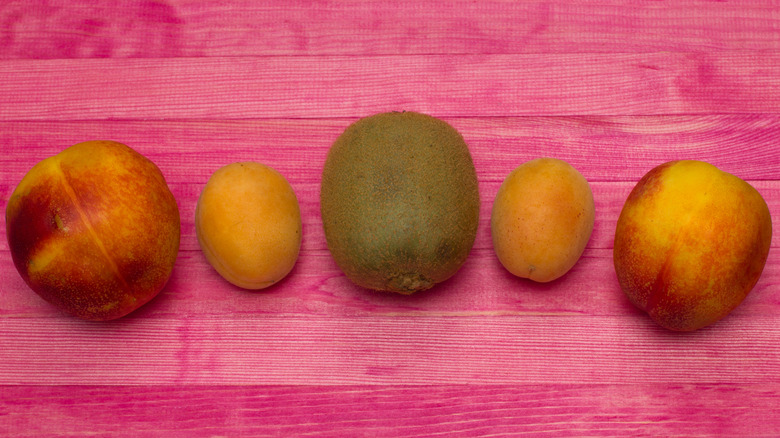
Raspberries certainly aren't alone in their fur defense. Some fruits sprout hair to keep pests and bacteria away, but depending on the variety, these hairs can also keep moisture inside or protect the skin from heat and sun damage. Peaches, of course, are known for their soft, fuzzy covering, but kiwis, apricots, and unripe quinces are also hairy by nature. Like raspberries, blackberries are covered in styles left over from pollination. As for the hairiest fruit of the bunch, it's hard to beat the rambutan, a round tropical fruit that looks like it's wearing a red, spiky wig.
You can enjoy most of these fruits after simply washing them with water, but others (like the kiwi and the rambutan) will be much more pleasant if you shave them first. Of course, by "shave," we mean removing the skin completely. It's unwise to try this with raspberries, however, as any sort of abrasion may ruin that delicate skin and turn your berries to pulp (likely with a little hair left over, though you won't be able to taste it). Then again, you could always use this method to make a raspberry steak sauce, which sounds wrong but totally works.