

Should You Keep Storing Bread In Its Plastic Bag?
We may receive a commission on purchases made from links.
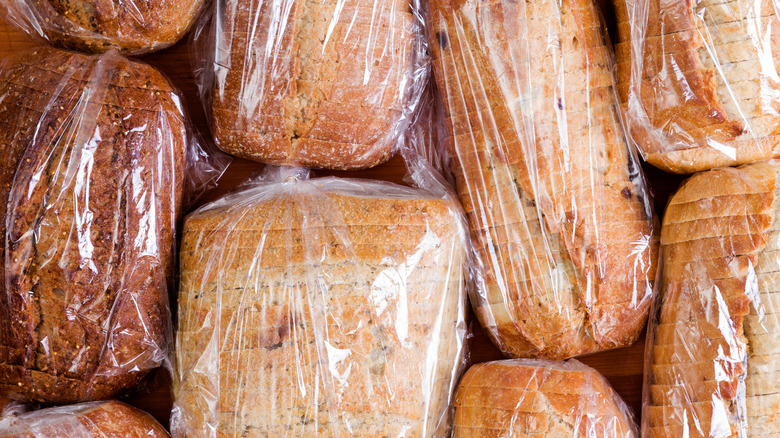
That plastic bag your bread comes in might seem like the best option for keeping it fresh for as long as possible. It seals up easily and is air-tight, but the reality is, a plastic bag is a storage mistake for bread. Instead of preserving bread for longer, this method of storage may be accelerating how quickly it's going bad.
The location and climate have a lot to do with how quickly bread molds or goes stale. If there is humidity present, plastic can trap moisture in the bag, creating conditions where mold thrives. In a dry environment, the plastic bag provides no airflow, which translates to the bread becoming stale. For example, on a hot summer day, opening the bread bag multiple times introduces moisture. The plastic bag that bread comes in can function as a storage solution if your kitchen isn't too dry or humid, and the bread is stored away from light and heat. You must also be good at remembering to correctly close the bread bag every time it's opened.
The most obvious sign that bread has gone bad is visible mold; it might look like patches of green, blue, white, or black. Unfortunately, if you spot any, the entire loaf should be tossed as mold spreads through bread faster than it appears on the surface. Trust your sense of smell: Bad bread will smell sour, musty, or off in a way that's clearly different from its normal yeasty aroma.
Better ways to store bread
How to best store your bread depends on how quickly you plan on eating it. For bread you plan to eat within a day or two, you can get away with leaving it out on the cutting board with the side that has already been sliced down, and the crust will protect the interior during this short time frame.
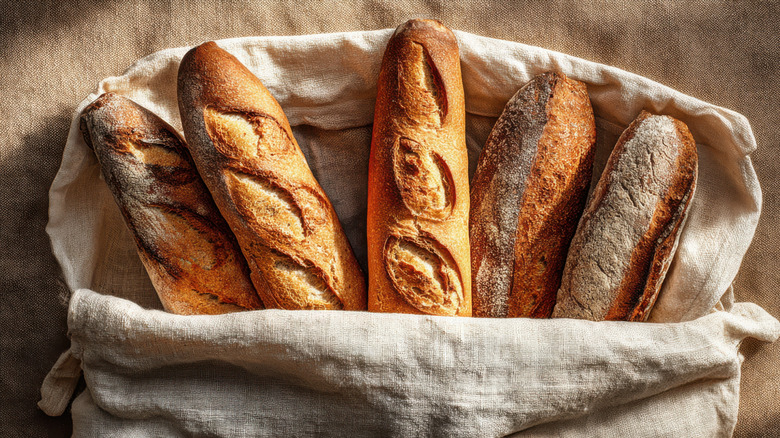
If it's longer than this short window, the best move is to transfer the bread from the plastic bag it comes from into another bag or box. Linen bread bags offer the best of both worlds — they still protect the bread, but allow sufficient airflow into the bag and don't keep moisture trapped. A reusable beeswax wrap, like the 3 Pack of Assorted Beeswax Wraps on Amazon, works similarly to plastic wrap, but it isn't airtight and keeps the bread fresh. Bakeries package bread in paper bags, but this doesn't mean they're the best storage option; the assumption is that the bread will be eaten right away.
A bread box is another classic solution. It's a contained environment with just enough airflow to regulate humidity and minimize moisture buildup, keeping the crust crisp and the interior soft. For bread you won't get through fast enough, turn to the freezer. Slice the loaf before freezing so you can pull out individual pieces as needed, and wrap it tightly with plastic wrap for minimal air contact, and then a plastic bag or layer of aluminum foil for another protective layer.