

What Happens To All The Leftover Food On Cruise Ships?
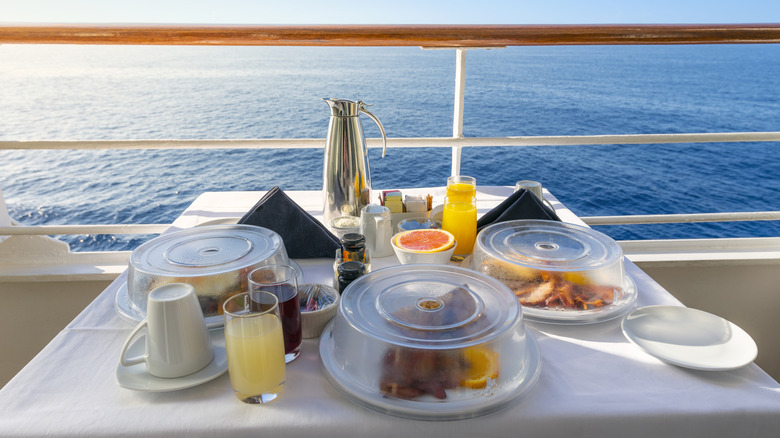
Food waste is a serious problem. The USDA estimates that 30% to 40% of the food supply is wasted in the United States, with implications that range from hunger and food insecurity to unnecessary pollution. At home and in most businesses, it's easy to put unwanted food in the trash and watch it disappear on a garbage truck. On a cruise ship, it's a trickier problem. The truth about cruise ship buffets is that their wide selection of food isn't always eaten, but since it can't be carted away regularly, where do the leftovers go?
Unlike at home, garbage can't simply leave a cruise ship, so the first consideration is to reduce the space it takes up in the first place. Many cruise lines use inventory systems that track uneaten food and adjust purchasing accordingly, since reducing overproduction is cheaper than managing waste. Also, some cruise lines offload usable surplus food to local food banks or charitable organizations when the ship reaches a port.
Other times, yes, food waste is dumped into the ocean. Cruise ships aren't permitted to dump regular garbage there, so once the food waste has been separated out, it's ground up and mixed with water until it's liquified. Then, it's pumped out of the ship. International law forbids cruise ships from disposing of food waste until the vessel is at least 12 nautical miles from the nearest land.
Cruise ships condense their waste as much as possible before disposal
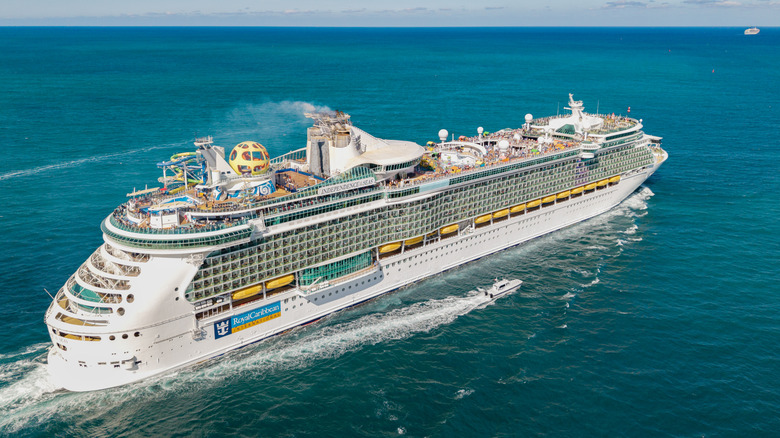
Each cruise line has its own ways of dealing with food waste, and some have adopted more modern versions of the liquefy and dump method. Many cruise line operators now have biodigester machines onboard that use microorganisms to break down food waste and reduce its size, with the remains then discharged with wastewater. Substances like plastic and cardboard go into a machine called the micro auto gasification system (MAGS), which burns garbage into ash. The MAGS functions like a waste-to-energy plant, using the heat created from burning the waste to generate energy.
Cutting-edge equipment and processing procedures aren't just a feel-good bonus. It's in cruise lines' interest to reduce the volume of food waste and reuse as much as possible to keep operating costs low. Due to regulations that prohibit or limit dumping, many lines have moved in this direction. For example, Princess Cruises uses gasification systems across the fleet.
These eco-conscious disposal efforts weren't always a priority. In 2016, Princess Cruises was fined $40 million by the United States government for intentionally dumping garbage and attempting to cover up the pollution. Despite this high-profile felony conviction, regulating waste in international waters remains infamously complicated. Maritime law applies to cruise ships, but ultimately, cruise lines are free to set their own standards regarding food waste management on board.