

Here's A Storage Tip For Longer-Lasting, Crispier Cucumbers
We may receive a commission on purchases made from links.
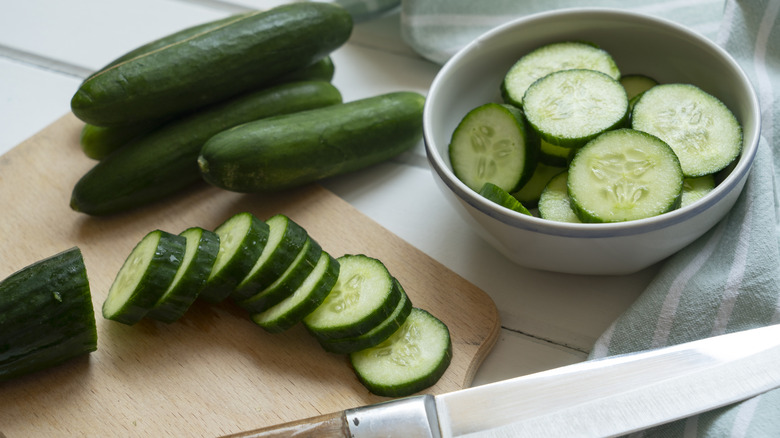
Whether you're stocking up on cucumbers to beat the hot weather or getting ready to make homemade pickles, you want them to stay cool and crisp, not soggy and sad. The good news is that there's a simple way to ensure optimal texture: Wrap your cucumber, then put it in the crisper drawer of the fridge. A tight layer of plastic wrap will do the trick, as will a reclosable plastic bag (just be sure to add a piece of paper towel to absorb excess moisture and discourage sliminess).
Moisture is actually the key to keeping cucumbers fresh and crunchy. It makes sense — cukes are about 95% water. Wrapping it will lock in the moisture that's already inside, preventing it from drying out and shriveling. English cucumbers are often sold wrapped in plastic for this reason. The plastic also protects their thin skin.
Cucumbers that are sharing the crisper drawer with other fruits and veggies should always be wrapped in plastic. Due to their thin skin, cukes are sensitive to ethylene gas, which some fruits and vegetables release as they ripen. The presence of ethylene can cause nearby produce to spoil faster. For cucumbers, this exposure can result in yellowing and mushy spots, but a layer of plastic wrap will keep the gas away. And don't worry, ethylene isn't dangerous to humans. It's a natural part of the ripening process for many produce items.
Cucumbers can last about 2 weeks if stored properly
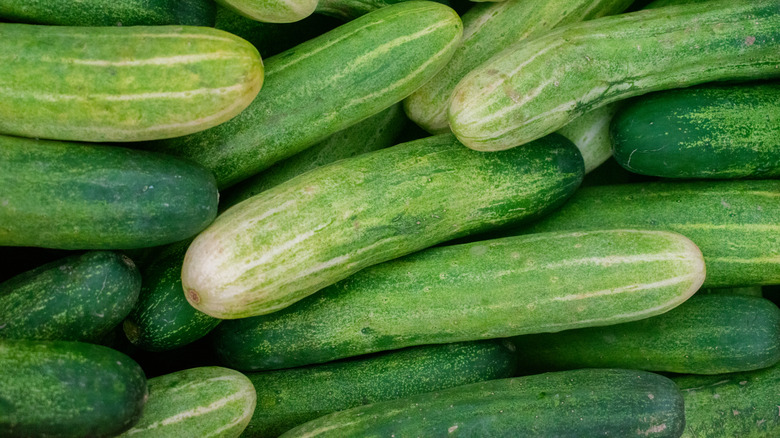
Your refrigerator is probably set to 40 degrees Fahrenheit (or a few degrees lower), but cucumbers are happier at around 50 degrees. To store them closer to this temperature, place them at the front of the crisper drawer. This is the warmest part because it's closest to the door and gets hit with room-temperature air when the refrigerator is opened. You could also store cucumbers at room temperature (around 70 degrees) if you plan to use them within a few days.
By wrapping a cuke in plastic wrap or storing it in a zipper storage bag, you can expect it to last up to two weeks, though it'll be at its freshest within the first three days or so. When you start to see wrinkly skin, a slimy coating, squishy spots, or visible mold, it's time to throw the cucumber out.
A cucumber that's slightly soft yet not fully mushy is past its prime, but that doesn't mean it's garbage. You can cut it lengthwise, then put the wedges in a glass or a jar, cover them with cold water, and let them sit in the refrigerator for a day. The cuke will reabsorb some of the water, bringing back some of its crispiness.