

Are Cloudy Eggs Safe To Eat?

The USDA reports that over 100 billion eggs were produced in the United States in 2025. Many Americans probably don't think twice about grabbing a carton in the supermarket, while some prefer farm-fresh eggs. Often, the farm-fresh variety has deep yellow or orange yolks, which can indicate differences in the hens' diets. Some of these eggs also tend to have cloudier whites, which may cause you to wonder: Is it fine to still eat them?
The short answer is yes. Although a foggy white might seem off-putting, there's nothing concerning about it in terms of food safety. You can't tell from the outside whether an egg white will have a cloudy look, but if you crack one open and notice this deviation, it can be a sign that the eggs are very fresh.
So why does the milky egg white indicate freshness? The foggy appearance is due to the natural presence of carbon dioxide inside the egg. Over time, that carbon dioxide will slowly escape through the shell. If the carbon dioxide is still present, it means it hasn't been that long since the egg was laid. Cloudiness by itself doesn't make an egg white taste any different from a translucent one.
Signs your egg has gone bad
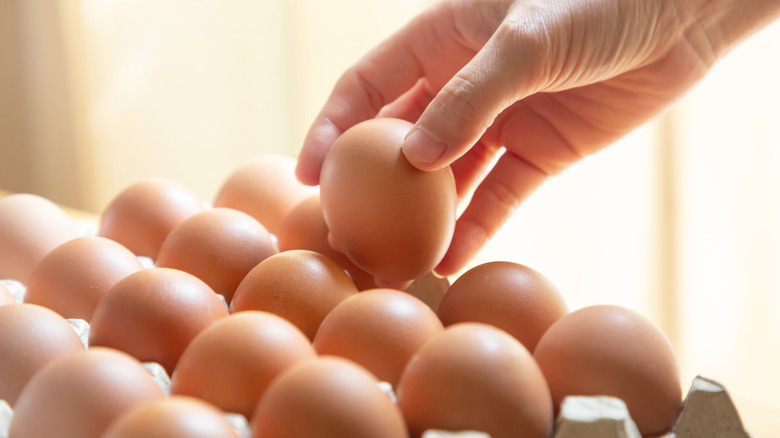
Although an opaque interior is a sign of a fresh egg, a foggy exterior might be a warning that it has gone bad. After all, knowing how to tell if eggs are still good is the ability to spot old eggs that are unsafe to eat. For example, a powdery coating on the shell can indicate rotting or bacterial growth. One caveat here: sometimes, it can simply mean the egg is a little dusty or coated with natural materials and can be eaten safely after being rinsed off.
If you're unable to gauge an egg's freshness by the appearance of its shell, the classic smell test may provide more certainty. Crack the egg and take a sniff. Rotten eggs have a strong smell, often described as sulfuric or sour. A raw egg that's still good shouldn't smell like anything at all.
One of the best ways to test an egg for freshness is to put it in water and see if it floats. Older eggs will float, while more recently laid eggs will sink. Over time, an egg loses moisture through its shell, and an air cell forms, making it buoyant in water. Something to keep in mind: water easily penetrates eggshells, so you'll want to dry and use float-tested eggs right away to minimize the risk of bacterial contamination.