

How Many Tablespoons Are In A Standard Stick Of Butter?
We may receive a commission on purchases made from links.
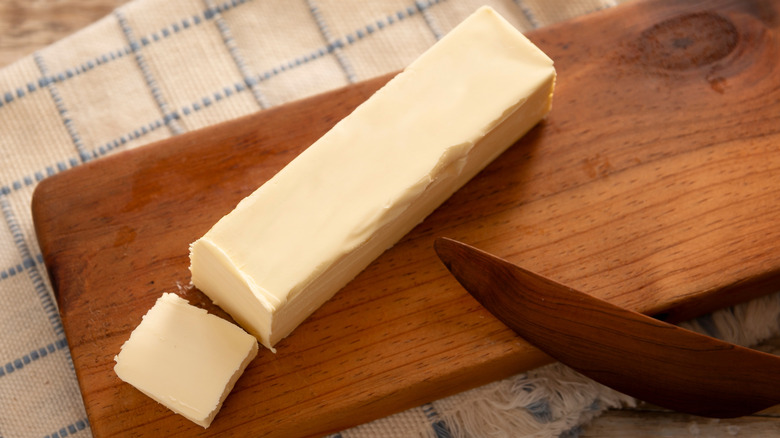
At this very moment, there is a humble stick of butter sitting in the refrigerators of millions of American kitchens. Baking recipes often call for half or full sticks, and every good mashed potato recipe requires several tablespoons of the beloved dairy product. A standard stick of butter is packaged uniformly, making it a lot easier to measure out. This standardization also means that commercially sold sticks of butter are equal to 8 tablespoons, or a ½ cup.
Not only is this knowledge convenient to have, but you don't even need to physically measure out the butter in tablespoons (or cups, for that matter). The butter's paper packaging is typically marked with lines that partition the stick by 1-tablespoon increments. This is handy when less than 8 tablespoons is required, and allows you to slice off the exact amount needed rather than spooning out the butter with a measuring spoon.
Most U.S. butter brands adhere to this style of packaging, including popular names like Land O'Lakes. Butter sticks on the East Coast have a different shape than West Coast butter – the sticks are thinner and longer – but both still contain the standard 8 tablespoons.
Not all butter products follow the same measurement rules
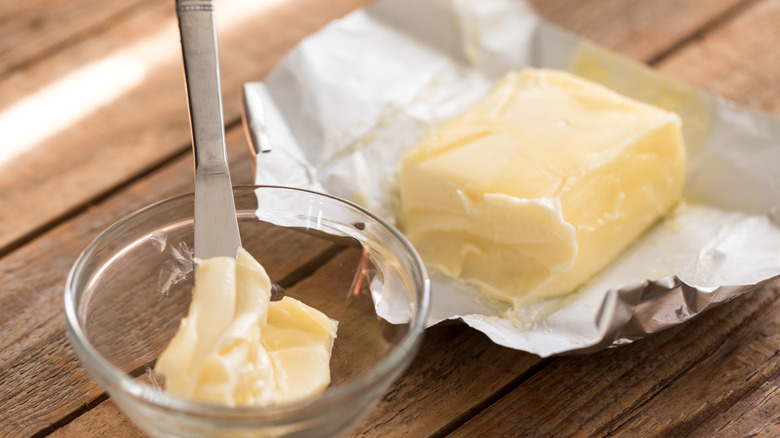
Although American butter sold in stick form feels very universal now, butter has not always been packaged this way. In the past, butter was often cut and sold from large blocks. Allegedly, a restaurant in New Orleans in the early 1900s asked its butter supplier to cut its product into sticks rather than blocks, and influenced how butter in America was portioned from then on. Today, restaurants and bakeries may still use larger blocks of butter, as they go through far more than the average home kitchen.
Imported butter from Europe that you see in the supermarket may look different for a few reasons. For example, Irish butter is different than American butter. Brands such as Kerrygold have a richer color and texture and are often sold in thicker, ½-pound blocks. Australia and Canada also use blocks, not sticks. If you're following a recipe from a website published in any of these countries, you'll likely see the amount of butter called for in grams. Sometimes, the marked lines are present on these butter packages to simplify measuring them out.
Alternative and specialty butters like whipped butter, spreadable butter blends, and plant-based butter can come in tubs, large blocks, or other differently sized packages. These, along with the European butters, can be a bit messier to measure during baking and are often better suited for spreading. When used in a recipe, consider weighing it out for more precise measurements.