

The Kitchen Appliance Rule You Should Never Ignore (It's A Fire Hazard)
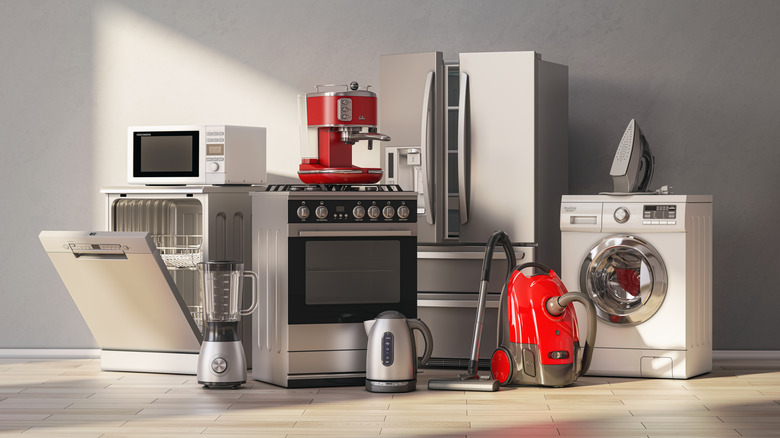
It goes without saying that one of the worst-case scenarios in any kitchen is a fire. By avoiding mistakes – ensuring that oil cooking in a pan never gets too hot , for instance — is one way to take steps to avoid catastrophe. But be mindful of another unsuspecting fire hazard: extension cords. The Electrical Safety Foundation International reports that 3,300 fires start in the home due to extension cord misuse. Kitchen appliances are no exception.
When an outlet isn't easily accessible or available in a kitchen, it isn't surprising that someone would reach for an extension cord or power strip. This, after all, is what you would do in the bedroom or living room to allow a lamp or something else to reach a faraway outlet. However, large, power-hungry kitchen appliances complicate matters. Because a refrigerator or microwave draws so much power, an extension cord is not safe to use; they should be plugged directly into a wall outlet.
When an appliance uses more power than the extension cord can handle, it could lead to overheating. This is especially true for risky kitchen appliances that generate heat, like a toaster. This can cause the cord to melt, expose wires, and spark a fire. According to ZDNET, a simple rule to remember is that any appliance that requires 1,800 watts of electricity should not be plugged into an extension cord. Obvious appliances on this list include refrigerators, air fryers, and crockpots.
How to safely plug in more appliances in the kitchen
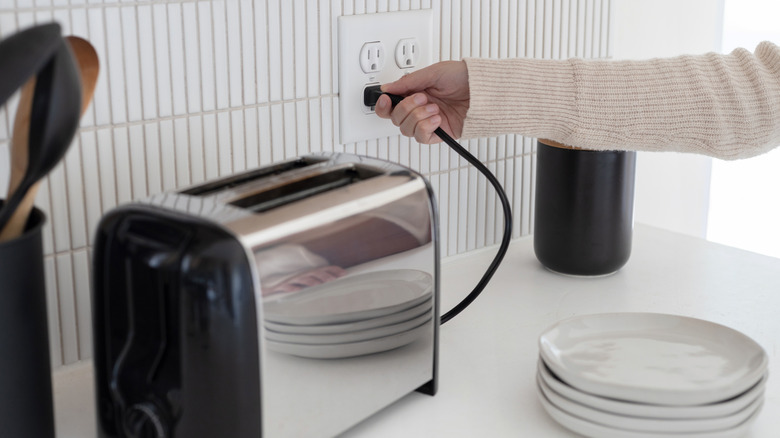
If you only have two or three outlets in the kitchen, reserve them for what you use the most. Naturally, the fridge needs to stay plugged in all the time, and you might appreciate having your espresso machine ready to use; however, it's easy to unplug something like a coffee maker to plug in a blender or air fryer, and the U.S. Fire Administration recommends unplugging a toaster when not in use. Consider setting aside one outlet for rotating kitchen tools as needed, and you could also practice minimalism by resisting niche kitchen appliances that chefs recommend not buying.
An outlet expander multiplies the number of sockets available for small devices and charging. These expanders plug directly into the wall, do not include a cord, and work well if you want to plug in multiple, low-watt items like a phone charger, lamp, fan, or even a small coffee grinder (typically 100-300 watts). Another plus to outlet expanders is that they often are surge-protected to prevent power spikes.
The safest solution is to have an electrician add more outlets in your kitchen. The simplest method is to add them to existing circuits, but it may be necessary to install new circuits or upgrade the electrical system (especially in older homes). While that is more expensive, it does allow you to select where the new outlets go, how many you want, and ensures that multiple high-wattage appliances can be used without tripping the circuit.