

The Grocery Store Germ Hotspot Many Shoppers Never Think About
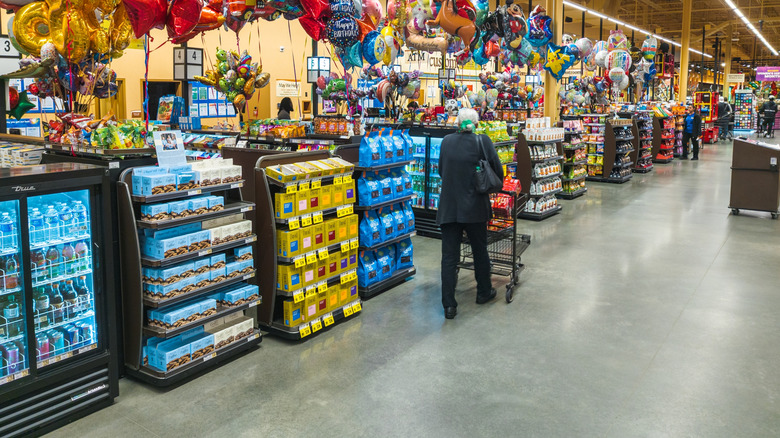
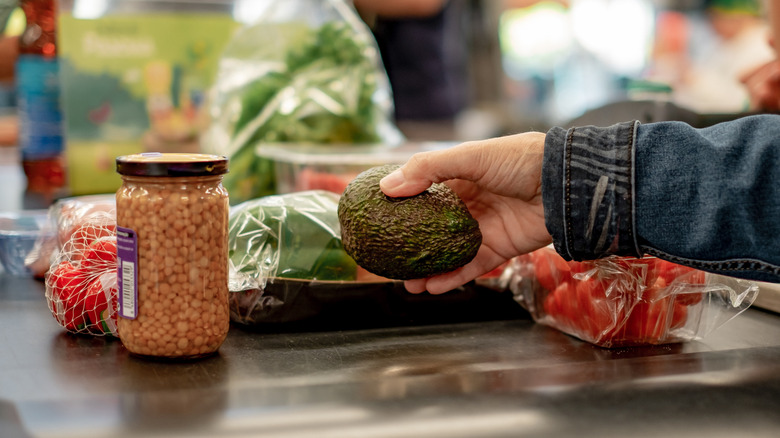
At the grocery store, if you place your apples, bananas, and other produce directly on the conveyor belt, you may want to think twice next time. Shopping carts get all the attention when it comes to grocery store germs — many stores now provide sanitizing wipes to clean the handles — the checkout-lane conveyor belt is another major germ hotspot you should know about.
Most grocery store conveyor belts are made of PVC, a plastic derived from petroleum products. PVC's durability makes it an excellent choice for long-term usage, but consistent exposure to food spills, moisture from fresh produce, and frequent touching can create biofilms, causing bacteria and other microorganisms to accumulate. In fact, a 2009 Michigan State University study of 42 randomly selected grocery stores found concerning levels of bacteria, yeast, mold, Staphylococcus aureus, and coliforms — bacteria native to human and animal digestive systems — on grocery store conveyor belts. All of the samples tested contained some or all of these contaminants, with bacteria taking the top spot.
While grocery store employees do try to clean conveyor belts during their shifts, as one cashier on Reddit pointed out, it's hard to keep them continuously sanitized between customers. So, what's being done to combat conveyor belt germs?
Avoiding germs in the grocery store checkout lane
Luckily for concerned shoppers, Mol Belting, which provides the majority of grocery store conveyor belt systems in the U.S. according to Progressive Grocer, developed an antimicrobial belt-cleaning system called Molchem in 2014. MessageWrap developed a similar antimicrobial belt coating now used by major brands like Albertsons, Target, Kroger, and others. According to Chain Store Age, Redner's Markets, a regional Pennsylvania grocery chain, installed MessageWraps in all of its stores in 2020 during the height of the pandemic.
Beyond these examples, however, there's no guarantee that your local grocery store is using one of these antimicrobial conveyor-belt cleaning systems at checkout — or that they're truly better at preventing germs. So, what can you do to limit your exposure?
The best way to avoid grocery store germs from conveyor belts is to not use them at all. Many stores now feature self-checkout stands without conveyor belts that instead use stainless steel and glass scales. If you do use a standard checkout lane, avoid putting fresh produce directly on the belt. Use produce bags, whether they're the plastic ones from the store or reusable ones from home. It's also wise to bag refrigerated meat since it can leak onto the conveyor belt. Lastly, avoid touching your face after a shopping trip until you can wash your hands. While there's no guarantee you'll completely avoid germs at the grocery store, a few extra precautions at the checkout lane may go a long way.