

3 Reasons Leftover Banana Peels Belong In Your Garden
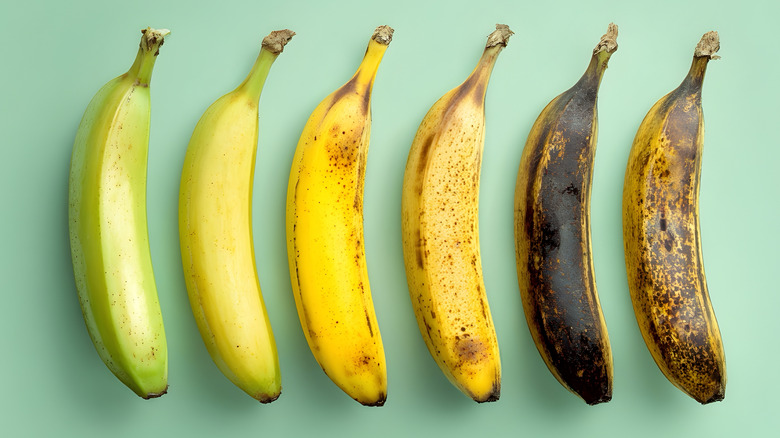
Making a fresh batch of three-ingredient banana bread is a great way to use up overly ripe fruit to reduce waste in the kitchen. But what about all those peels? While banana peels are actually safe to eat, often these kitchen scraps are simply bound for the trash. If you don't fancy whipping up a plate of banana peel bacon, consider saving the peels for the garden.
Banana peels contain nutrients that support plant health and growth, including potassium and phosphorus, and they can be put to use in several handy ways around the garden. The trick is using them intentionally; tossing whole peels directly around plants can attract pests and take a long time to break down, so the best methods involve chopping, composting, or soaking the skins. Used this way, banana peels can support your garden as mulch and fertilizer, and enhance the nutritional content of soil, all while keeping food waste out of the trash bin.
Add banana peels to compost
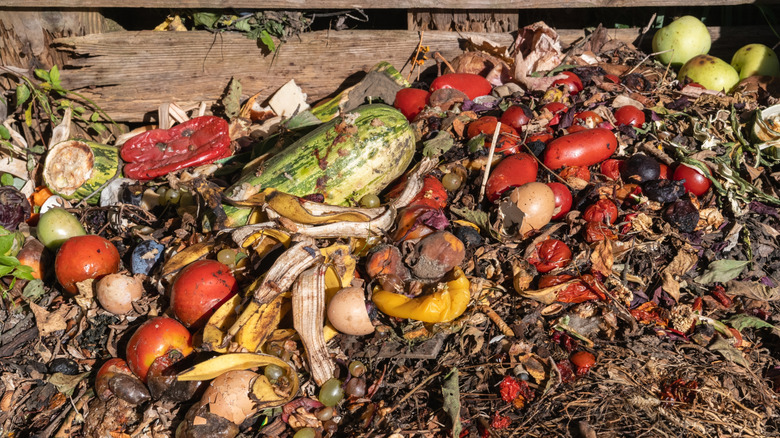
If you already have a compost set up, composting is one of the most straightforward ways to use banana peels in the garden. The compost pile gives peels the warm, microbe-rich environment they need to break down properly. Once decomposed, those scraps become part of a rich soil that can be mixed into garden beds or added around plants that benefit from extra organic matter.
This method also avoids the problem of attracting pests when laying the peels on top of the soil. Composting gives the peels time to break down first in a protected environment. You can add them to the compost whole, but to break them down faster, chop them into smaller pieces before adding them. Compost best practices include aeration and regularly turning the mix to ensure it gets proper exposure to air to aid decomposition; if a banana peel were simply stuck in the garden dirt, it would take much longer to break down.
Banana peels are a wet material, and compost should have a balance of dry and wet materials – so add them in with dry materials, such as leaves or shredded paper. If you already see seeping liquid or pooling water, don't add more wet fruit scraps.
Use banana peels as mulch
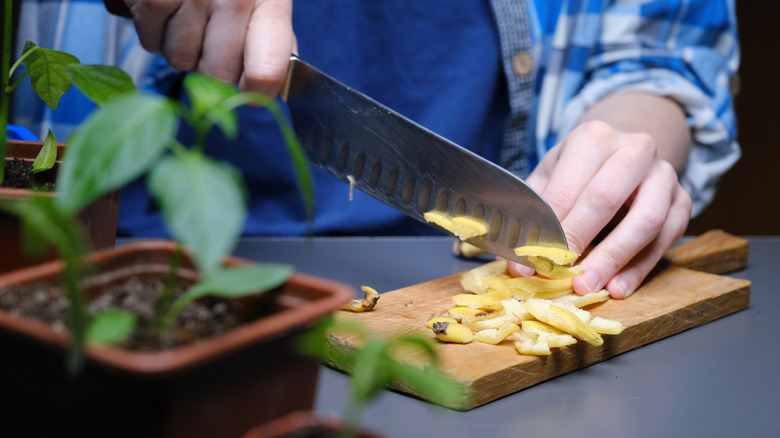
Another reason why you shouldn't throw out banana peels is that they can work as a slow-release mulch. Think of mulch as a protective layer that covers the soil and plant roots, protecting them from moisture loss and weeds. However, this does not mean tossing whole peels around your plants and hoping for instant results. Larger exposed pieces sitting on the soil can attract pests and bugs as they decompose, so the peels are best used chopped up into smaller pieces.
The smaller bits can then be combined with mulch options like wood chips, straw, or grass clippings to form the protective layer. Then, as the peels gradually decompose, they add organic matter and nutrients. The banana peels can contribute nutrients such as potassium, which supports overall plant health, and magnesium, which is key for photosynthesis.
If you don't want to make the effort of chopping the peels, place them directly on top of the dirt around the plants. Then, cover the peels with another type of mulch; this creates a multi-layered mulch while also ensuring the peels aren't attracting pests.
Turn banana peels into a liquid fertilizer spray
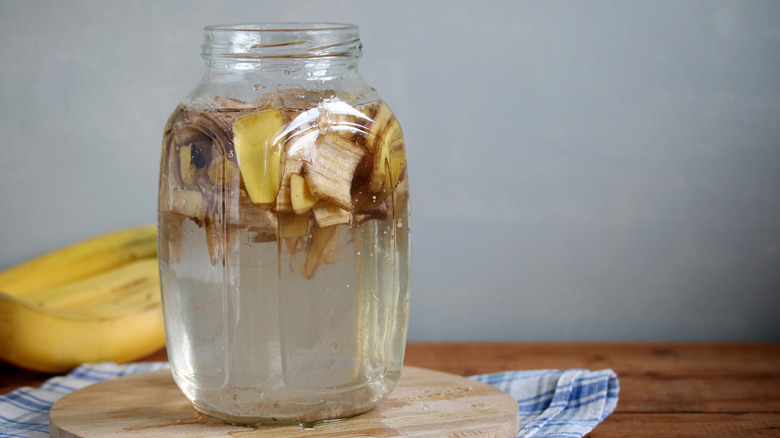
Finally, banana peels can be used to create a natural fertilizer. Fertilizers are used to provide plants with an extra boost of nutrients to support growth and increase yields. Banana peels contain many nutrients normally found in fertilizers, such as calcium, magnesium, potassium, and phosphorus.
This involves cutting the banana peels into small pieces, covering them with water, and letting the mixture sit for two days to up to a week. This can be strained, and the used peels composted. The infusion can be diluted with a bit of water and added to a spray or squirt bottle to feed plants by spraying around the base. There is an additional benefit to this spray: It can also repel pests when sprayed on stems and leaves.
If you don't have the patience to wait for the peels to soak in water, blend the peels with water and pour the thick mixture into the soil. For this method, it is important to cover the blended mix with a bit of soil so it's not directly exposed and attracting animals or insects.