

Where Is The Dragon Fruit Capital Of The World?
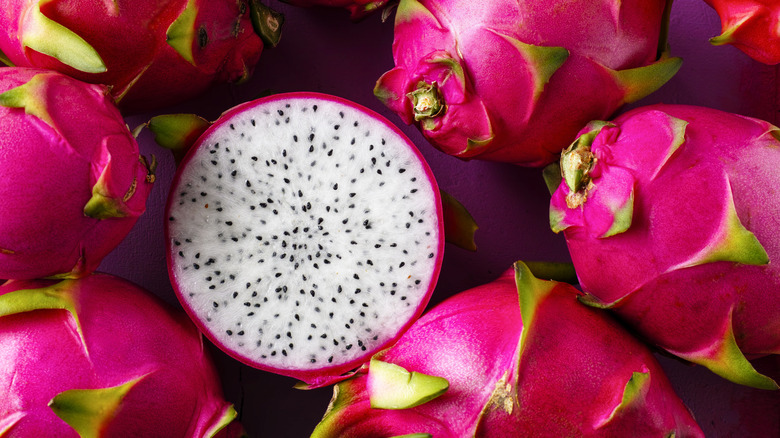
Whether you call it dragon fruit, pitaya, strawberry pear, or night-blooming cereus, this tropical delight has made a splash on the international stage. Characterized by a spiky, pink exterior and speckled white or red flesh, it stands out as one of the most aesthetically pleasing fruits (at least according to Reddit). While many countries grow this food, the undisputed dragon fruit capital of the world is Vietnam. The 2024 Global Fruit Market Report found that the country produced over 95% of the world's exports of that crop (via the Vietnamese newspaper Tap Chi Viet Nam Huong Sac). A prolific dragon fruit grower, producing around 1 million metric tons annually (via FFTC Agricultural Policy Platform).
The 55,000 to 60,000 hectares dedicated to the spiky fruit are divided between three main regions: Bình Thuận, Tiền Giang, and Long An. Also known as the Dragon Kingdom, Bình Thuận produces the most dragon fruit of the three, according to a book published by Chapman University's Institute for Earth, Computing, Human and Observing. Since dragon fruit is in the cactus family, the fruit can survive drought and thrives in Bình Thuận's relatively dry and sunny climate.
While Vietnam is clearly the capital of dragon fruit production, it's not the only country that grows it. Dragon fruit grows throughout Southeast Asia, South America, and the U.S., with countries like China, the Philippines, Malaysia, Taiwan, Colombia, and Mexico as top producers behind Vietnam. Even though you can find growers in California, Hawaii, and Florida, the U.S. still mainly imports this product from Vietnam and elsewhere in Southeast Asia. As a result, dragon fruit often comes with a high price tag.
Dragon fruit's rise in Vietnam
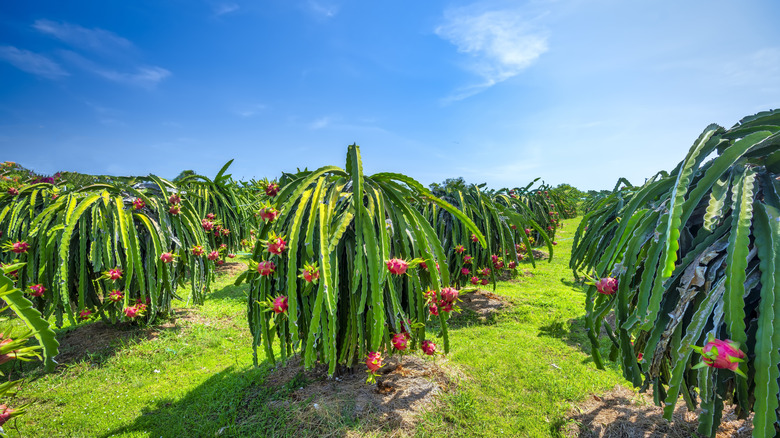
Despite Vietnam's reputation for dragon fruit, it isn't native to Southeast Asia. This unusual tropical fruit, known in Vietnam as thanh long, appeared in the country after the arrival of the French in the 1800s. Colonists likely used the plant ornamentally, decorating their gardens with it. They brought it over from the Americas, where it originated in countries like Mexico and Colombia.
Commercial dragon fruit production, however, didn't begin until the 1980s, a decade during which Vietnam saw an economic boom due to sweeping political reforms. As the fruit became a popular export, farmers kept up with demand by developing new technologies. One of the most famous was nighttime farm lighting, which allows for year-round fruiting of the already prolific plant. The bright lights have become an iconic part of Southern Vietnam's landscape and are even part of travel tours throughout the year.
Dragon fruit has become an important part of Vietnam's economy. While China is the largest consumer of the tropical fruit, it's highly prized locally, too. Vietnam holds many fruit festivals, such as the Dong Thap Fruit Festival in the Mekong Delta, where dragon fruit is a featured product. People enjoy consuming it in both fresh and dried forms and even use it to make tea. It's also featured in a number of local dishes, such as salads, soups, and stir-fries. Although other countries are expanding their production, Vietnam's influence continues to set the standard for the global dragon fruit industry.