

Does Almond Milk Expire?
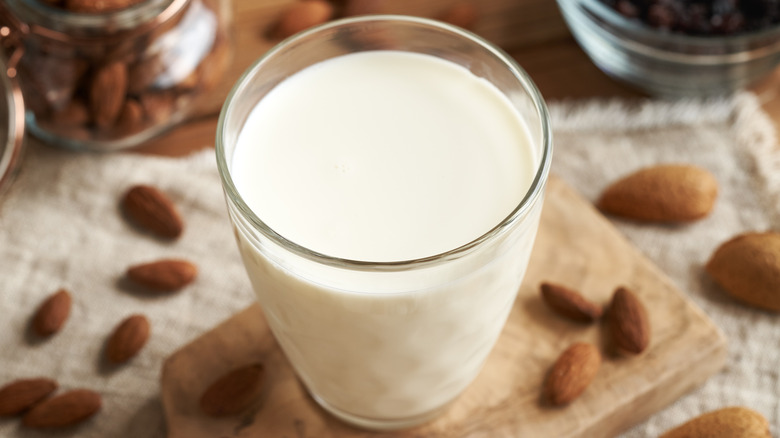
Almond milk is the best-selling dairy-free milk in the United States, and it was popular long before the plant-based food craze. It's made from almonds that are blanched, peeled, and ground up before being mixed with water, flavorings, and sweeteners. If almond milk is made with nuts and water, does it still expire? The answer is yes. In fact, you should treat it similarly to dairy milk.
Plant-based items spoil just like foods made from animal ingredients do. Unopened almond milk sold refrigerated will generally last until the date printed on the container, but once you break the seal, it's good for about a week. Unopened shelf-stable almond milk will last up to two months when stored in a cool, dark place, but it expires in about 10 days once opened and refrigerated (Our guide to the best and worst almond milks includes both types). Homemade almond milk typically lasts a maximum of five days. Like regular dairy milk, almond milk shouldn't be kept open and unrefrigerated for more than two hours. If you want to extend the shelf life, you can freeze almond milk for up to six months – just be aware that it will separate, and you'll have to give it a good shake when it thaws.
Other food-safety tips to know about almond milk
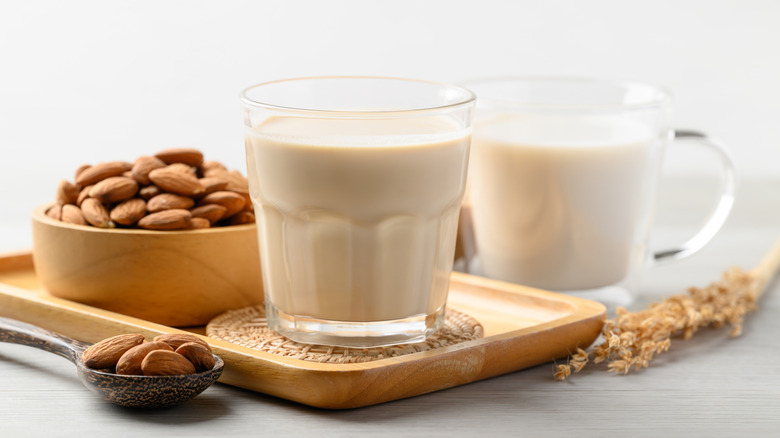
Once you open a container of almond milk, it should be kept below 40 degrees Fahrenheit in a closed container. Just like dairy milk, the exact shelf life of almond milk will depend quite a bit on the brand, how long it sat on the shelf before coming home to your kitchen, and how well it's been stored along the way.
Almost all commercially sold almond milk has been pasteurized. This involves quickly warming the milk to 280 degrees Fahrenheit, then cooling it just as fast, killing any existing bacteria. In the event that bacteria are present in your almond milk (especially in the case of homemade almond milk), they grow most rapidly between 40 and 140 degrees Fahrenheit, so avoid keeping the milk in that range.
How can you tell if your almond milk went bad? You're likely already familiar with the best tests to check it. A sour or rancid smell is a sure sign of a spoiled product and should be discarded. If you see chunks or lumps in the milk, try shaking it; if they remain, it's likely gone bad. (Separation is not necessarily a sign of spoilage, but a quick shake will fix that.) Or, if the carton looks bloated, it could be a sign of microbial growth inside. In each case, it's best to toss it if you're unsure.