

Snake-Filled Whiskey Has Some Of The Most Unforgettable Bottles You'll Ever See
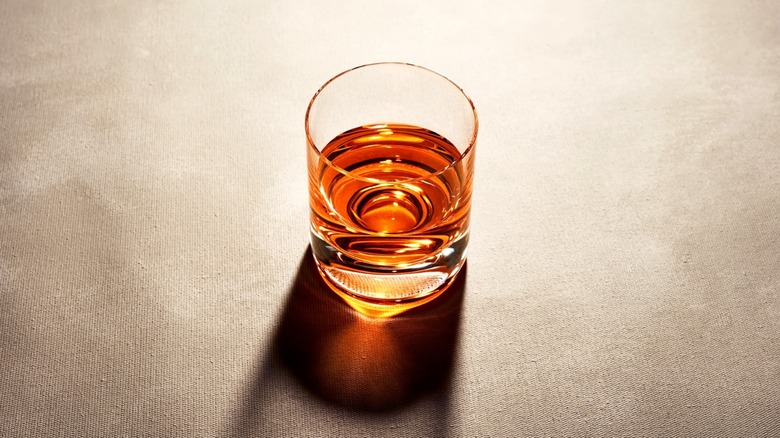
Picture this: you pop into this well-known bar in the Philippines for the first time, and everything looks as you might expect. Except, of course, for an ominous-looking bottle on one of the shelves. At a glance, it looks like something out of a biology lab, but it gets even more extreme the longer you take things in. There's a whole snake suspended in a pale yellow-brown liquid, and it's surrounded by scorpions. Then, the bartender grabs the bottle, pours out a shot, and offers you a try.
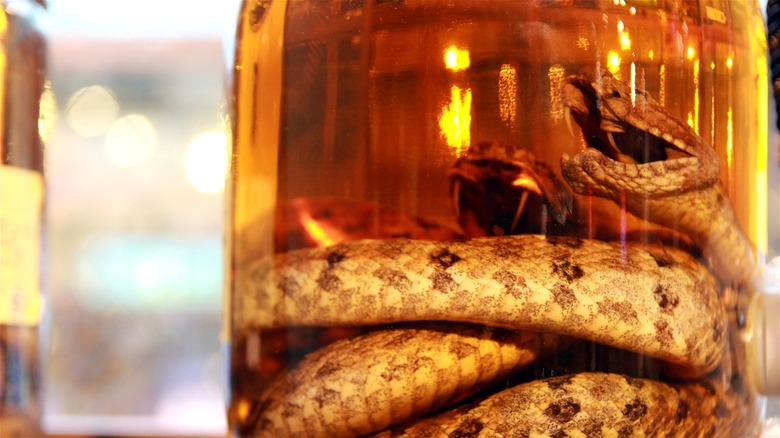
What you just tasted was snake whiskey, a traditional beverage most commonly found in parts of East Asia and Southeast Asia. Snake whiskey (also traditionally known as snake wine) is made by submerging a snake inside a bottle filled with a spirit and letting it ferment over time. Whether it's alive or not when this happens depends on the recipe. While different countries use different snakes, it's said that the most venomous species make the best whiskey.
Over time, the ethanol in the liquor neutralizes the snake's venom and makes it safe to consume, although there has been at least one case where someone temporarily developed blood coagulation problems after drinking it. According to a 2014 story in Metro, snake whiskey appears to be a part of North Korean leader Kim Jong Un's regular diet, and he seems fine as of 2026 — at least, as far as dictators go.
Despite its looks, snake whiskey is medicinal, not recreational
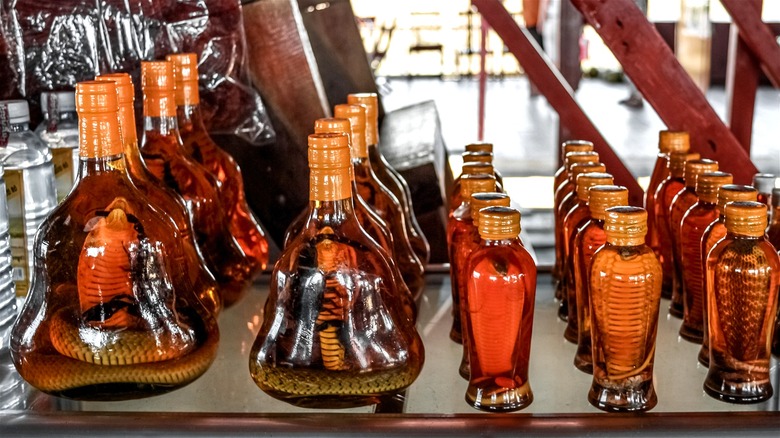
As intimidating as a bottle of snake whiskey might seem on the surface, it's actually the product of thousands of years of traditional medicine, just like silkie chicken soup. One of the earliest written records of people drinking snake whiskey dates all the way back to 770 B.C. China, where it was supposedly used for pain relief and as an aphrodisiac. It was also said to help with hair loss, rheumatism, fever, far-sightedness, and leprosy, among a host of other ailments. While the booze can still get you tipsy, this isn't snake whiskey's primary aim.
Snake whiskey isn't alone in its medicinal origins. Many liquors we enjoy today were originally made to treat illnesses. For instance, absinthe may have been called "the green fairy" because of its brilliant emerald color and high alcohol content, but its earliest version was a vivid green herbal medication used to prevent malaria and dysentery among French soldiers in the 1840s.
That said, the liquor's appearance can't help but stir a sense of curiosity among those who see it for the first time. Reddit is flush with tourists posting photos of the bottles they spot on their travels, with many trying snake whiskey for the same reason one might have for tasting some of the world's most unusual booze brands — to satisfy their sense of adventure.
If you're going to try snake whiskey for fun, prepare your taste buds
One of the most common questions people might have when they see a bottle of snake whiskey is whether or not it actually tastes good. Based on several accounts, it's best to manage your expectations. If you're thinking it might taste like a classic snake bite shot, you couldn't be farther from the actual flavor.
Food blogger Eddie Lin said that the cobra wine he tried tasted like rice wine mixed with chicken and a hint of fish (via BBC). Whether or not that's a good thing depends entirely on the taster. A writer for VICE who drank snake wine infused with geckos for a story in 2015 described it as "a meal in a shot glass" — almost like lemonade, but with a touch of seawater, soil, and flesh. One Reddit user said it tasted exactly like dead snake.
The bigger challenge might be getting ahold of snake liquor in the first place. It's rare enough in the U.S. that you might have to turn to specialty shops like Thailand Unique to buy a bottle, and stock may not always be available. Bringing it into the country is also a little tricky. U.S. Customs and Border Protection says some bottles may be prohibited if they contain endangered species.