

Why Don't You See Much Ranch Dressing Outside The US?
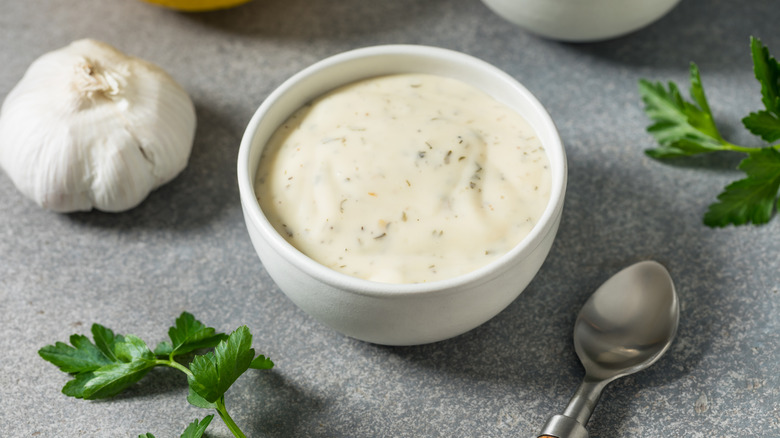
Ranch dressing has become so synonymous with American culture it's referred to as "American flavor" in other countries, according to Forbes. The creamy, buttermilk-based dip and dressing is everywhere these days, especially at fast food places and chain restaurants. It's a dip for french fries, Buffalo wings, and, most controversially, pizza. It's used on salads, wraps, and sandwiches. But why isn't ranch as ubiquitous outside the U.S.? The simple answer is it's a quintessentially American creation.
The dressing started as a niche product in Santa Barbara, California, on a dude ranch called Hidden Valley Ranch. Yes, the famous brand was a real place. Originally, Hidden Valley sold ranch as a dry seasoning mix that their customers could combine with buttermilk and mayonnaise at home. Although not unique to the U.S., those ingredients may help explain why ranch remained largely an American phenomenon. Buttermilk has deep roots in American cooking, particularly in the South, where it's used in everything from fried chicken to biscuits. Although mayo has European origins, its popularity skyrocketed in the 1950s as an American convenience food, showing up in several recipes we now find largely questionable.
Ranch likely never caught on outside the U.S. because it wasn't marketed that way. As food historian KC Hysmith told the BBC, "[The dressing] grew popular because it had this association with dudes, cowboys and ranches," painting a very American picture. That branding helped make ranch feel distinctly American, making it harder to translate to cultures with their own established foodways and flavors.
Can ranch dressing catch on internationally?
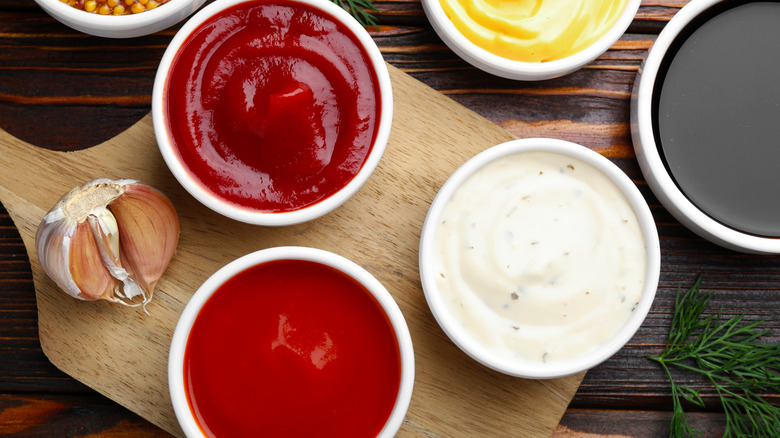
Even though ranch started as more of a sauce or salad dressing, these days it's most often seen as a dip. While dip options are plentiful and often have a cultural connection, ranch often accompanies fried "American" foods at restaurants. Unless you're eating at an American restaurant abroad, you likely won't have access to ranch while dining out. Other countries have their own popular dips and dressings that use culturally appropriate ingredients, often with a long, storied history.
In other words, ranch doesn't really fill a culinary gap overseas. The U.K. has salad cream, Lebanon has toum, France has tartar sauce, the Mediterranean has aioli, and so on. In many Asian and African cuisines, however, dairy isn't a common ingredient, likely due to the high incidence of lactose intolerance in these areas. But that doesn't mean ranch is completely unknown abroad. It's often available at grocery stores in English-speaking countries, including Canada, Australia, England, and Ireland. As interest grows, ranch manufacturers are popping up overseas, preferring locally made versions over importing U.S. brands.
But the 2026 World Cup may have given ranch a boost on the international stage. As foreign visitors descended on the U.S., their reactions to trying ranch went viral on social media. One British visitor even reportedly packed $300 worth of ranch bottles into his luggage to take home, according to the BBC. Ranch OG Hidden Valley also launched a Ranch-bassadors program over the summer to show just how well ranch pairs with foods across Europe. If anything, it may simply be that people haven't had enough opportunities yet to discover what Americans already know: that ranch goes with almost everything.