

5 Tips For Buying The Best Grocery Store Ground Beef
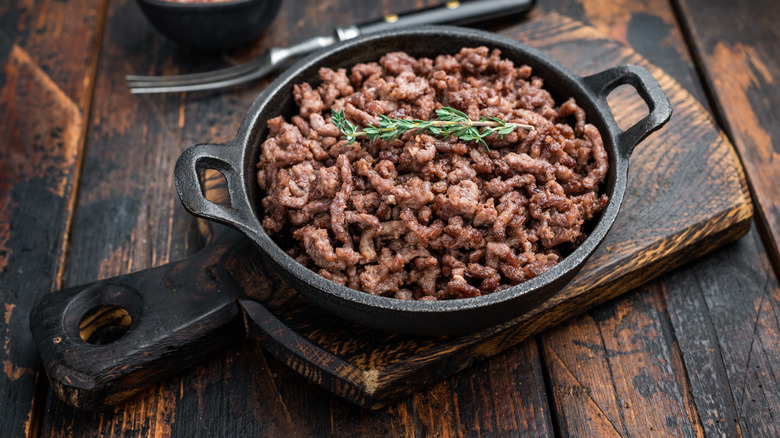
When shopping for animal-based proteins, ground beef stands out as a delicious, often affordable option, especially compared to whole cuts of meat. It is also quite versatile and can be used in many different cuisines, from Italian wedding soup to a cheesy taco skillet. At the grocery store, you might be inundated with all sorts of labels on ground beef packages that make it confusing to know what to buy. There are a considerable amount of mistakes you are probably making with ground beef (only looking at the prepackaged meat is one of them), so how, then, do you choose the best ground beef?
There are five main tips to consider when looking for ground beef. The first is to think about the kinds of meals you often make and choose the beef that will taste best for those dishes in its ground form. Grind size matters, and so does the USDA label, whether it is "Prime", "Choice", or "Select". Take note of the date when the beef was ground, and most importantly, for shelf-life purposes, remember that the appropriate packaging ensures the ground beef you buy will last as long as it's supposed to. Let's explore these points one by one.
Choose the type of ground beef specific to your recipe's needs
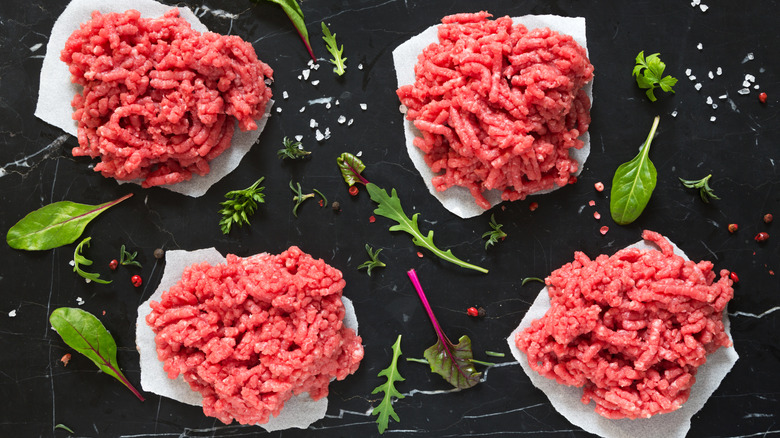
The most important tip for choosing the best ground beef is to know ahead of time what you are going to be using it for. Ground beef is often made from specific cuts, and just like the unground version, different recipes will benefit from specific cuts. Take burgers, for example. You may not want something too lean, so look for ground chuck or ground brisket (you can also use a blend of ground cuts in the patties). If you are making cottage pie (the beef version of shepherd's pie), you might prefer meat that won't render off too much fat, so look at leaner cuts like sirloin or flap meat.
This leads into a related tip concerning fat ratios. Many pre-ground beef packages will state the ratio of lean meat to fat, with an 80/20 ratio often touted as the most versatile – it's also Bobby Flay's preferred burger ratio rule. A 90/10 ratio works well for recipes that have other added fats, like butter and oil. An 85/15 ratio is the sweet spot that works for dishes like meatloaf or meatballs, where you want enough fat to carry the flavor but not so much that it becomes too greasy.
The importance of grind size
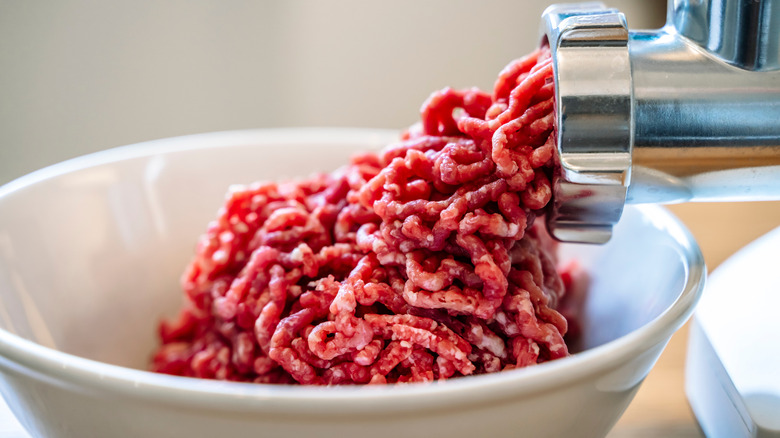
One of the meat's attributes you may not think of paying attention to, but should, is the grind size. Ground beef's grind size is key for the texture you want to impart in the dish. What does the term "grind size" mean here? A meat grinder has a set of grinding plates with different-sized holes that can be changed out. The ground meat forced through the holes of a grinding plate will have a grind size that corresponds to their diameter, whether it be a fine mince, a medium mince, or a coarse or large grind.
How does this translate to recipes? A coarse grind is suitable for dishes like chili, where you want small pieces of beef that can still stand up against the bulk of kidney beans. Using a fine mince for beef chili would likely end up as a thick bean soup that tastes beefy, because the meat's texture gets lost. A medium mince works for burger patties, where you want bite but not to the degree where the meat crumbles apart too easily, which can happen with a coarse mince. A fine mince is good for dishes like meatballs, where textural uniformity is important to the eating experience.
Check the USDA label
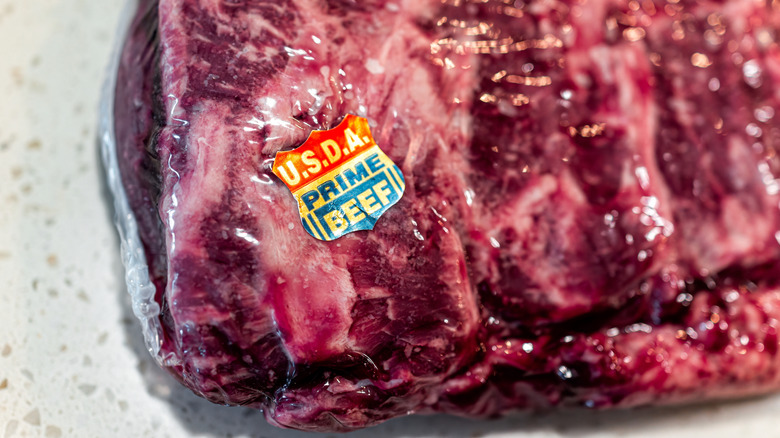
The USDA labels for beef encompass a detailed range based on two main features: quality and yield. Per the USDA website, "Quality grades for tenderness, juiciness and flavor; and yield grades for the amount of usable lean meat on the carcass." The three commonly seen USDA labels on grocery store beef are "Prime," "Choice," and "Select". For those asking the butcher behind the counter to grind their beef, these labels are useful for determining the amount of fat marbling on a particular cut. Sometimes, you will also see packaged ground beef marked with the corresponding USDA label.
What do these USDA labels actually mean? "Prime" beef is often the most expensive, and it is what you may get in high-end restaurants and hotels. You could get Prime ground beef, but it can be unnecessarily luxurious since the meat isn't whole. "Select" and "Choice" are your best bets, as they have sufficient marbling and would taste good whether or not they are ground. There are other grades, but these are either not explicitly labeled or not available for purchase as a standalone grocery item. For example, the "Cutter" and "Canner" grades tend to be sent to factories to be processed further into ground meat products.
Look for the freshest ground meat
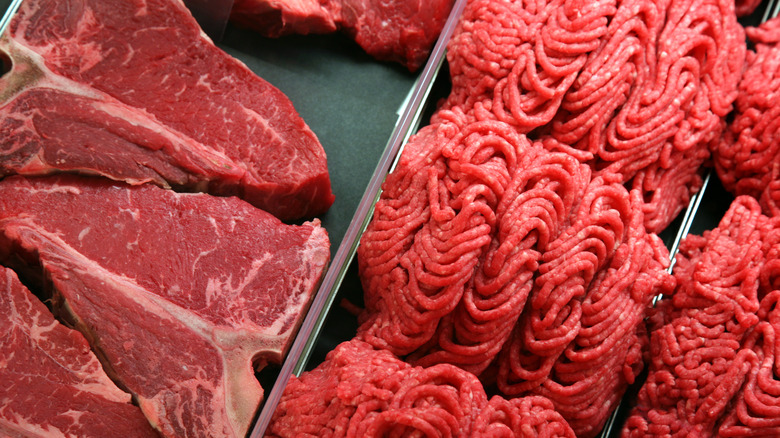
What does it actually mean when ground beef turns brown? Like many natural products, beef is sensitive to the color-changing effects of oxidation. Oxidized beef does not equate to spoiled beef and is perfectly fine to eat, even if it may not be aesthetically pleasing. With ground beef, the surface area of the meat has been maximized, so it oxidizes much faster than a regular cut. If this is something that is concerning to you, consider getting the freshest ground beef possible.
Prepackaged ground beef will have a label stating when it was ground and packed. Choose the package containing meat that was ground in the store that day, or as close to the current date as possible. While grinding meat in stores is becoming less common, there are some grocers that still grind beef upon request, including Whole Foods and Sprouts Farmers Market, which hire trained butchers. When ordering freshly ground beef, choose your preferred cut of meat and lean-to-fat ratio, or even tell the butcher what you are planning to cook, and they will take care of the rest.
Consider the type of packaging
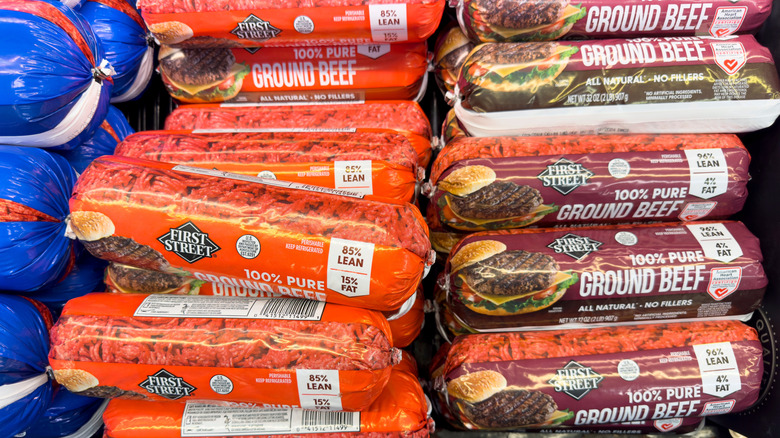
Every home cook has their own version of pantry staples, a steady supply of ingredients they always keep in stock. This does not have to be confined to dry ingredients — the fridge and freezer are also places to store your staples. Consider keeping ground beef stocked as a freezer staple for its affordability and versatility. In this case, opt for ground beef that has been packed into tubes or vacuum-sealed. These types of packaging have little to no exposure to air and stack well inside a freezer for long-term storage.
Planning to use ground beef on the day of purchase? Just go with typical overwrapped packaging, where ground beef is placed on a styrofoam tray and covered in plastic wrap. As a middle ground, you can store overwrapped ground beef in the freezer within two hours of purchasing to prevent further oxidation and defrost for use before the "best by" date. Ground beef can technically last for three to four months in the freezer, but it should be preserved in airtight packaging (or vacuum-packed) to minimize freezer burn.