

3 Tips To Identify The Spiciest Jalapeños At The Grocery Store
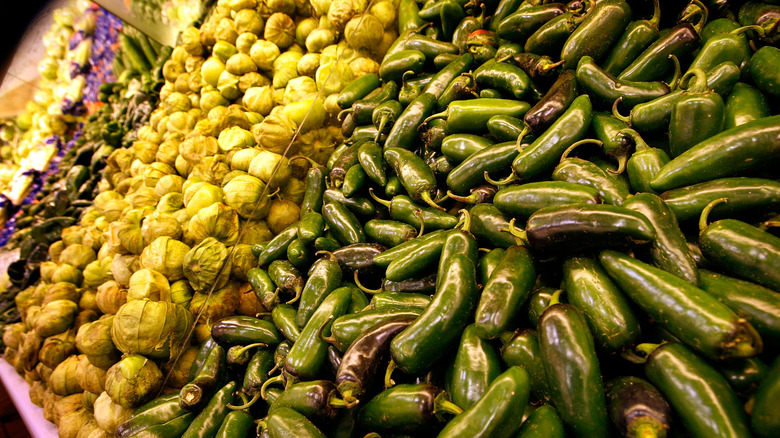
How spicy is a jalapeño pepper? There's no single answer to this question, as some jalapeños are hotter than others. These chiles get their signature spice from a compound called capsaicin in the membrane and seeds, but the amount of capsaicin can vary enormously from one specimen to the next. So what should shoppers look for when they're seeking out jalapeños on the highest end of the spice spectrum?
Keep an eye out for a pepper with striated skin (it looks a bit like wrinkles and is called corking) — it can indicate a mature pepper that's built up more capsaicin. Smaller jalapeños can be spicier, too. And look for jalapeños that have a deep, rich color. Those with a red tint will generally be spicier than brighter or lighter green ones.
One important note about heat levels in these jalapeños: a pepper's heat is measured on the Scoville scale, with sweet bell peppers measuring zero Scoville units and Carolina reapers measuring between 1.4 and 2.2 million Scoville units. Jalapeños are on the lower end of the scale, coming in at 2,500 to 8,000 Scoville units. In other words, there are many popular types of peppers that are spicier than a jalapeño. If your main priority is finding the spiciest jalapeño on the shelf, these tips will guide you in the right direction.
Corking can indicate higher spiciness
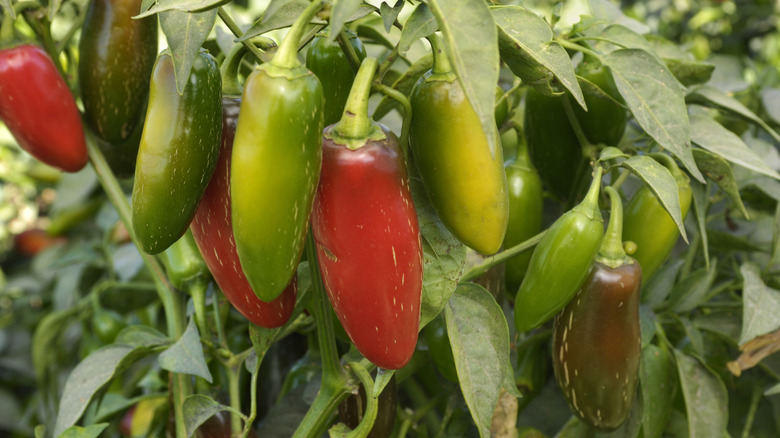
The texture and appearance of a jalapeño's skin can be telling of its heat level. Imagining the perfect jalapeño may conjure an image of smooth green skin, but one with thin, light brown striations called corking running from end to end is often spicier (this is not to be confused with peppers that are wrinkly because they're older and losing moisture). This corking may also be referred to as stretch marks, because that's exactly what they are.
Corking naturally develops on jalapeños and other peppers as they grow. The presence of many striations indicates that a chile has gone through more growth periods and is more mature. Peppers tend to develop a higher concentration of capsaicin as they grow, which is why they generally have more heat.
If corking looks a bit scary to you, don't worry. These stretch marks don't suggest any flaws in the taste or freshness – they're simply the aftermath of a growth spurt. The interior of the pepper grew faster than the skin, causing it to break and then heal over (corking often occurs after heavy rainfall). The skin is still edible and won't taste different from the rest of the chile, but the pepper as a whole may be hotter.
Smaller jalapeños tend to be spicier
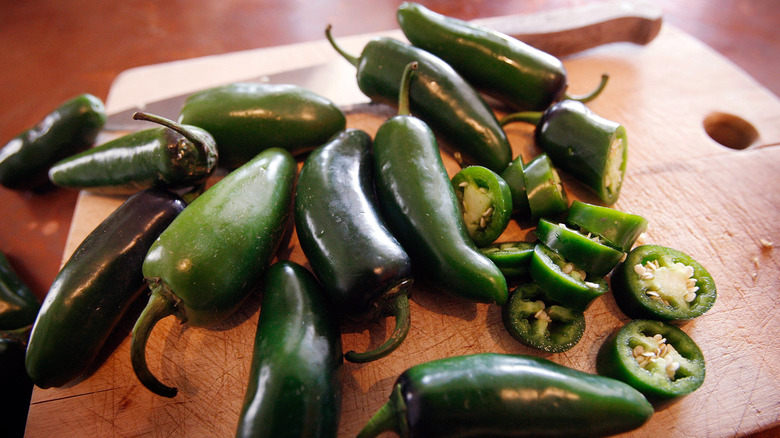
Across all types of peppers, smaller varieties are typically spicier than larger ones. You might already know this from experience: Large poblano peppers (almost the size of a bell pepper) have minimal spice, while jalapeños are spicier. Petite chiles like serrano are hotter still, and wiry cayenne peppers beat all three on the Scoville scale. The same basic guideline holds true for individual peppers within a single variety, so smaller jalapeños are often spicier than bigger ones.
Small, dense chiles hold their capsaicin in a more concentrated area, increasing the spice level. Relatively speaking, smaller peppers have more seeds and membrane (where the capsaicin is stored) and less flesh (which is generally mild), while the ratio for larger peppers leans in favor of more flesh and less membrane. This may explain larger jalapeños' tendency to be watery, but it is by no means a foolproof method to determine spiciness. Numerous factors can influence capsaicin levels and size. Evaluating the size of a jalapeño is best done alongside other tests to gauge its heat.
Look for deep green or a red tint, but not fully red jalapeños
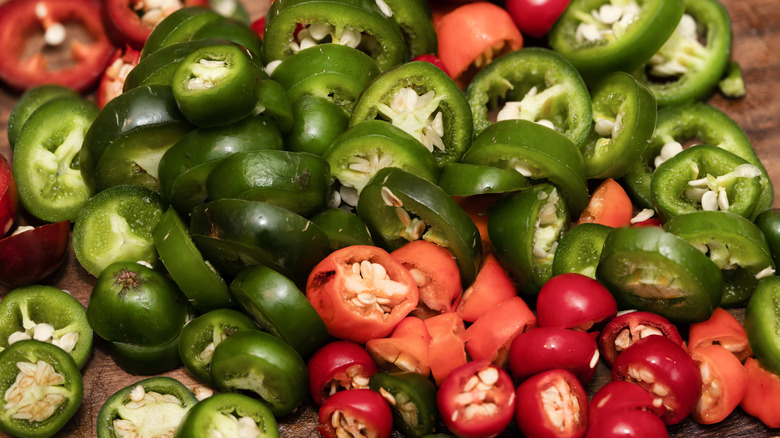
As jalapeños mature, they turn from light green to dark green to a deep red. The peppers also develop more capsaicin over time. At a glance, color can be a clue to where the pepper was in its maturing process when it was picked. Like corking, there's no hardline evidence that deep green or red-tinted colors make a jalapeño spicier. Still, it's a helpful approximation of its capsaicin levels (and therefore its spice levels) when you're at the grocery store and cannot judge by taste.
Here's an important catch: jalapeños reach peak capsaicin levels around 40 days into their lives. That's when the chiles are just beginning to turn red. After the 40-day mark, capsaicin levels begin tapering. A deep red color indicates full maturity but also a potentially lower spice level than a jalapeño that's green and red. Fully red jalapeños at any spice level usually have a more complex sweetness than green ones because the flavors have had time to develop.