

Why Navy Sailors Rarely Wash Their Coffee Mugs
We may receive a commission on purchases made from links.
If you ever get invited to check out what meals are like inside a Navy aircraft carrier, you might spot a nasty, brown-crusted coffee mug lying around. It looks like it's never been washed because it probably hasn't, and that's just how the owner likes it. As repulsive as some might find the sight, however, there's honor and sentimentality behind it.
To many Navy sailors and veterans, unwashed coffee mugs represent tradition and their years of service. In the same way coffee helped win the Civil War, it helps keep Navy service members alert as they protect our waters, especially during long deployments. For this reason, Navy coffee tends to be stronger out of necessity. In his 1983 memoir, "A Sailor's War," Captain Sam Lombard-Hobson describes the coffee as "black as ink and hot as hell; to keep the watch watchful on cold nights in the North Atlantic" (via USS Nautilus). All that strong black brew leaves stains that build thicker over time, so sailors have come to associate dirtier mugs with more years of active duty. Think of it like the rings inside a tree trunk, except with old coffee gunk.
This is why you might come across stories of old sailors completely losing it when someone washes their mug. Cleaning out those stains is basically erasing a badge of honor they earned through years of experience at sea. Even if the mug somehow manages to get adequately filthy again, the stories and memories behind those old stains are irreplaceable.
Some Navy sailors believe it makes their coffee taste better
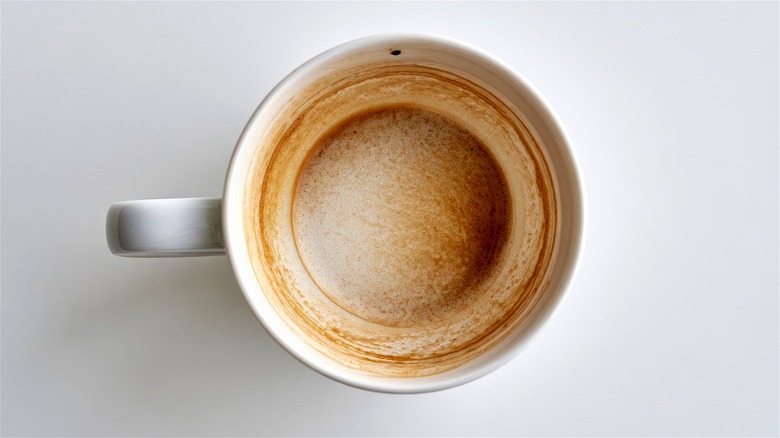
For a good number of sailors, it isn't just about years of service. There's a surprising case to be made for never washing coffee cups outside of hygiene issues involving shared cups: Some say that leftover schmutz makes the coffee taste better. It's not even necessarily unique to the Navy; you'll find people of all backgrounds making the claim almost as much as you'll hear it from folks who have served.
It has to do with the concept of seasoning. Some believe cups and mugs made of porous materials like ceramic absorb the oils in coffee, which in turn can affect the flavor of future pours. This "seasons" the vessel in the same way Chinese clay teapots are seasoned to build more flavor. Others, however, contest the idea, saying leftover coffee oils might even turn rancid and ruin your drink.
There is one fringe case where developing that coffee patina makes clear sense, though. One of the first things people do with a new moka pot is to brew it several times so that the oils coat the inner surface — in other words, they season it. This effort isn't to add more flavor to your coffee, but to create a protective film that blocks the taste of the pot's metal. If a Navy sailor tells you their coffee tastes better from their unwashed aluminum mug or tumbler, it could be because it has less of that metallic tang that clean mugs might have. Or it could be about tradition.