

What Are The Main Differences Between Wheat And Hefeweizen Beer?
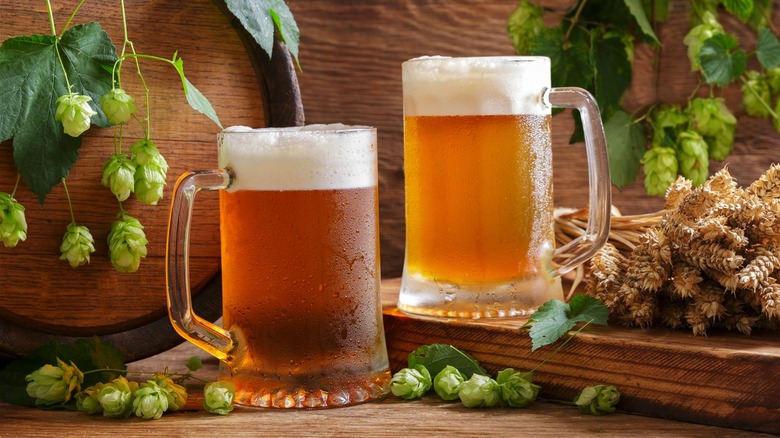
The only real difference between a wheat beer and a hefeweizen is that one is a category of beer while the other is a style within that category. Wheat beer is any beer brewed with 30% or more of its ingredients being wheat. Hefeweizen, which originated in Germany, falls under the wheat beer category, as does witbier from Belgium and bier blanche from France, among several others. Each style within the category has its own nuances, so there are a lot of differences to unpack.
Some of the more pronounced distinctions are between hefeweizens and a relative newcomer to the category: American wheat beers. Drinkers in the U.S. are more likely to encounter the latter style than other wheat beers simply because of its local nature, so it's good to know more about how they are made. At the very least, understanding how a traditional German hefeweizen and an American wheat beer differ brings you one step closer to ordering beer at bars like a pro.
One point to note: if you want to compare American wheat beers with hefeweizens in a taste test, know that hefeweizen also goes by "weizenbier" or "weissbier". It's one of the best German beer styles you should try, and it would be a shame to miss out on a good bottle because it's going by a name you aren't familiar with.
They use different types of yeast
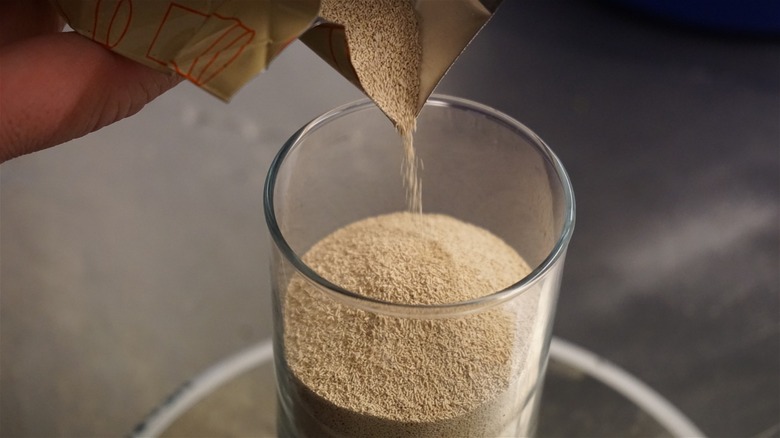
One area where hefeweizen and American wheat beer really diverge is the type of yeast they use, which is a bigger deal than one might assume. "Hefeweizen" comes from the German words for yeast ("hefe") and wheat ("weizen"), suggesting they're the two standout ingredients of this style.
Hefeweizen was developed during the 1500s in Bavaria, home of the world's oldest known brewery. Back then, brewers used specific strains of local yeast in their recipes, and much of a traditional hefeweisen's flavor comes from this. Over time, these strains became associated with the style itself and are often referred to as weizen yeasts.
The much younger American wheat beer doesn't use imported weizen yeast. When the style was in its infancy in the 1980s, brewers didn't have easy access to Bavarian yeasts, and instead opted for the strains they were already using for lagers and ales. While Bavarian weizen yeasts are more commercially available in today's market, American wheat beer's distinct flavor profile is so well established that many brewers still use the more neutral-tasting yeasts it's known for.
Hefeweizen is fruitier, while American wheat beer tends to be more bitter
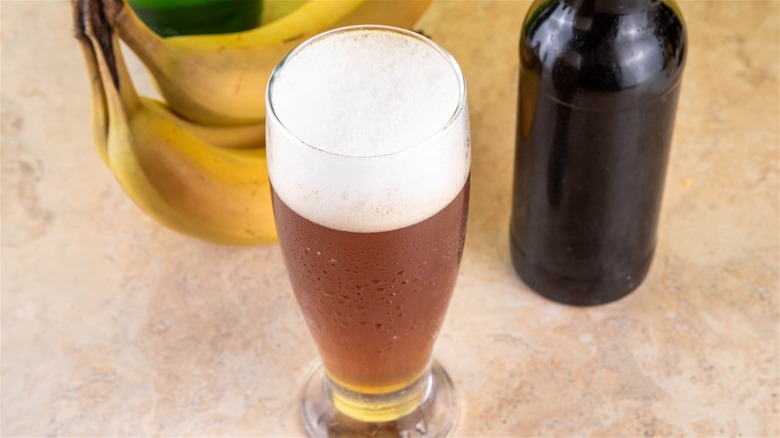
During fermentation, the weizen yeasts in hefeweizen produce two key compounds that give the beer its signature flavors. Isoamyl acetate is an ester that creates fruity flavors and aromas and is responsible for hefeweizen's prominent notes of banana. The phenol 4-vinyl guaiacol (4VG) contributes a subtle spiciness commonly compared to cloves. Banana and clove are consistently cited as two of the most dominant tasting notes in hefeweizen's overall flavor profile.
The fermented ale and lager yeasts in American wheat beer don't produce these compounds. Without these strong, spiced-fruit flavors present, the taste of the hops is more pronounced, despite their relatively low concentration compared to other beer styles. Depending on the specific type of hops used, you may pick up citrusy, floral, or spicy notes. Either way, hops act as a bittering agent in beer, so you'll also get more bitterness in an American wheat beer than a hefeweizen.
Some folks might get confused when their hefeweizens don't have those banana and clove flavors. It's fairly common to encounter American wheat beers labeled as hefeweizens, but they aren't brewed with traditional Bavarian yeasts. To be sure you're getting the beer you expect, stick with hefeweizens from Germany, like Weihenstephaner Hefeweissbier, which earned the top spot in Mashed's ranking of popular German beers you can buy in the U.S.
Hefeweizen is always cloudy
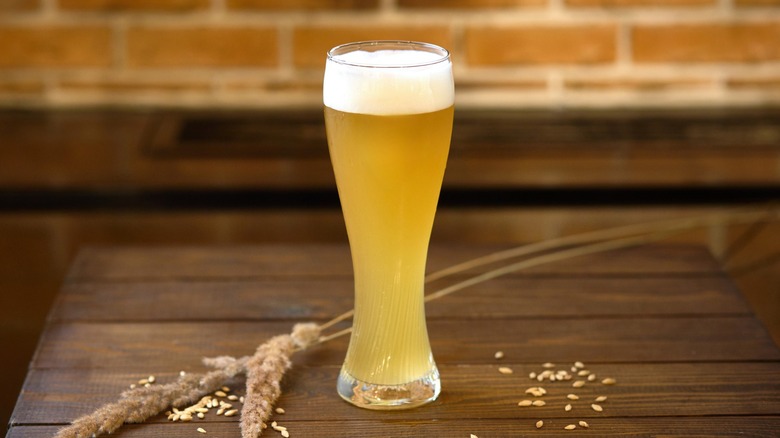
One of the first things you'll notice after pouring a German hefeweizen is that the beer appears cloudy. That haziness comes from the yeast and wheat proteins floating in the liquid. Sediments aren't traditionally filtered out of hefeweizens, so this style is almost always cloudy. In fact, filtered hefeweizens are usually given their own label: kristallweizen. The same is true for similarly cloudy Belgian witbiers, another member of the wheat beer family.
American wheat beer, on the other hand, may or may not be filtered. Anchor Brewing Company's Summer Wheat Ale, for instance, pours out clear instead of cloudy because it was filtered. Allagash White, a Belgian-style witbier out of Portland, Maine, is one of the best-known unfiltered domestic beers in the U.S.
Cloudiness doesn't typically impact the beer's flavor, but it can play a role in head retention. The proteins keep the foam dense and stable, which in turn makes each sip feel a little more velvety in the mouth. You might taste a bit of creaminess, too, which, along with the hoppiness, makes filtered wheat beers seem crisper in comparison.
You may find more variety in American wheat beers
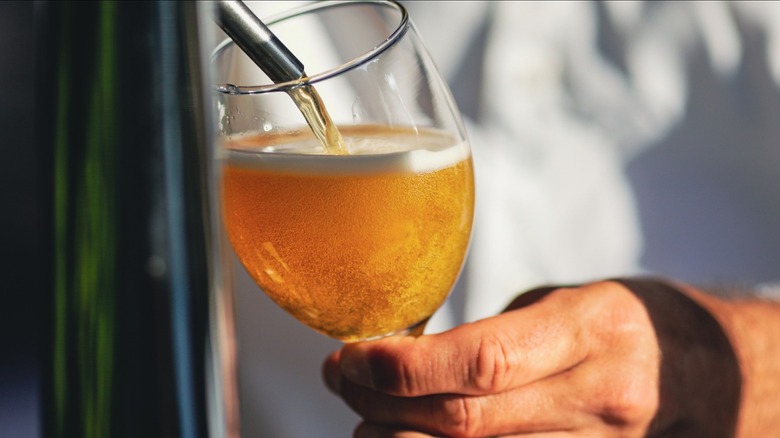
A common sentiment about German hefeweizen is that it's a less diverse style than American wheat beer. There may be some truth to it given each one's respective history. Back in the early 1500s, Duke Wilhelm IV of Bavaria issued the Reinheitsgebot, or the Beer Purity Law. The decree stated that beer could only be produced using three ingredients: water, hops, and barley. Other members of the Bavarian royalty, however, had a fondness for wheat beer, so they created a special exception for hefeweizen's production.
Only one brewery in the entire region was permitted to add wheat to its recipe, and this went on for over 80 years. While restrictions from the Reinheitsgebot have eased up over the past few hundred years, German brewers are still subject to strict regulations, which is why experimentation with clearly defined styles like hefeweizen may not be as common as we might expect.
In contrast, American wheat beer started its development during the American craft beer revolution of the 1960s and beyond, when experimentation was essentially the norm. American brewers in general have a reputation for being less restrictive when it comes to beer styles, so it's easy to see why their wheat beers can be filtered or unfiltered, use a wide variety of hops, or, in the case of brands like Blue Moon, be flavored with additional fruits and sweeteners, like its Mango Wheat beer.