

Why Butter Isn't The Right Choice To Season Your Cast Iron Skillet With
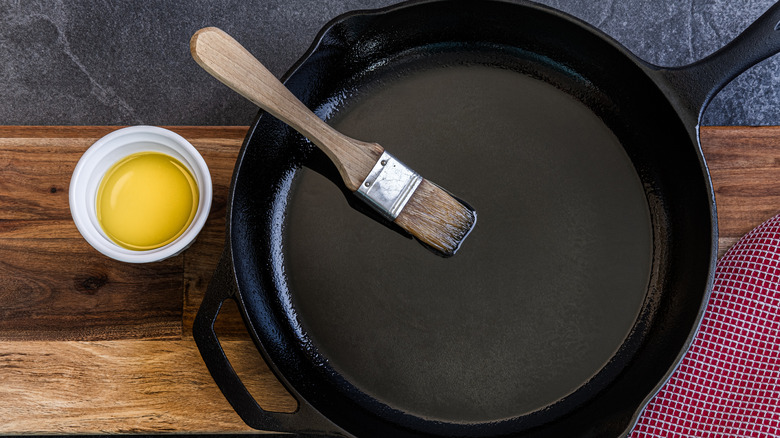
To properly season a cast-iron skillet, you need fat to create the barrier that makes the skillet both rust-resistant and less sticky. But not just any fat will do. A neutral oil, such as canola or vegetable, is one of the best options, while butter is one of the worst. It's true that butter is mostly fat. It's what isn't fat that's the problem. The milk solids in butter give it a low smoke point, so it burns when heated to the temperature required for seasoning, really stinking up the place in the process.
Plus, those burnt milk solids interfere with any remaining fat's polymerization, which is what happens when the fat molecules join together after being heated between 450 to 500 degrees Fahrenheit (232 to 260 Celsius) in an oven for 40 minutes to an hour. This tight-knit, hardened combination is what forms the nonstick coating. So any holes in the coverage that seasoning with butter would create make the effort both stinky and mostly worthless.
How to maintain your cast-iron skillet without butter
Though butter may not be the right choice for seasoning the skillet, this doesn't mean butter can never touch your cast iron. Once your cast-iron pan has been seasoned, you can use butter to flavor the food just as you normally might. Keep in mind its low smoke point. Cooking at a high temperature may result in the milk solids burning and making a gummy mess of your pan. If you are using oil in your recipe, consider using it as a base for lubricating the pan before adding butter for flavor. While there are differences between ghee and clarified butter, both are rich and have a higher smoke point than regular butter, so you could try those instead.
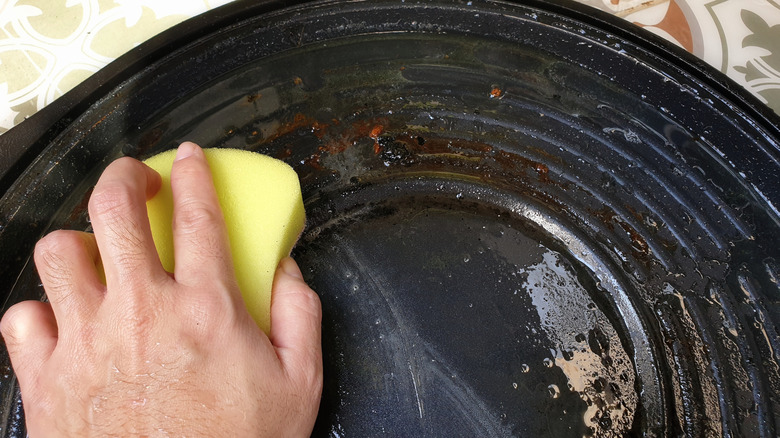
If you have gunked up your skillet by burning butter, you're going to want to wash it off right away. When cleaning your cast-iron skillet, there are some common mistakes you need to avoid. First off, although it might be tempting to let your skillet soak in water to encourage stuck-on food to detach, it's a big mistake. Allowing it to stay wet too long can promote rust, which requires another round of seasoning. You always want to be sure your skillet is completely dry before putting it away for the same reason. A better way to remove cooked-on food is to scrub the pan using a non-abrasive sponge and a paste made from kosher salt and a little hot water.