

Beer Date Codes Aren't As Simple As Expiration Dates
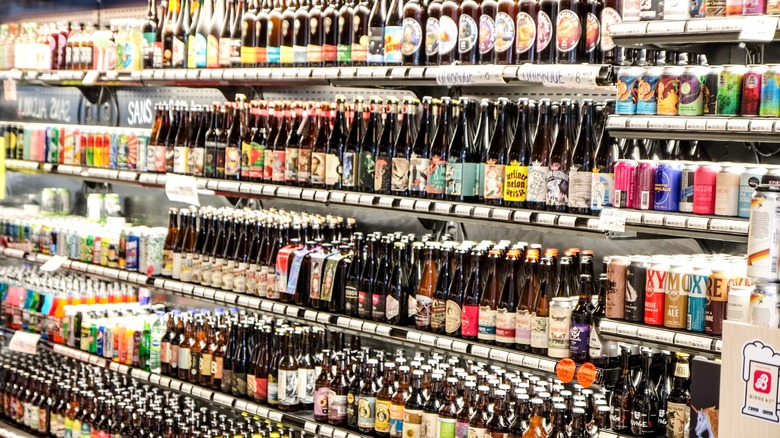
If you're set on getting the freshest beer possible at your local supermarket, you'll need to do some homework, first. The dates you'll see on beer cans and bottles can be surprisingly difficult to decipher, in large part because they aren't at all standardized. Some brands use "best by" dates, while others use "born on" dates. Some brands even use both, and it isn't always clear which is which.
Beer is typically safe to drink even after it's gone bad, which is why you might see a "best by" date instead of a traditional expiration date. This tells you the point at which a brewery believes its beer will start to degrade in flavor. It's the easiest way to make sure the beverage will taste fresh when you open it; all you need to do is drink it before the indicated date. For maximum freshness, however, you'll want to pay attention to the "born on" date.
The "born on" date indicates when the beer was placed into the can or bottle. The closer you are to that day when you consume the product, the fresher it will be. It's also generally more useful for drinkers who like to age their beer, since it gives them a more accurate picture of how old the brew will be when they crack it open. Since different types of beer age differently, knowing the "born on" date helps tremendously in getting you the best results. Distinguishing between "best by" and "born on" dates is probably the least complicated part of all this, however.
Beer bottling and expiration date formats can get confusing
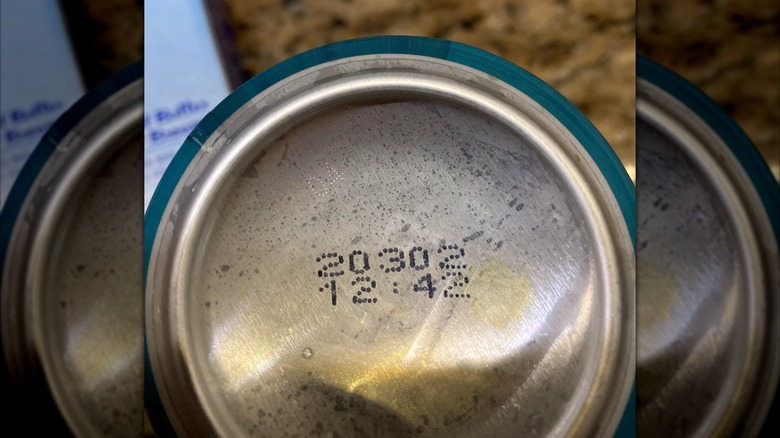
How the dates are written isn't standardized. A number of U.S. breweries use the MM/DD/YYYY format. Under that system, "01/12/2026" means "January 12, 2026." However, you'll often see variations of this. Molson Coors, for instance, indicates the "best by" date of its U.S. market beers using the first three letters of the month, both digits of the day, and the last two digits of the year, i.e. "JAN1226."
Most countries outside the U.S., however, use the DD/MM/YYYY format, so a "best by" date of 01/12/2026 means the beer stays freshest until December 1, 2026. Some nations may use YYYY/MM/DD, which is important to note since various brands might shorten the year to two digits. Accordingly, 26/12/01 in this case means "January 12, 2026," not "December 26, 2001." There can also be differences in formats within the same brand, depending on where a beer was brewed. Kirin beer brewed in Japan might follow the YYYY/MM/DD format, while bottles produced in China can be seen using DD/MM/YYYY.
Some breweries use variations of the Julian calendar. This refers to dates by order within a year; i.e., "032" means the 32nd day of the year (February 1). The year itself may be represented in a variety of ways — "26032," "6032," "03226," and "0326" could all mean February 1, 2026. Lagunitas, which brews one of the best IPAs for beginners, indicates its "born on" date with the day separate from the year, so February 1, 2026 would be "032 6."
Decoding unique beer dates is surprisingly tricky
As if that wasn't complicated enough, some breweries use their own unique date codes for their beers. For instance, Weihenstephaner — one of the best-reviewed German beers in America — uses a complex four-digit code that indicates the beer's "best by" date using the last digit of its day, followed by a two-digit week, and ending with the year's last digit. A bottle with "1106," for instance, means a day that ends in 1 on the 10th week of a year that ends in 6; if it was brewed within the last decade, its "best by" date is March 1, 2026.
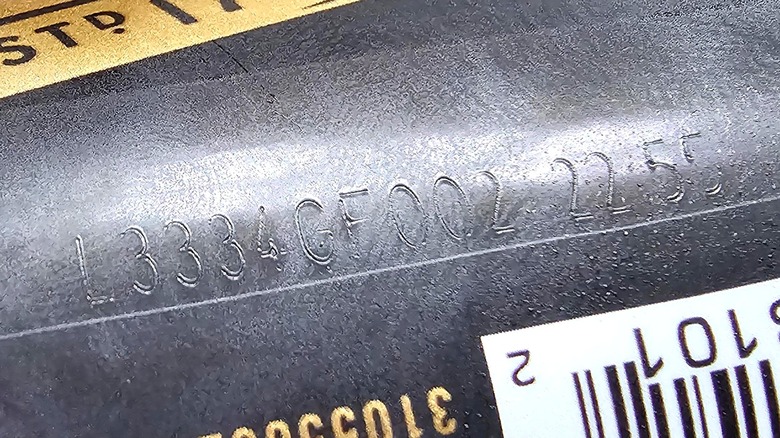
Guinness uses 14-character codes that contain a lot of extra information, but you only need to know the first five. If the code starts with "L," it's a lot number, or the equivalent of a "born on" date. The next four digits correspond to its Julian calendar date, with the first digit being the last number of its production year. That would mean a can with the code L6059GH005 was likely made on the 59th day of 2026, February 28.
A huge problem with all this is that breweries can also just change their date code systems. Anheuser-Busch InBev, the company that owns most of your favorite beers, has done so multiple times over the years. Many references you might find on how to decode beer expiration dates could subsequently have outdated information. So where does that leave you? Your safest bet might be to just straight-up ask breweries how to decipher their date codes.