

How To Use Cast Iron On Induction Stovetops Without Worrying About The Glass
We may receive a commission on purchases made from links.
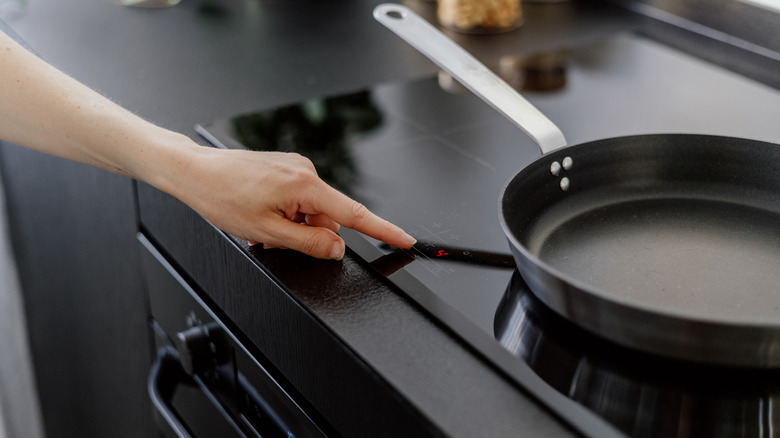
Induction stovetops are gaining popularity due to their higher energy efficiency than electric and gas stoves. But these electromagnetic cooktops feature a smooth glass-ceramic surface, leading to some concern over scratches, particularly when using cookware made of heavy, rough materials like cast iron. Luckily, you can still use this type of cookware on an induction stovetop as long as you take a few simple precautions to minimize friction between the cookware and the stovetop's glass surface.
The first precaution is the golden rule of induction stoves: Always lift your cast-iron cookware using two hands to ensure you don't drop it. Don't slide it. Cast iron is a heavy material, so it's understandable that you'd want to slide it instead of lift it when you need to reposition the pan. But that may eventually lead to scratches on an induction cooktop. You can also help prevent scratches by using enameled cast-iron cookware since it has a smooth coating that is gentler on the glass cooktop.
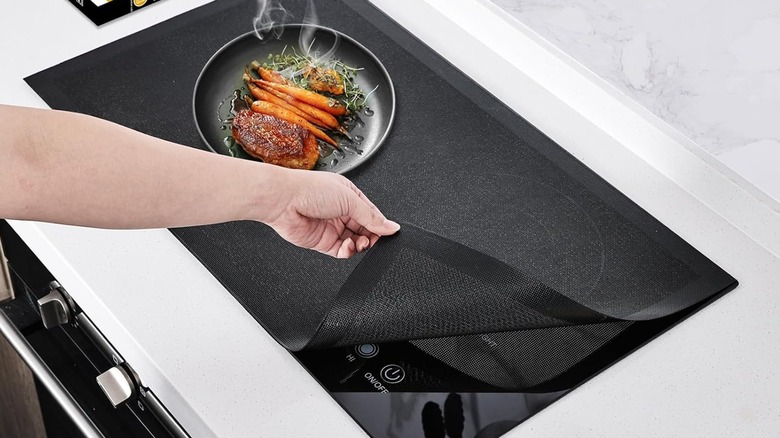
But even with enamel, abrasive food debris can stick to the bottom of both cast-iron cookware and glass-ceramic cooktops, easily causing scratches. Therefore, it's a good idea to inspect and wipe down the cookware and stovetop before use. For an extra anti-scratch barrier, use an induction protector mat, a heat-resistant pad you can set your cast-iron cookware on and still cook your food. Use one that is specifically for induction stovetops and made of fiberglass-reinforced silicone since this has a higher temperature resistance.
Tips for buying induction protector mats
One of the main advantages of induction stovetops is that they heat up and cool down faster than gas and electric stoves, offering more precise temperature control. So it's important to understand how the new mat is going to work. While manufacturers of some induction protector mats may claim that they are completely compatible with induction stovetops, some makers of induction stoves warn that they could interfere with the effectiveness of the cooktop. For instance, the luxury appliance brand Wolf advises against using any kind of barrier on its induction stoves, stating on its website, "A barrier will decrease cooking performance and may prevent cookware from being detected."
However, many induction stove users still choose to use a heatproof silicone mat to battle the difficult task of preventing scratches on a glass cooktop. In a Reddit post in the Induction Cooking subreddit, one person wrote, "Absolutely you can cook on induction using silicone mats. Mine are round and fit over the burners. Zero loss of connectivity." Regardless of this anecdote, always check with the appliance manufacturer before purchasing a stove protector to verify whether it is safe to use or will interfere with the stove's efficiency.
If you do buy one, make sure it has a high heat rating to avoid melting the silicone mat. You have the choice between buying a mat that covers the entire stovetop surface, like Cook's Aid's silicone induction cooktop protector or one that only covers the induction burners, like Lazy K's silicone fiberglass scratch protectors.
Best cast-iron cookware for your induction stove
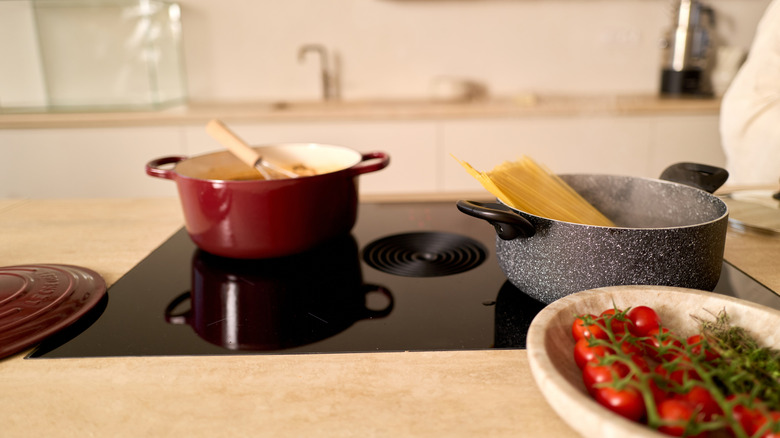
On an induction stove, electrical currents travel through copper wires under the glass surface of the cooktop, creating a magnetic field that heats the pot or pan. As such, induction-compatible cookware must be made of "ferromagnetic materials" (which just means they're magnetic). It should also have a flat base so that they sit flush on the stove, allowing for direct electromagnetic energy transfer from the internal copper coils.
Enameled cast-iron pots and pans are a great choice for induction stoves since their core is made of ferromagnetic material and the glass-ceramic coating does not interfere with the cooktop's magnetic field. If you aren't sure what material your enameled pot or pan is made of, you can easily test its induction-compatibility by holding a magnet to the bottom of it. If the magnet sticks, it will work on your induction stovetop.
The Le Creuset enameled cast-iron Dutch oven is a popular premium choice for induction stovetops, as is Cuisinart's Chef's Classic enameled cast-iron frying pan. However, if you need the extremely high heat resistance (above 500 degrees Fahrenheit) that only an unenameled cast iron pan can offer, opt for a light one with a smooth base, like the Field Company No. 8 medium cast-iron skillet or the Lodge Blacklock lightweight cast-iron skillet.