

The Butter You Should Be Using For Tasty Pancakes
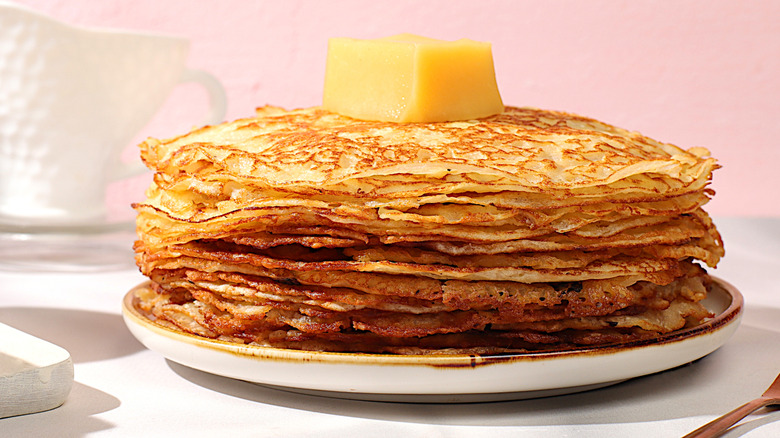
There are various ways to upgrade your pancakes. For example, if you want an extra-fluffy stack, whip up your egg whites before adding them to mix. But if you prefer a crispier finish on your flapjacks along with a deeper flavor, you'll want to be strategic about which type of butter you use for both frying and topping. For chef and restaurateur Ham El-Waylly, clarified and cultured options are the way to go.
Mashed spoke to the pancake pro at the 2026 New York City Wine and Food Festival, where he revealed some tasty tidbits about his version of the breakfast staple. "I like using a lot of clarified butter and ghee to actually cook my pancakes because the clarified butter and ghee have all the milk solids taken out of it," he explained. "So you can get a really nice crispy pancake without worrying about your butter burning."
When it comes to topping pancakes, El-Waylly actually prefers a different variant of the dairy fat with some fixings: "I'm a purist when it comes to pancakes, so I like three things on top of my pancakes. Really good quality maple syrup, a whole bunch of cultured butter and a nice heap of flaky salt," he told us.
Why clarified and cultured butter make for delicious pancakes
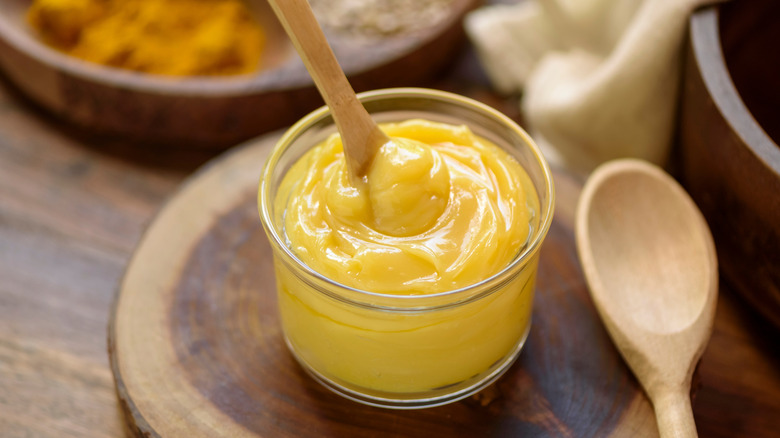
Standard American butter can probably be found in most kitchens in the United States, while the home bakers among us may also have a stock of rich Irish butter like Kerrygold at the ready. But when it comes to high-heat cooking, like the kind you'll want to do when achieving a crispy stack of pancakes, clarified butter or ghee is an excellent choice. Due to the removal of the milk solids and water found in standard butter, the clarified variety is almost entirely milkfat. This results in a higher smoke point, meaning it takes a greater degree of heat for this ingredient to start veering into that bitter, blackened territory you're definitely hoping to avoid.
The smoke point for regular butter is 350 degrees Fahrenheit, while for most clarified butter it is 450 degrees Fahrenheit (though ghee's can actually go up to about 485 degrees). This difference also makes the latter fat compatible with high-temp cooking methods, such as searing and frying, which allow foods to develop a flavorful crust with less risk of burning.
Cultured butter is produced using live bacterial cultures, similar to yogurt or sour cream. It boasts a bolder, tangier profile that comes from the process of fermentation. This sort of butter can add depth and complexity to pancakes, especially when combined with the sweetness of maple syrup and well-developed crust on the pancakes themselves. Together, clarified butter and cultured butter should make for an extra-tasty breakfast.