

Why You Shouldn't Peel Stickers Off Fruit Until You're Ready To Eat It
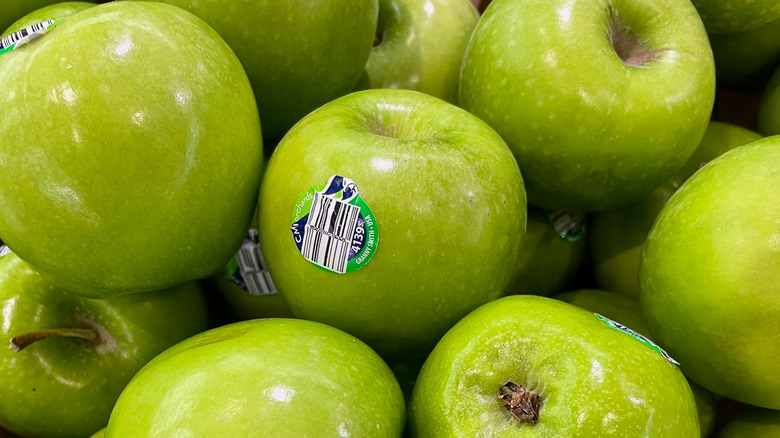
If your household's the type to remove stickers from freshly bought fruit before storing it, you're better off dropping that practice. Peeling the stickers off risks damaging the produce in several ways. For instance, the adhesive could take off some of the fruit's skin, or a fingernail could cut into it. This in turn might compromise the protective layer and expose the fruit's flesh to oxygen.
Why would that be so bad? Oxygen reacts with certain enzymes to trigger a chemical reaction called enzymatic browning. This gives your fruit a muddy brownish color, makes it develop off-flavors, and can even ruin its texture. While this technically doesn't make the food unsafe to eat, it does make the produce less appealing. The stress caused by this damage, however, can trigger other chemical processes that cause ripening to occur quicker than it normally would. This will lead to spoilage if you don't catch it soon enough.
Exposed fruit flesh also provides the kind of environment bacteria need to flourish, making it spoil even faster. Even if you get to the food before it goes bad, the tiny amount of oxidation introduced by minor injuries to the skin can cause its vitamins to degrade, reducing its nutritional value by a small degree. Removing the sticker just before eating the fruit reduces the odds of all this happening. If you're concerned about eating the sticker accidentally, don't worry — it's generally harmless.
Keeping fruit stickers on could even save lives
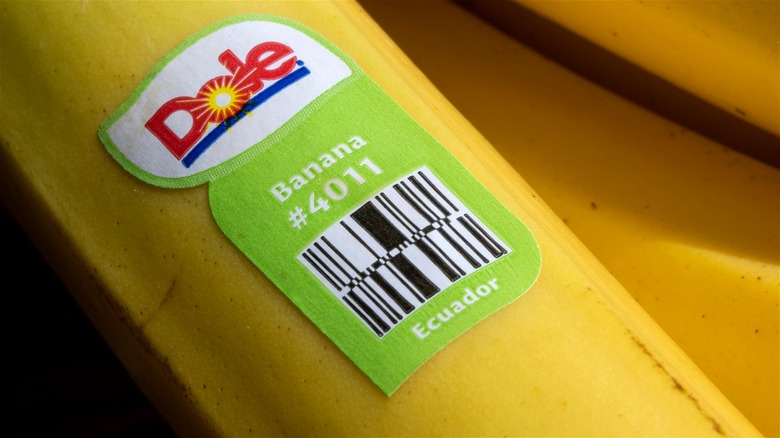
One of the most overlooked advantages to keeping fruit stickers on is also one of its most important. They come in handy when you need to single out unsafe produce. One of the absolute worst food recalls of all time, for instance, involved contaminated melons. When the FDA discovered that a batch of cantaloupes were the source of a deadly listeria outbreak between late August and October 2011, customers were notified that they could identify the tainted fruit by its stickers.
Fruit stickers aren't just about branding and inventory; they can also help with traceability. Many contain information on which farms grew the produce and where. As a viral TikTok video on fruit stickers explained, they also tell you whether the food was grown organically. In the case of the 2011 cantaloupe recall, fruits with stickers bearing the names Frontera Produce or Jensen Farms were part of the infected batch. Unfortunately, not all of them had labels, but those that did may have saved people from falling ill.
Of course, you don't need to go back a whole decade to find a case where stickers served this purpose. Fruit safety concerns have reared their ugly head in 2026 as well. A recall from this year involved hundreds of boxes of mangoes that posed a Salmonella risk. One of the key ways to identify them was their blue stickers.