

What's The Main Difference Between Lobster And Crawfish?
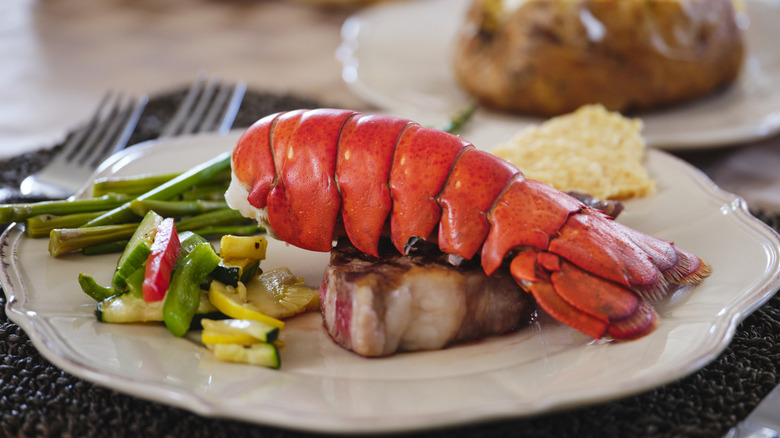
The seafood in a lobster-based meal isn't always what you expect, especially if lobster is an ingredient instead of the main star of the dish. When you're sitting down to a bowl of lobster pasta or seafood bisque, there's a chance the chef swapped the dish's namesake with a different crustacean — crawfish. Often at restaurants that do this, you'll notice a disclaimer that says langostino or other lobster substitutions may be used. Typically, customers don't notice because the two are so similar. There are quite a few distinctions, however, between lobster and crawfish, beyond their size, and the main difference is their habitat.
Lobsters are saltwater creatures that come from the ocean. Crawfish come from fresh water sources like streams, lakes, swamps, and rivers. Their sizes certainly do distinguish the two crustaceans from each other; crawfish max out at around six inches and lobsters can reach up to 20 inches in length. There are also many other differences beyond environment and measurements. The culinary world of crawfish is vastly different than that of lobster. Each has their own nuanced flavor profile, preparation style, and food culture that sets them apart from one another. And each has a special place in the hearts of seafood lovers.
Lobster is known for luxury
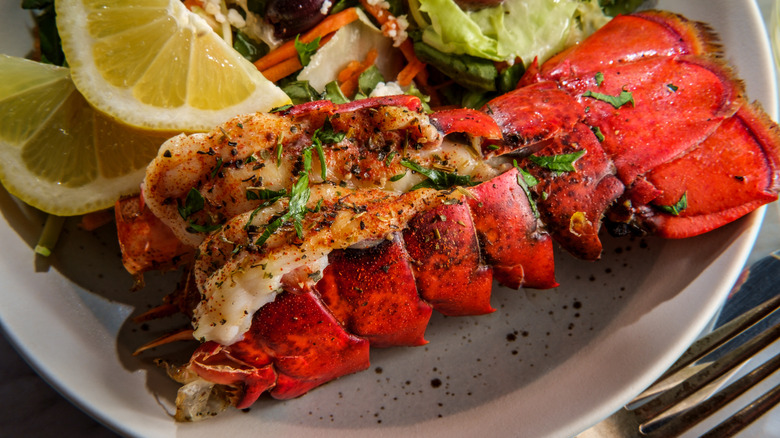
Broiled lobster tails are among seafood royalty. They're usually part of the most expensive lobster dinners at a restaurant, often priced by the pound and positioned somewhere elite on the menu. You can expect a lobster dinner to start at $35 to $45 a plate. The sweet white meat presented on top of the vibrant tail is stunning and simple to reach — you don't have to crack open any shells to get to it. Add all that up, and it's easy to see why lobster is known as a symbol of luxury.
Preparation methods for lobster differ depending on the chef. Some boil or steam the lobsters live for eight to 20 minutes, depending on the size. Others dispatch the lobsters quickly and split them before cooking, separating the tails and prepping them for the grill or oven or to poach in butter. They're usually prepared with a limited number of seasonings or additions because of their own bold, yet delicate, flavor profile. Lobster's saltwater environment gives it a natural salinity that underlines a buttery sweetness from the dense, firm meat. Herbs like tarragon or chervil add delicate anise notes that enhance lobster's sweetness. Champagne vinegar and extra-dry Champagne both break up the richness of lobster meat while it's cooking. Oaked chardonnay is a lobster dinner pairing that lets that indulgent, buttery flavor shine as well.
Crawfish is linked to Southern cooking and seafood boils
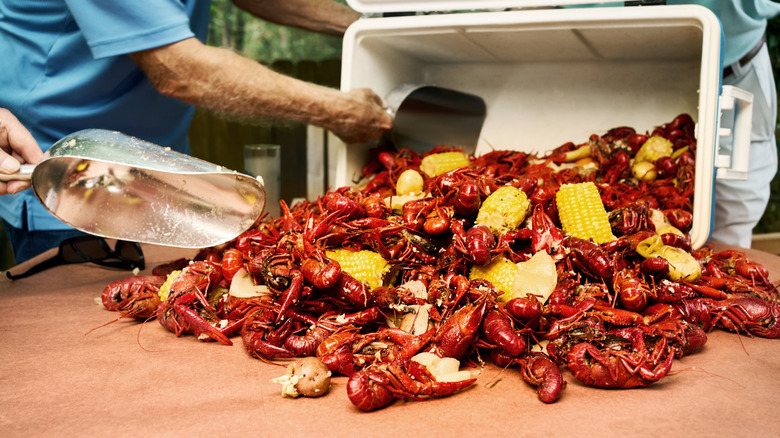
Crawfish has a very different vibe than its upscale lobster relative. Also known as crayfish, crawdads, and mudbugs, these creatures are at the center of Louisiana seafood boils and rich Cajun food culture. They're a symbol of homestyle cooking, family gatherings, and community events — and they have their own flair. Usually, they're cooked in huge batches at about two to five pounds of crawfish per adult in a standard crawfish boil meal. At a true seafood boil, they're dumped in a huge pile straight onto the table and you dig right in. You don't even need a plate, just a big napkin and an even bigger appetite.
Crawfish is the star of other Cajun-style dishes, like classic crawfish etouffee, as well as pastas, pot pies, and more. The meat has an earthy undertone with a flavor and texture that's somewhere between lobster and shrimp. It soaks up strong flavors very well and shines when paired with bold seasonings like Cajun spices. It also pairs well with the aggressive flavors in Chinese cooking, usually paired with shisanxiang (thirteen-spice) powder — an aromatic blend of star anise, fennel, Sichuan pepper, cinnamon, galangal, sand ginger, cloves, and other traditional herbs. Drink pairings for eating crawfish dishes of all kinds include anything that'll cut through the heavy dose of seasonings. Opt for frozen drinks, cold beer, and crisp wines to help balance the heat and flavor combinations.