

Where Does Costco Get Avocados From?
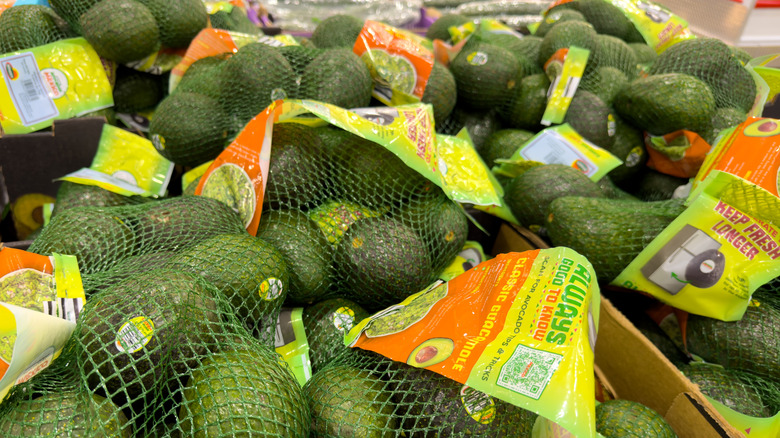
In the last 25 years, avocado consumption in the United States has quadrupled, according to the Avocado Institute of Mexico. Rich in heart-healthy fats, not to mention fiber and essential vitamins, avocados have made their way into roughly 70% of American households, some of whose members might never have seen or tasted one a few decades ago. To meet this growing demand, Costco stores across the U.S. stock six-count packs of Hass avocados — the dominant variety in the country — for consumers' dip, toast, and salad recipes. But where do all of these once little-known fruits (it's true, they are actually fruits) hail from?
The Costco Same-Day website lists the United States, Mexico, Peru, Chile, and New Zealand as the origins for its Hass avocados. Costco sources avocados from multiple countries to keep them available year-round as growing seasons and supplies shift. The next few times you visit Costco, look at the avocado labels: They might be from Peru one week and Mexico the next. While Costco does not publicly identify all of its avocado suppliers, a few companies have been documented, including California-headquartered Mission Produce and West Pak Avocado, as well as Mexico-based Aztecavo, according to a 2023 study.
What conditions do avocados grow in?
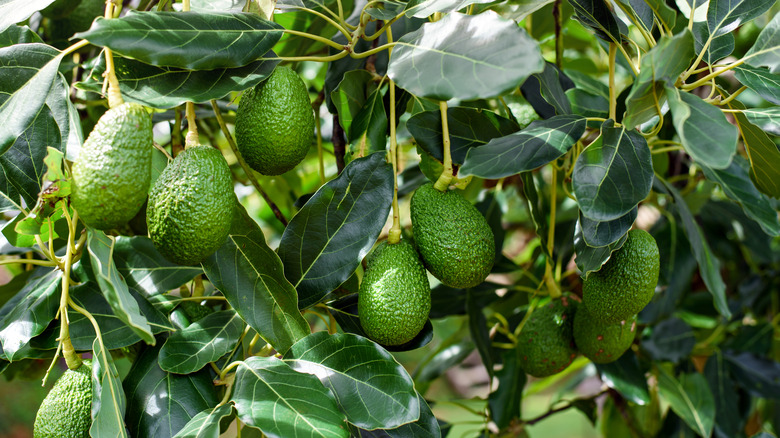
Hass avocado trees grow best in warm, often moderately humid climates, such as the Mediterranean and sub-tropical regions. The trees can take up to five years to start producing. And for such a trendy fruit, the individual avocados themselves take quite a long time to grow: between 12 and 18 months from first flower to harvest-ready fruit (depending on location). During the final growth period, avocados prefer a consistent temperature of about 68 degrees Fahrenheit to 77 degrees Fahrenheit. While avocados enjoy full sunshine and can even withstand a mild winter, sudden extreme spikes or drops in temperature can severely damage the tree and its fruit.
These specific growing requirements, combined with Americans' increasing appetite for avocados, have put pressure on the regions suited to cultivating the fruit. In parts of Mexico, forests have been cleared (sometimes illegally) for avocado orchards, and Indigenous residents have even reported threats of violence for speaking out against avocado-driven deforestation. On the arid coast of Peru, reports have shown that the water required to grow export produce, including avocados, has increased water stress — a strain on resources — among local people. The crop's water demands can be substantial: In Chile's Valparaíso region, which includes Petorca province, a 2017 investigation by Danwatch reported that growing a single avocado required approximately 320 liters (roughly 85 gallons) of irrigation water.
How does this impact avocado selection at Costco?
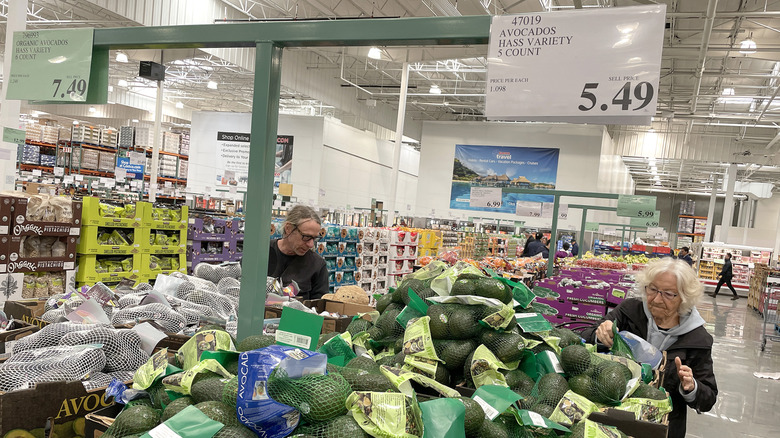
Environmental concerns are among the reasons consumers like to know a product's origin. Costco's avocado suppliers have faced scrutiny around the detrimental outcomes of the fruit's supply chain. A 2023 investigation by Climate Rights International identified Mission Produce and West Pak — whose avocados researchers found at Costco — among companies supplied by Mexican orchards containing illegally deforested land. Those connections raise concerns about Costco's supply chain, although they don't establish that a particular bag of avocados sold at the retailer came from those orchards.
Costco has outlined steps to lower its environmental footprint. In its 2025 sustainability report, the company said it was working to diversify avocado sourcing away from regions with the highest deforestation risk and expected suppliers to prevent sourcing from illegally cleared land. However, its avocado-specific commitments do not include a deadline for eliminating deforestation-linked sourcing or disclose how much of its supply meets these standards.
If the environmental impact of your produce is something you consider while shopping, there are a few easy first steps you can take on your Costco run. Before buying the six-pack of avocados, make sure you have a plan to use all of them, because food waste also wastes the water, land, and energy used to produce it. Avocado ripening can be fickle, but experts say that refrigerating ripe ones can help them last longer. If six is more than you'll use, buying fewer elsewhere is more practical.