

Famous Mexican Restaurant Chains That Are Almost Gone Now
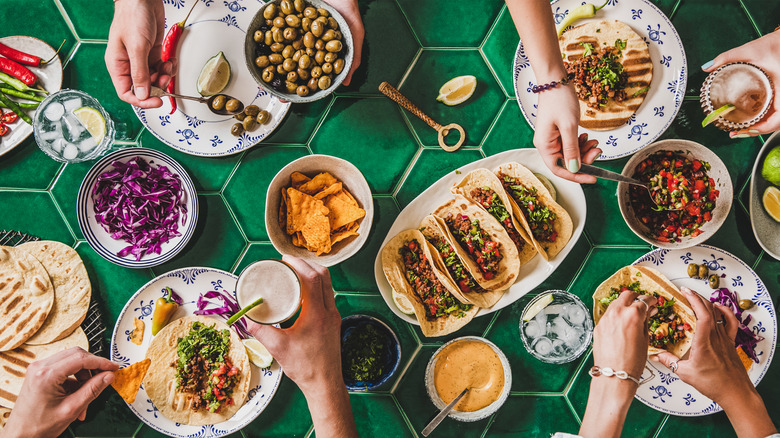
As the United States' only Southern bordering country, Mexico has had an indelible effect on our country's cuisine. In fact, before the Mexican-American War, large swaths of land that now make up the Southwest were part of Mexico, including Texas, Arizona, and, of course, New Mexico. Basically, even before the U.S. was the U.S., locals were already enjoying many of the staples of Mexican cuisine. And now, over 85% of counties have at least one Mexican restaurant.
However, that popularity caused quite a bit of competition along the way. Today, one out of every 10 restaurants has Mexican food on the menu. That saturation makes it increasingly difficult for restaurants to stand out in the market, especially in the face of new fast-casual concepts like Chipotle and Qdoba offering speed, freshness and customization. As a result, many older Tex-Mex chains like Don Pablo's have been pushed out of the market entirely. While the following restaurants aren't closed yet, many are struggling to find a new footing in an ever-changing market.
Taco Cabana
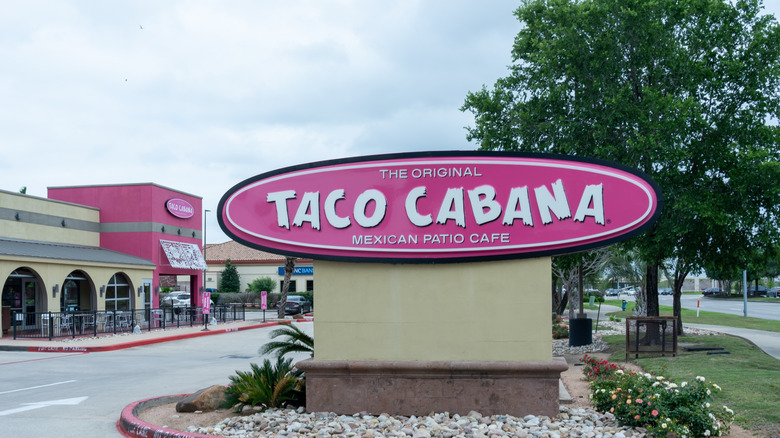
Taco Cabana was an early pioneer in the Mexican restaurant space. Founded in 1978 by Felix Stehling, the first location opened in San Antonio in an abandoned Dairy Queen lot. What started as a taco stand evolved into a patio cafe, featuring outdoor seating beneath a roof decorated with Mexican adornments, such as papel picado. While that concept is widespread today, back in the '80s, Taco Cabana brought a lawsuit against Two Pesos, a rival Mexican restaurant, winning $3.7 million in damages for blatant imitation. This brought about the financial ruin of Two Pesos, and Taco Cabana swept in to buy the firm and 30 restaurants in San Antonio, a defining moment in the chain's untold history.
Acquiring its rival helped Taco Cabana dominate the market, driving sales from $29.1 million to $96.9 million by 1993 and surging to $127 million just a year later. Despite this, the chain underwent a number of changes, from leadership to brand image, resulting in stagnant growth. Fast forward to today, and Taco Cabana has shuttered around 10 of its stores in its home city of San Antonio, claiming it to be a strategic move to sustain growth. The restaurant's fans, however, remark that the chain's quality has decreased while prices have increased significantly. The fate of Taco Cabana is unknown, however, the company has also started a new franchisee program with plans to open stores in multiple states outside of Texas.
Baja Fresh
Baja Fresh offered something that's now synonymous with many fast casual Mexican restaurants. But in 1990, it was the first of its kind, selling made-to-order meals with fire-grilled meats and only the freshest quality ingredients. While founder James Magglos and his wife, Linda, had no experience in the restaurant business, they believed in their concept of serving Mexican food to the point that they took out a third mortgage on their home. The first Baja Fresh Mexican Grill opened to much success, so much so that businessmen began approaching Magglos about franchising. By 2002, Baja Fresh had grown to 210 restaurants and went public, acquired by Wendy's for a cool $275 million.
Why, then, is Baja Fresh struggling today? The answer lies again in competition, along with operational hiccups. While innovative, made-to-order tacos and some of the best fast food burritos created longer wait times vs. the behemoth Chipotle, which had better marketing and was also on the rise. Average store sales plummeted along with the number of restaurants. At its peak in 2005, Baja Fresh boasted 299 stores. Twenty years later, that number is around 80. Baja Fresh may have pioneered the fast casual Mexican restaurant, but many copy-cats, including Qdoba Mexican Eats, Moe's Southwest Grill, and Rubio's Coastal Grill, took up space in an already crowded market.
Rubio's Coastal Grill
Rubio's Coastal Grill stepped onto the fast-casual Mexican restaurant scene with Baja-style fish tacos that are some of the best in the U.S. Founder Ralph Rubio visited Mexico on spring break as a student at San Diego University, where he and his friends ate fish tacos every single day. This inspiration fueled his entrepreneurial spirit, and with an investment from his father, the first Rubio's was opened in 1983 in an old Orange Julius stand. Throughout the '80s and '90s, Rubio's steadily expanded throughout Southern California, eventually going public and expanding into neighboring states. In 2000, Rubio's had grown to 100 locations.
The downfall of Rubio's can be attributed to a lack of clear brand identity, along with a competitive market. The chain originally operated as Rubio's Fresh Mexican Grill and Rubio's Baja Grill, rivaling other popular chains in the fast-casual scene. To differentiate itself, Ralph Rubio decided to go back to his roots and rebrand as Rubio's Coastal Grill with a seafood-centric menu. Despite this change, however, Rubio's continued to shutter dozens of locations due to the increased cost of operation, and filed for bankruptcy soon after.
Sales were projected to rise again post-pandemic, but never did. In June 2024, the chain filed for Chapter 11 bankruptcy yet again, with a staggering $100 million owed. While its footprint has lessened on the Mexican restaurant scene, you can still enjoy the Baja-style Mexican eats in 86 locations, with the majority in Southern California.
On the Border
On the Border was started by three friends drinking tequila, inspired by the specifics of border-side eats. The chain first established itself in 1982, leaning into the Tex-Mex aesthetic with mesquite wood-smoked fajitas along with guacamole prepared tableside, tequila, and a plethora of margaritas. Franchising began in the 1990s with an acquisition by Brinker International, the parent company of Chili's, in 1994. By 2001, the chain reached 100 restaurants.
That success wouldn't last. On the Border was sold in 2010 and then again in 2014 to a private equity firm. As the years went by, consumers were less impressed with the menu, which tried to cater to everyone by offering a vast selection of Mexican meals. The quality also decreased, and On the Border was cited as the unhealthiest Mexican chain by Men's Health for a number of years. As with many restaurants, On the Border struggled during the pandemic, closing a number of stores. In 2025, the restaurant filed for Chapter 11 bankruptcy, owing $25 million and operating a mere 80 locations.
Chevys
Chevys carved out a niche in the Mexican restaurant scene with a neat little machine. Affectionately dubbed "El Machino", it pumped out 900+ tortillas in an hour and allowed diners to watch the process of smashing dough balls into flattened taco and burrito wrappers. This unprecedented form of entertainment drew major coverage from publications all over San Francisco, where the first location opened in 1986. From there, the chain rapidly grew, with one location in Moscone reportedly making $4 million in a single year. In 1992, the chain raked in $84 million and promptly sold the business to Taco Bell the following year.
A decade later, Chevys filed for Chapter 11 bankruptcy, and in 2005, it was bought by yet another company, Real Mex. At this point, it implemented a brand-altering decision: the removal of "El Machino", resulting in a plethora of store closures that ultimately led to Real Mex's bankruptcy. Removing itself from the Fresh Mex category, Chevys struggled to hold on to its footprint in the market, with brand troubles in 2012 and a mere 20 restaurants in operation today.
Uncle Julio's
Uncle Julio's entered the Fresh Mex scene in 1986 with a promise to deliver Tex-Mex meals from original recipes using fresh ingredients. For some time, this Mexican chain proved its concept with mesquite wood-fired fajitas and specialty-crafted margaritas, along with a proprietary dessert: a chocolate piñata that could be broken tableside, revealing fresh fruit and other sweet goodies. It had a small yet steady growth to 29 restaurants across 7 states, a presence that summoned interest from a private equity firm in 2017.
As with many businesses, Uncle Julio's suffered during the pandemic. The CEO, Tom Vogel, released a heartfelt statement when he made the difficult decision to lay off some 4,200 employees, regrettably claiming that without this move, the company would have to permanently close. In March 2024, a longstanding location in Chicago shuttered after a staggering 32 years in operation, due to a rent increase.
La Salsa
La Salsa's unique offering to the Mexican restaurant scene is in the name. Along with offering Fresh-Mex eats, the chain specializes in an original salsa bar that's been a staple ever since the first taqueria opened in 1979. At its peak in 1999, with the acquisition by Santa Barbara Restaurant Group, Inc., the chain had 50 locations and an additional 48 owned by franchisees, with $25 million in yearly sales.
That number dwindled significantly in the following years. Santa Barbara Restaurant Group was acquired by CKE Restaurants, the parent company of Carl's Jr. and Hardee's, and in 2007, was sold to the same investor that bought Baja Fresh. Considered sister companies with similar offerings, both chains saw a decline in sales, and both were acquired by MTY Holdings in 2016. At the time, La Salsa had merely 23 restaurants still in operation, and as of 2024, that number is down to four.
El Burro Loco
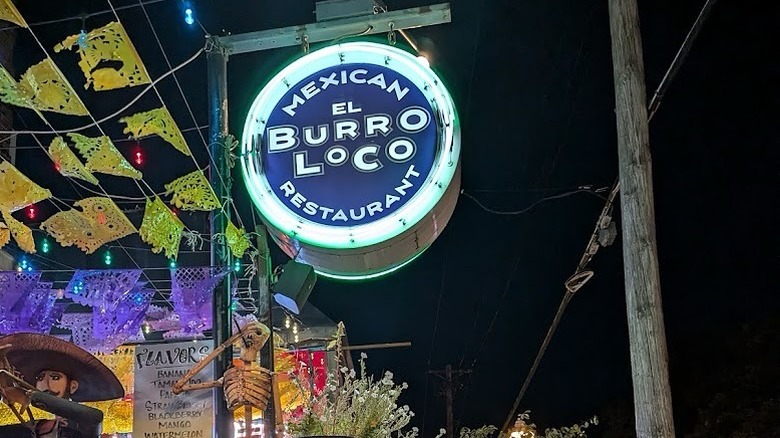
El Burro Loco is a unique Mexican restaurant chain that originated as a food truck in central Florida, growing to several very popular restaurants known for authentic Mexican food in a colorful ambiance. So popular, in fact, that the chain expanded to St. Louis in 2015. However, El Burro Loco was plagued by its inability to stay relevant in an ever-changing market, vastly over-saturated by bigger chains with a stronger hold on their consumer base.
Additionally, the restaurant amassed some $358,000 in back taxes, with lawsuits and liens on company property resulting in even more closures. Social media posts reference other issues with El Burro Loco, including high-priced items and a salacious claim that minors were being served margaritas without ID checks. Needless to say, its reputation didn't help keep El Burro Loco as a mainstay in the competitive Mexican restaurant market. It filed for Chapter 11 bankruptcy in October 2025, with restructuring planned for 2026 to turn a profit.
El Chico
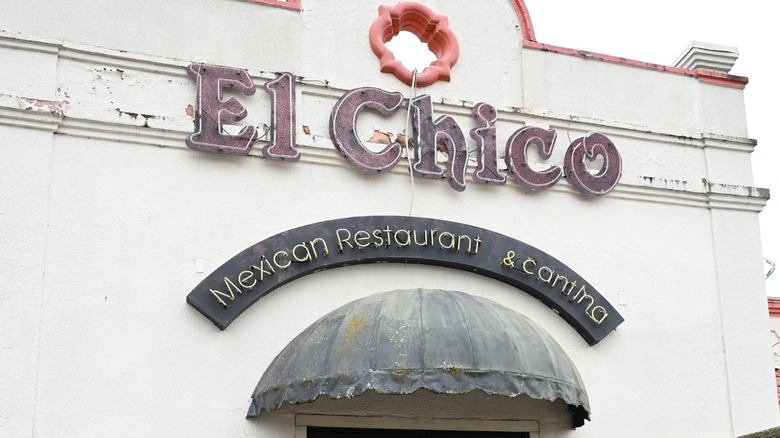
El Chico has a long and storied career dating back to the early 1900s. Founder Adelaida Cuellar emigrated with her family from Mexico in 1890, where she first sold her homemade tamales in 1926 at the Kaufman County Fair in Texas. Business steadily grew and remained in the family, with two of her sons opening the first El Chico in 1940. From there, the restaurant firmly established itself in the Tex-Mex scene, becoming famous with celebrity encounters like John Wayne and Grace Kelly. Ronald Reagan's request to have El Chico cater the 1985 White House Congressional Barbecue was another win for the business.
At its peak, El Chico grew to 80 restaurants with a family-friendly atmosphere that included waiters shouting "Hot plate!" when delivering fresh fajita platters. In 1977, the brand was acquired by Campbell Taggart but switched hands back to the Cuellar family in 1983, with franchise plans. In the '80s, the company diversified with a handful of spin-off brands, taking the main focus away from El Chico. Eventually, the restaurant chain would see its number of locations shrink to just 15, likely from dwindling sales in a market that's consistently growing with new players every year. Despite this, El Chico is a mainstay in Texas, with nostalgia drawing in customers and contributing to a legacy spanning more than 80 years.
Tijuana Flats
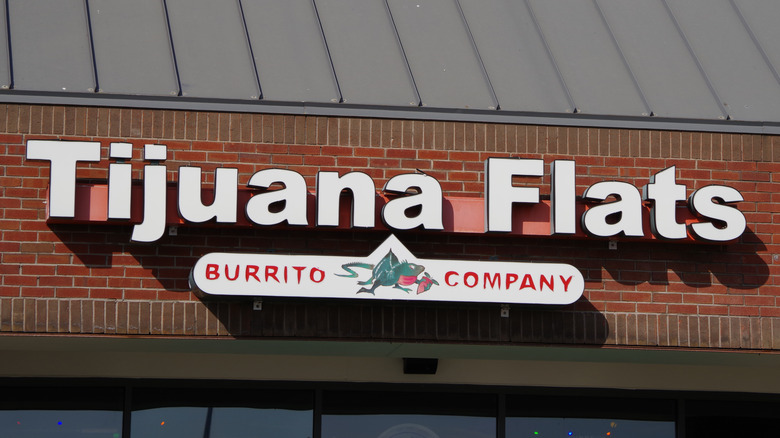
Tijuana Flats emerged in 1995 as a stellar entry into the Tex-Mex restaurant scene. Brian Wheeler, a University of Central Florida graduate with no restaurant experience, got a $20,000 loan from his father to start a chain that expanded to 140 restaurants. At its heart, Tijuana Flats differentiated itself with an edgy vibe and an even saucier hot sauce bar.
Unfortunately, Tijuana Flats succumbed to the heat of the market. When Wheeler sold the company to a private equity firm in 2015, the entire concept was revamped, removing practices such as grilling burritos before serving. Losing part of its brand identity led to more struggles, as the company was acquired yet again in 2024 by Flatheads LLC, after filing for Chapter 11 bankruptcy. The restaurant continued its struggle to gain footing, shuttering a considerable number of restaurants that same year. As recently as 2025, Tijuana Flats went through another ownership change of hands, now falling under Latitude Food Group. While 95 restaurants remain open, the future of Tijuana Flats remains to be seen.
Chi-Chi's
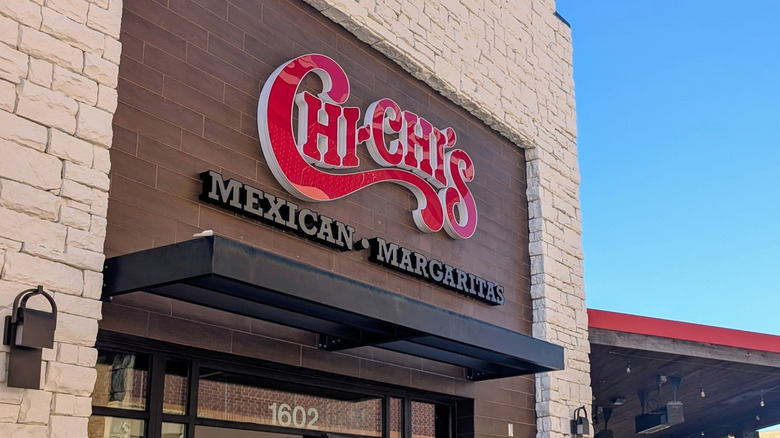
Chi-Chi's was established in 1975 by Marno McDermott and Max McGee of Green Bay Packers fame. While the chain didn't offer anything remarkably different from other Tex-Mex restaurants of its day, locals in downtown Minneapolis, Minnesota, were met by the irresistible flavors of Sonoran-style Mexican food to tantalize their taste buds. In its heyday the '80s, Chi-Chi's grew to 237 locations, championing the Tex-Mex specialty of chimichangas and fried ice cream to cool down the spicy Mexican meals.
A few decades later, however, Chi-Chi's was met with fierce competition in the Tex-Mex space, causing a steep decrease in locations to just 144 in 2002. It filed for bankruptcy in 2003, and an even harder hit would come for this multi-restaurant chain that same year. Contaminated green onions were used at a Pittsburgh restaurant, causing upward of 600 cases of hepatitis A and four deaths. Multiple lawsuits were filed, so the chain made the decision to close the rest of its restaurants. However, Chi-Chi's is slated for a comeback. In 2024, Marno McDermott's son Michael struck a deal with Hormel to bring back his family's chain in 2025, with the first location open in October in St. Louis Park, Minnesota.