

What Does It Mean When Your Steak Turns Purple?
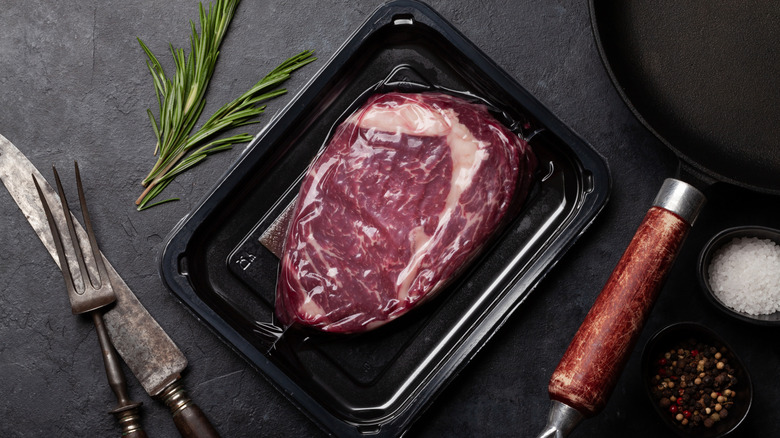
Meat colors reveal a lot about a cut of meat, from its freshness to its quality to how it was stored. While steak you find in grocery stores tends to be red prior to cooking, you may occasionally come across steak with a purplish hue. This is unusual, but is it harmful? It depends. Purple steak can occur for a range of reasons.
Oxygen exposure is a key factor in steak color. A protein found in beef called myoglobin has a naturally dark purple shade. Upon exposure to outside air, myoglobin transforms into a compound known as oxymyoglobin, changing the color to red. Extremely fresh cuts of steak tend to be purple, although this color does not tend to last long. By the time a steak hits your grocery store shelves, it's typically red. However, vacuum-packed steaks are a different story. Given they're stored in a way that prevents any oxygen exposure, they often remain purple over long periods of time.
Keep in mind, however, that purple steak may not always indicate extremely fresh cuts. Factors like bruising during slaughter, for instance, can also cause steak to have purplish tones. And over time, steak color actually comes full circle, so to speak. Long-term oxygen exposure causes steak to once again take on a purplish brown shade, which can indicate spoilage rather than freshness.
Is purple steak safe to eat?
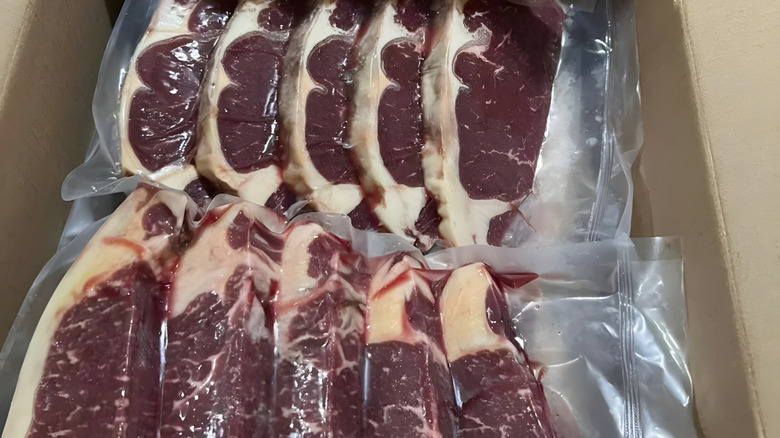
Purple steak can be a bit confusing given that the color can both indicate freshness and spoilage. The scenario in which you encounter a purple steak can help you determine if it's safe to eat. Vacuum-packed steaks are expected to be purple, and are perfectly safe to eat. In fact, they are likely even fresher than red varieties. However, if a once-red steak sitting in your fridge has gone purple, it might be past its prime, although it could still be safe to eat.
Rather than immediately tossing a purplish steak, take a moment to evaluate other factors. There are many ways to tell if your steak has gone bad outside of its color. First, check the steak's texture. If you press a finger down on a fresh steak, it should pop back up swiftly, while spoiled steaks will be slower to rise. Spoiled steaks may also have a sticky surface and emit a foul odor. When fresh, raw steak gives off almost no smell.