

10 Reasons Restaurant Pasta Dishes Are Better Than Homemade
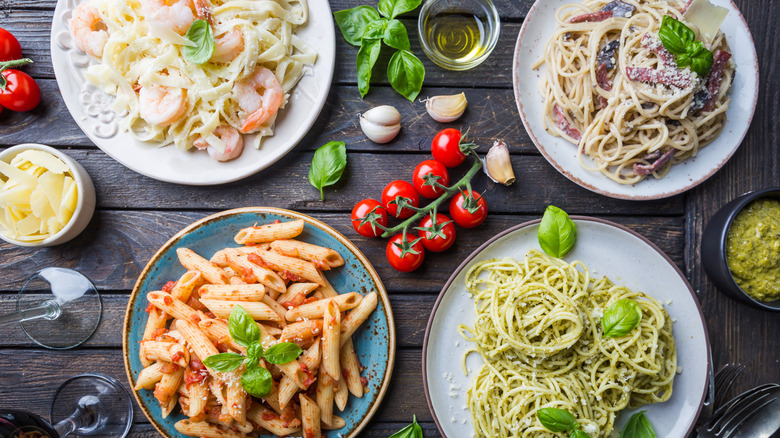
Great pasta is life. It can be light and summery, rich and warming, and everything in between. But, why is it that restaurant pasta dishes are better than homemade? If you have a favorite restaurant noodle dish, you might be disappointed when you make pasta at home and it's just not the same. It doesn't have to be this way, though, once you learn the reasons why, you can make pasta dishes just as good or better at home.
I'm half Italian and grew up with pasta as a primary food group, spending summers in Italy cooking with my nonna. Now, as a food writer and recipe developer, pasta is among my specialties, so I have my fair share of experience. However, I wanted to get opinions from other experts, particularly those that work in restaurants.
I interviewed chef Jason Bartner, who trained and worked as a chef in New York City before opening La Tavola Marche, an inn and cooking school in the Le Marche region of Italy. I also spoke with chef David Buico, owner and chef of Mercato Cucina in Huntington, New York, and chef Jacinto Perez, head chef of Constantino's Pasta Bowls in Greenwich, Connecticut.
Armed with their pasta tips and tricks, I discovered some of the reasons why restaurant pasta dishes are often better than homemade attempts. This isn't just a chef flex, because they're all things you can do yourself at home. Once you know the secrets of restaurant quality pasta, you'll never again be disappointed by your homemade noodle dishes.
1. Restaurants use the right pasta for the dish
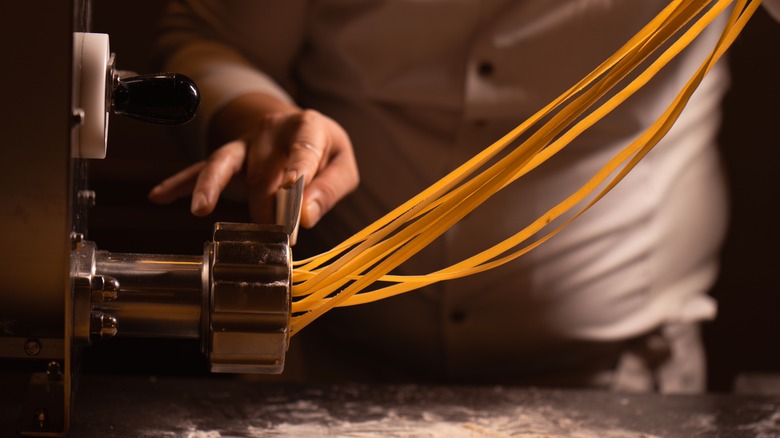
You might assume that restaurant pasta is better because the noodles are always homemade. And, sure, sometimes they are, but some dishes are actually better with dried pasta. The difference is that chefs know the correct type of pasta for the dish, which makes way more of an impact than you might realize.
Chef Jason Bartner explains that "some pasta dishes only go with dry (semolina) pasta and others pair perfectly with fresh egg dough pasta." So when should you use fresh and when should you use dry? Fresh pasta is softer and silkier and pairs well with creamy dishes. Dry pasta, when properly cooked, has more of a bouncy, chewy texture and works well with oil-based sauces and heartier, chunkier sauces.
When opting for fresh pasta, making it yourself is going to give you the restaurant quality edge. "If you're making fresh pasta, flour choice matters — semolina and 00 are key," David Buico advises. "Fresh, preferably organic eggs make a huge difference in both flavor and color," he adds. But that doesn't mean fresh pasta is always better. Buico says he prefers dry pasta. "I love the chew of a perfectly cooked dry pasta from producers like Mancini or Gentile," he notes.
Chefs also know the best pasta shapes to use for each dish. For instance, spiral shapes like fusilli and cavatappi are good for hearty sauces where they catch chunks, while long, fine noodles like angel's hair work best with light sauces. Learning the right shape of pasta for the sauce will help give you a restaurant-level dish.
2. Chefs know which sauces to use and how much
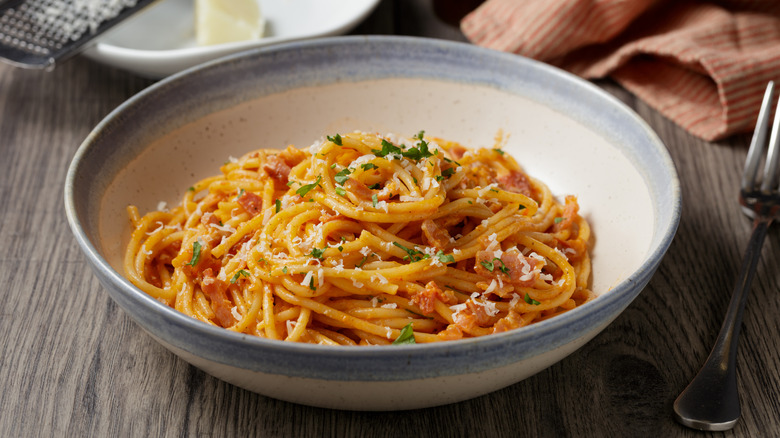
When you order pasta at a good restaurant, the sauce will have been carefully considered, but haphazardly thrown together. Sure, sometimes it's tempting to make pasta with whatever you have on hand, and once you have the skills, you might be able to do this successfully, but it's not the best way to go about it. "Restaurants and chefs tend to be very deliberate," says Jacinto Perez of Constantino's Pasta Bowls. "We're not throwing 10 ingredients into a sauce just because they're there."
Chef David Buico notes that people often buy whatever sauces are cheap or on sale when making pasta at home, and this is a big mistake. Of course, there are some days when buying sauce for a quick dinner just makes sense, but if you're actively looking to get restaurant quality results, you'll have to make that sauce from scratch.
You also don't necessarily need to think of everything that goes with pasta as a sauce. Aglio e olio, for instance, is just garlic and olive oil, while cacio e pepe is pecorino cheese, pasta water, and black pepper. One of my favorite dishes is pasta e lenticchie, which is pasta cooked in an almost stew-like mixture of brown lentils and aromatics.
Using the right amount of sauce is also important. Jason Bartner notes that good chefs know the correct quantity to use, while home cooks often use too much. "The sauce is the dressing not the dish," he explains, adding that you should think of it like dressing a salad.
3. Pasta from a restaurant is cooked in generously salted water
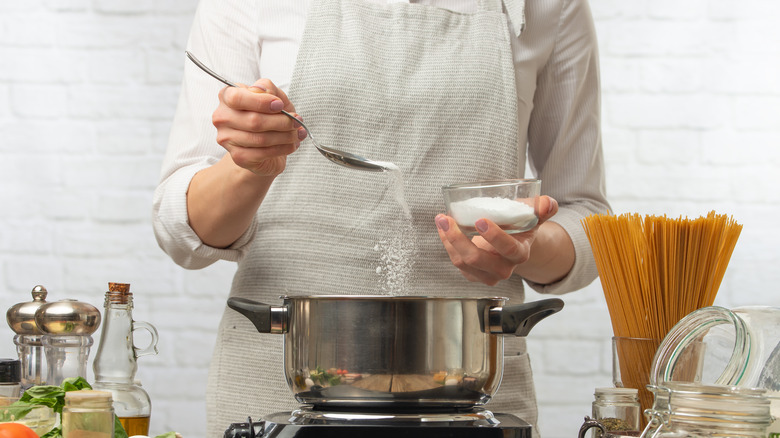
A lot of home cooks are scared of salt and then wonder why their pasta isn't as flavorful as it is at a restaurant. To get the same flavor, you need to generously salt your pasta water. Chef Jacinto Perez says it's "non-negotiable in a restaurant kitchen," adding that "many people are scared to over salt at home, but you should really look at this as your first step in the seasoning process."
There's a lot of debate about exactly how much to use, though some claim to have found the golden salt-to-water ratio for pasta. In reality, it's more of a spectrum, depending on how salty you like the water and what type of salt you're using. It can look scary throwing huge handfuls of salt into your pot of boiling water, but stick with us. The noodles only absorb a fraction of this salt. It's not the same as throwing it in a stew or sauce where you'll be eating the whole thing.
Some say pasta water should be as salty as the sea, but this is more of a cute turn of phrase than exact reality, as that would be far too salty. It's best to make your pasta water moderately salty, so your finished dish won't get tipped over the edge if you're using salty ingredients or pasta water in the sauce. This means using between 1½ teaspoons and 1 tablespoon of salt per liter of water, depending on how coarse or fine it is.
4. Good pasta dishes from a restaurant aren't complicated
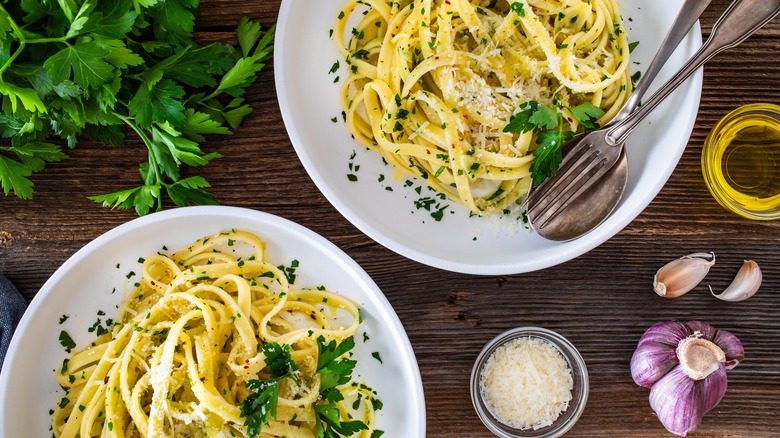
One of my favorite things about Italian food is its simplicity. I've tried dozens of pumpkin pasta recipes over the years, for instance. Many contained wine, cream, stock, and mountains of cheese, but the definitive one is just pumpkin, garlic, salt, and good olive oil. One of the reasons pasta dishes are often better from restaurants is that chefs don't overcomplicate them. Sure, there are times when you want a dish that's rich and elaborate, but often less is more.
David Buico of Mercato Cucina advises to "keep it simple and let the ingredients speak for themselves." Jacinto Perez of Constantino's Pasta Bowls backs this up. "We focus on balance and letting a few star ingredients really shine," Perez remarks. Going back to the pumpkin pasta example, that would mean letting the pumpkin come through, rather than diluting it with cream and white wine. That might still make a perfectly lovely dish, but pumpkin is no longer at the center of it.
Some of the best pasta dishes have minimal ingredients. The original Alfredo sauce contains just hard cheese, pasta water, and butter, which emulsify to give you an amazingly creamy sauce without adding heavy cream. It's simple and it's why fettuccine Alfredo tastes better at Italian restaurants where the old-school recipe is still followed. If you think a particular ingredient isn't adding much, take it away and see what happens.
5. Chefs know ingredient quality can make or break a pasta dish
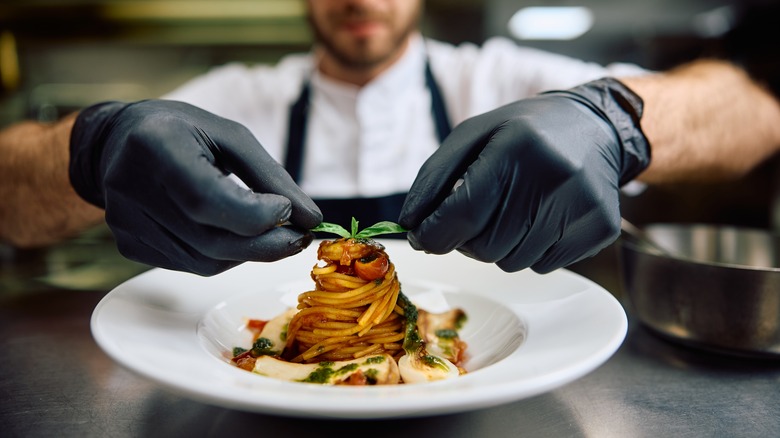
Sometimes it's all about the specifics. You might make a sauce from the same ingredients as a professional chef — tomatoes, olive oil, basil, and garlic — but yours doesn't come out tasting the same. The issue is that the quality of these ingredients matter and chefs understand this.
"Spend the extra dollar or two on quality imported pasta, good extra-virgin olive oil, and solid ingredients," suggests David Buico. "Great products make a great dish," he tells us. Quality truly matters, especially when a dish is simple. "When a restaurant uses high-quality pasta and great ingredients, it's a home run," Buico says.
Times are tough financially, so we understand picking up the most affordable noodles at the store, but it does make a difference. The real reason expensive pasta tastes better than cheap pasta is the texture. It's made using the same raw ingredients but pricier pasta has different production methods that allows it to soak up sauces better, making for a more flavorful dish.
But, it's not just noodles to think about. Good quality extra-virgin olive oil matters, especially for finishing a dish. Pasta dishes are often perfect with a robust, peppery oil for finishing, but sometimes a milder oil is better when you don't want to overwhelm the flavors. But, a basic olive oil designed for cooking just isn't going to cut it. If budget is a concern, you could spend more on the main ingredients in a dish and skimp on the ones that aren't as central to the flavor.
6. Pasta at restaurants is slightly undercooked and finished in the sauce
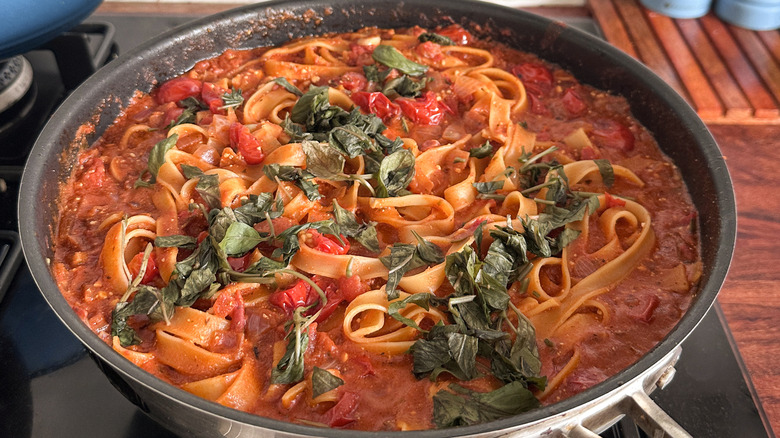
You might already know to cook your pasta until it's al dente — still with a little bite to it — rather than until it's soft and soggy. However, if you drain your noodles when they're perfectly done, you've already cooked them too much. Chefs make sure to undercook pasta so they can finish it in the sauce, which gives better results.
"Cook the pasta about one minute less than the package directions, then finish it in the sauce," chef David Buico advises. "This prevents overcooking and allows the pasta to absorb flavor." If you drain the pasta when it's completely cooked, then add it to the sauce and cook them together for a minute or two, the noodles will end up overcooked. Or, if you drain the pasta when al dente and just stir the sauce and pasta together, they won't get the chance to combine, so the noodles won't soak up any of the sauce and will be less flavorful.
Getting the timing right can be tricky. We'd recommend starting to test the pasta a few minutes before the recommended cooking time on the package. It shouldn't be hard inside when you drain it, but it should have more bite to it than the perfect al dente texture with a slightly grainy or chalky texture inside. As long as the sauce isn't liable to split, you can simmer the noodles in it for as long as you need to finish the cooking.
7. Chefs know how to finish a pasta dish
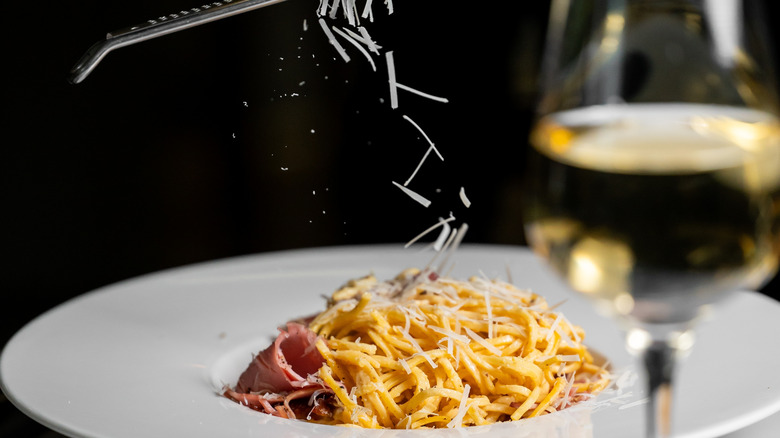
You might have noticed, when you go to a restaurant, pasta dishes often have finishing touches that make them stand out. So, if you're dolloping the finished dish onto a plate and serving it as it comes, you're missing out on the chance to build flavor. The right finishing flourishes can turn a dish from perfectly fine to totally memorable.
It doesn't have to be anything particularly elaborate or out-there. As Mercato Cucina's owner and chef David Buico says, "finishing pasta with a high-quality olive oil and freshly shaved Parmigiano-Reggiano is the difference between a good pasta dish and a great one." So, just keeping a great olive oil in your pantry and some nice cheese in your fridge can make all the difference. Chef Jacinto Perez agrees that olive oil and hard cheese can make or break a dish. "It's often a little luxury that people skip at home, but restaurants never forget," he says.
If you're looking to add a bit of texture, you could also finish your dish with pangrattato. This is the name given to crispy, fried breadcrumbs used in Italian cuisine. They're often made more flavorful with garlic and herbs. Fresh herbs can also finish a dish nicely, with basil or flat leaf parsley being ideal for Italian food. Fried fresh sage leaves are also delicious, particularly on heartier, autumnal or wintry pasta dishes.
8. Chefs don't let the pasta sit and wait for the sauce
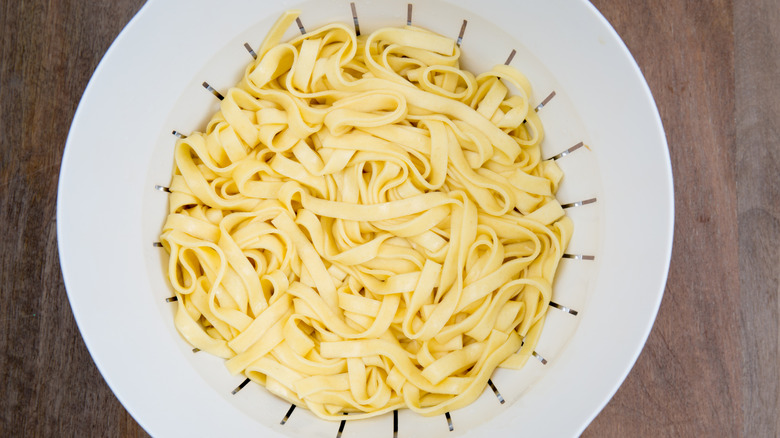
One small difference you might not realize is that chefs never let the pasta finish cooking first and let it sit until the sauce is ready. They get the timing just right so that the noodles don't hang around and lose their al dente texture. "Pasta and sauce should finish together, not separately," says Jacinto Perez of Constantino's Pasta Bowls. "At home, people often cook pasta too early, drain it, and let it sit; that's where texture and flavor start to fall apart."
Occasionally, in busy restaurants, pasta isn't cooked to order for every dish. So, to get around this, chefs may parcook noodles, run them in cold water to stop them cooking further, and then finish them in the sauce. This isn't quite the same thing as letting the pasta wait for the sauce, as steps have been taken to prevent overcooking. Still, the best restaurants will cook to order for each dish to prevent this. As chef Jason Bartner explains, some professional kitchens have industrial pasta cookers that cook more quickly to speed up the process.
Luckily, it's an easy fix at home. Just be careful of your timings and make sure the noodles don't finish first. It's fine for the sauce to sit around, as you can easily reheat it, so if you're worried about messing up the timing, wait until the sauce is basically done before you put your pasta on to boil.
9. Pasta dishes at restaurants use some of the cooking water
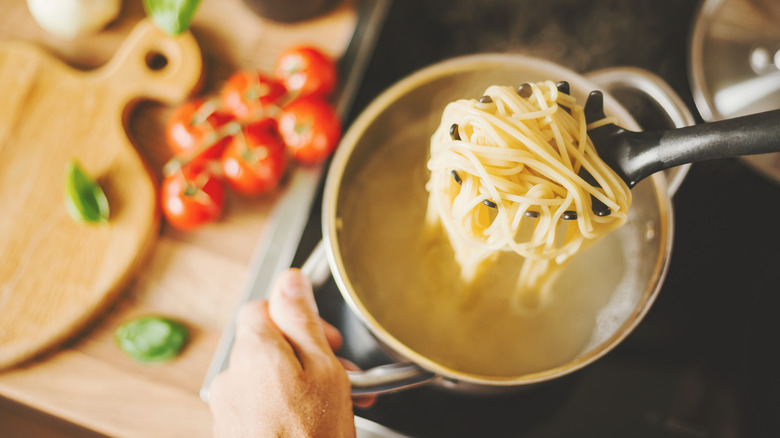
Restaurants usually use an ingredient in their pasta dishes that home cooks tend to throw away. "Don't strain your pasta water into the sink," chef Jason Bartner of La Tavola Marche advises. If you do, you're pouring away all that liquid gold that could turn your homemade pasta dish into a restaurant-worthy creation.
According to chef Jacinto Perez, "finishing the pasta directly in the sauce with pasta water" is a pro move you shouldn't overlook. Add some pasta water into the sauce when you mix it with the noodles and let it all simmer together for a couple of minutes. "That's how you get that cohesive sauce you taste in restaurants," Perez tells us.
But why does this matter? Well, pasta cooking water isn't just the water and salt that you added to the pot. It also contains a lot of the starches from the noodles that leach out while they cook. When you add this, it helps to emulsify the ingredients, so you get a more cohesive sauce that clings to the noodles. You might think that adding water would thin out the sauce, but because of the starches, it can actually thicken everything up, making a silky coating. It also adds flavor, not only from the salt but the starches, too. So, if you've been tossing it down the sink, you've been missing out on the free ingredient that could elevate your pasta dishes to restaurant quality.
10. Chefs take salty ingredients into account when salting the dish
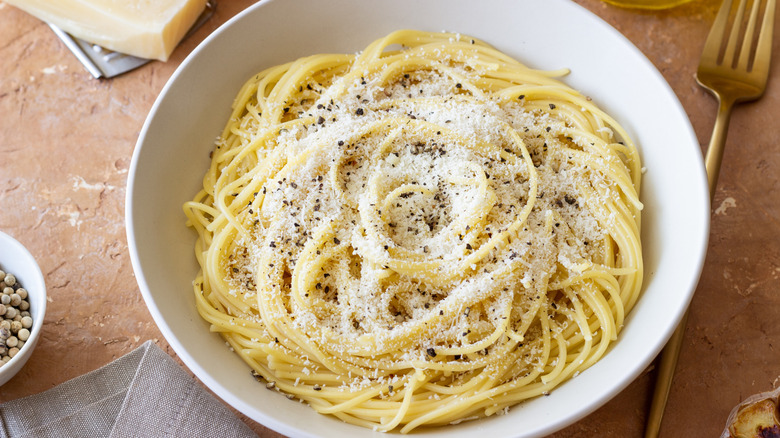
One of the great things about eating pasta at a restaurant is that the flavors are always perfectly balanced, including the salt levels. It will have enough salt to make the dish flavorful, but won't overdo it. The same can't always be said for the pasta you make at home. And that is because chefs take salty ingredients into account when salting the dish, whereas home cooks can forget this.
You've perfectly salted the pasta water and the sauce, but when you mixed the ingredients together, the resulting dish was so salty it was inedible. This could be because you forgot about the layers of salt in your dish. Chefs often talk about layering salt. This means using different forms of salty ingredients, not just sea salt or table salt. It's not just the salt in the sauce you need to think about, but ingredients like hard cheeses, anchovies, and broth.
While we've talked about the importance of salting the pasta water, you also have to be ready to make adjustments. "If we are making pasta with vongole (clams), I don't salt the water as much since the vongole will bring their own salt," notes Jason Bartner. Chef David Buico also mentions adjusting these salt levels when making cacio e pepe because of all the salty cheese that goes in it. So, to avoid oversalting, you need to account for these factors — something that professional chefs have the knowledge to do easily.