

How Chef Lidia Bastianich Strains Pasta Without Using A Traditional Colander

Emmy-award winning chef, cookbook author, restaurateur, and television personality Lidia Bastianich cooked Italian food with her grandmother and went on to specialize in the cuisine. So it makes sense that pasta would be a massive part of her repertoire. One of the most frustrating parts of preparing that food is straining it once it's done cooking. That's because saving your pasta water is a good idea for folks who want to make sauce, while doing that can be challenging with a traditional colander. That's where Bastianich's go-to tool could come in handy, Enter: the spider strainer.
Spider strainers are versatile kitchen tools. While they have strong ties to Asian cooking, they can also be utilized to scoop foods like french fries out of hot oil — or for Bastianich, pasta out of boiling water. Instead of letting that liquid go down the drain, the spider strainer remove the pasta from the water. Bastianch says this trick works well for smaller pasta shapes, although chefs may have to use tongs to grab longer and more elusive kinds of pasta (think linguine).
Spider strainers aren't made alike
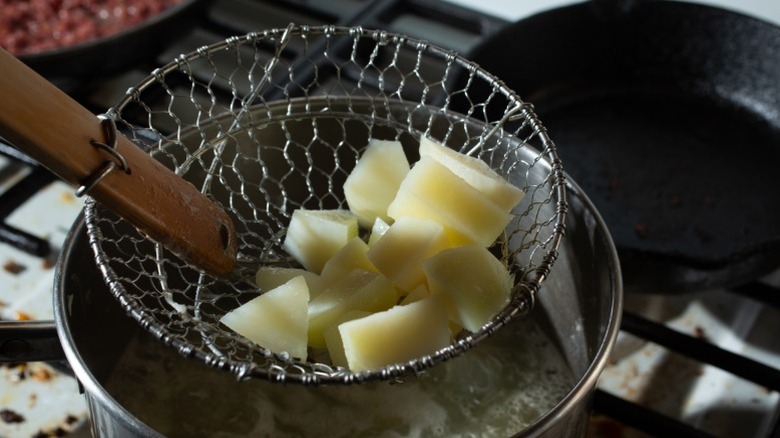
In an interview with Today, chef Lidia Bastianich said that her strainer is an inexpensive "chicken wire basket on a bamboo handle," there are different kinds of spider strainers. They can be made in different sizes from various materials. One of the more important factors to pay attention to is how long the handle is. For those who want to fry food and scoop pasta, buying a strainer with a longer handle will help ensure that oil doesn't burn your fingers. Another important specification to look at is the depth of the basket. Shallow baskets may not work well when grabbing larger items — think donuts — but could be better for smaller items you need to snag quickly like veggies.
As far as materials, many spider strainers are constructed from stainless steel, which makes them both resistant to the high temperatures and easy to clean. More traditional versions used in Asian cooking may feature a handle made out of bamboo and a wire basket. But, other strainers are fully metal& or have plastic handles.
When it comes to pasta-straining specifically, different kinds of baskets may be more effective when cooking different kinds of pastas. As Bastianich mentioned, smaller noodle sizes won't slip through the baskets, but larger varieties might. To avoid this, opt for a strainer with a smaller amount of space between the rings or wires. Regardless, you may still have to use tongs when cooking longer, skinnier noodles.