

Make Your Sourdough Starter More Reliable With This Simple Addition
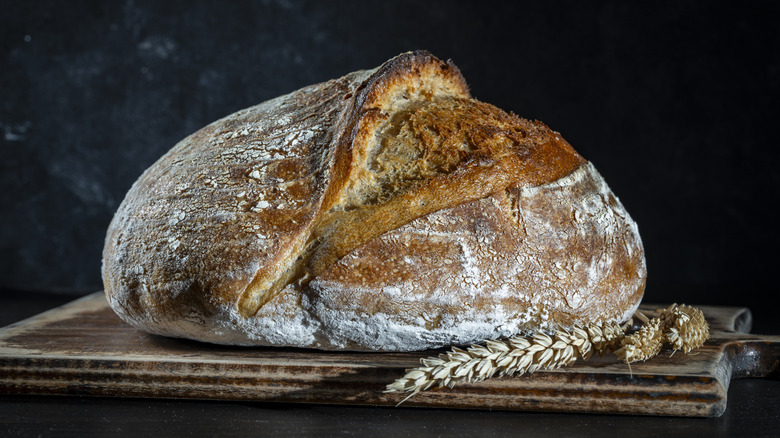
Crispy on the outside, chewy in the middle, nice and salty, and yes, of course, sour — sourdough bread is one of the great baked delicacies. However, there are mistakes everyone makes with sourdough, like not properly caring for your starter. And although it involves a naturally occurring fermentation process (that can even happen spontaneously), making sourdough starter from scratch can still be a difficult, intimidating process because there's a lot that can go wrong. The room temperature could be off. It could dry out if there's too much airflow. Or, possibly one of the most common outcomes, is that it can mold over and become useless, potentially even dangerous. Luckily, making a successful sourdough starter can be much simpler when you add this ingredient.
Adding a bit of yogurt to your sourdough starter will not only kickstart the process but will also fortify it biologically and nutritionally, and add some amazing flavor. The magic of sourdough is actually a bit of organic chemistry. Its pungent flavor comes from the yeast and bacteria in the starter, which is also what makes the dough rise. Although a sourdough starter really only needs flour and water, the lactic acid bacteria (LAB) in yogurt will lower the pH level of the mixture, making it more difficult for bad bacteria (the stuff that can make you sick) and mold to grow. LAB (the good bacteria) strengthens your starter, creating an environment that will encourage yeast growth. Plus, a lower pH and more good bacteria mean a more delicious sour flavor.
How to add yogurt for an easier, tastier, more dependable sourdough starter
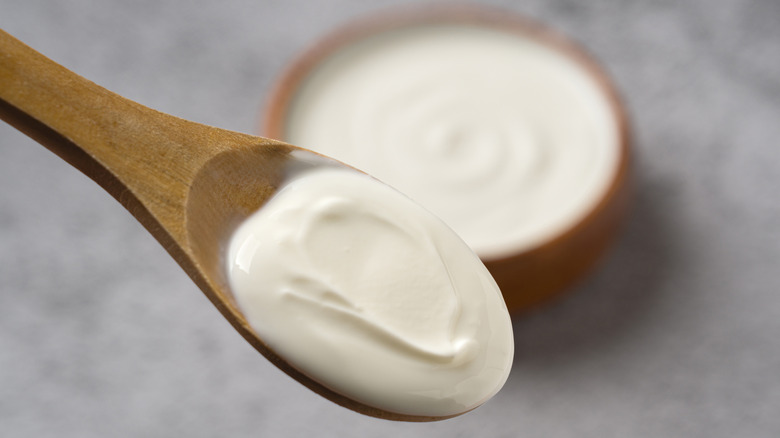
When creating a sourdough starter from scratch, you don't want to use chlorinated water or bleached flour because they can kill natural yeast, or at the very least, inhibit its growth, so it will take longer to get your starter going. Similarly, when you're choosing a yogurt, you want something all-natural — no added sweeteners, thickeners, flavors, or anything else. Just the real deal, plain yogurt with live cultures. Greek yogurt will add a kick of extra flavor, and homemade yogurt is probably best of all.
When using yogurt in your starter, you can simply add a couple of tablespoons to your regular starter recipe. Or use equal parts yogurt and flour, then mix in water until it's similar to a cake batter consistency. From there, you'll follow the remaining steps of a regular starter recipe, but you should use equal parts yogurt and flour (plus some water if needed) when feeding it through about the first week of its life. Once the yeast is fully colonized, you can cut out the yogurt and feed it with regular water and flour. While thick vs. thin starter is a matter of personal preference, when it comes time to use it, you may need to adjust the amount of water in the recipe depending on your starter's viscosity. Whether in a crispy, airy loaf, in pancakes, or for some extra chewy pizza crust, you'll love the flavor you get from a yogurt-aided, simple sourdough starter.