

The Blunder That Leaves Your Soup Noodles Sad And Mushy
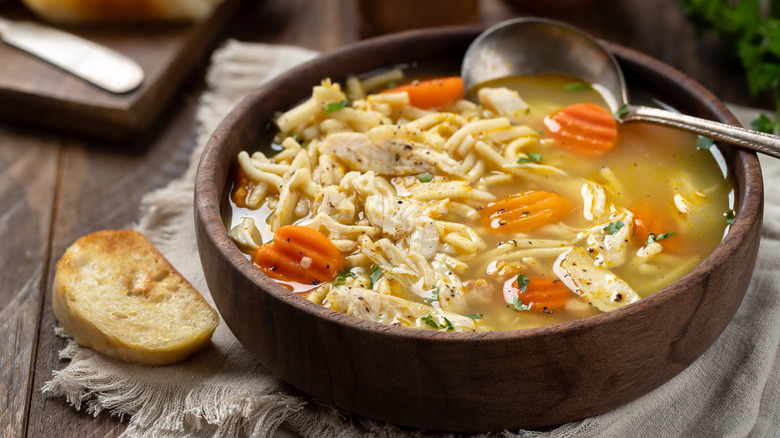
The last thing you want when you've spent hours simmering a comforting pot of soup is to have it ruined by sad, mushy noodles. While it's a common mistake home cooks make when incorporating grains like pasta in their soup, it's an easy blunder to fix. The reason those soup noodles are a less-than-desirable texture is simple: They've been overcooked.
Most ingredients in soup benefit from cooking together for a long time, allowing all those flavors to meld and develop complexity. It's not a bad thing to have tender vegetables or meat that's so moist it breaks apart with the slightest nudge of your spoon — in fact, that's often the mark of a really satisfying soup. (If you want a few more suggestions for soup success, we've compiled a few expert tips on making restaurant-worthy chicken noodle soup.)
Noodles are a little different, though. If you allow noodles to linger in soup for a long time, even if the pot is simmering and not actively boiling, they'll continue cooking and absorbing water. Soggy noodles aren't a problem with canned soup, because the noodles within those products are tougher and have a high alkaline pH, making them less absorbent. With homemade soup, even in recipes where you really want to just toss everything in a pot and call it a day, you need to treat noodles as a separate step.
A few solutions for optimal noodle texture in soup
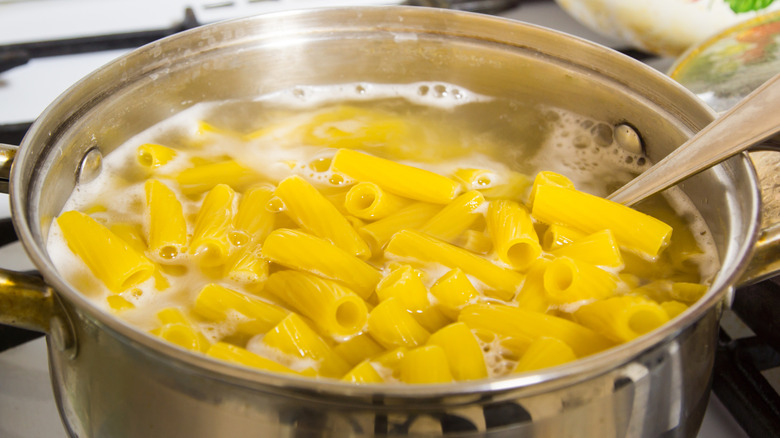
One of the simplest ways to ensure the noodles are cooked exactly the way you want is to keep them out of the soup entirely until it's ready to serve. To nail this approach, cook the noodles in a separate pot, the same way you would when preparing a pasta dish. Once they're perfectly al dente, strain and rinse them and add a portion to each soup bowl. This is also ideal if not everyone wants noodles in their soup. (If the rest of the soup is gluten-free, it's an easy way to accommodate dietary restrictions.) If you made a big batch of soup, this method keeps mushy noodles out of the leftovers.
Another solution involves adding the noodles at the very final stages of cooking. The exact timing will depend on the variety of noodles you're using, but a good rule of thumb is to take a look at the suggested cooking time on the pasta package and cut it in half. You want to cook your noodles until they're about halfway done, because they'll keep cooking in that bubbling soup base after you remove them from the heat. Give everything a final taste test prior to serving, but you should end up with perfectly al dente noodles.
If you've already cooked your noodles to the too-mushy point and don't have any backup noodles to substitute, there's a last-ditch effort to save the texture of overcooked pasta. Try scooping them out of the soup with a slotted spoon and sautéing them in butter or oil until they firm up a little.