

Is The 3-2-1 Rule The Secret To Perfect Beef Brisket?
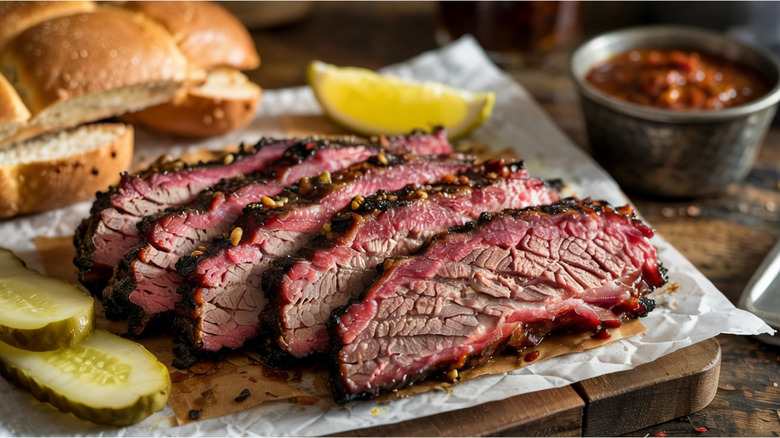
The 3-2-1 rule is a standard timing terminology that most aficionados of smoked meats are familiar with: Three hours of smoking, two hours of cooking wrapped in foil, and one hour of unwrapped cooking. Using the 3-2-1 method can do wonders for your pork ribs. They'll be fall-off-the-bone tender with just the right amount of smoke. But when it comes to brisket, it's not strictly that simple and could lead to another mistake you're making with brisket.
In an interview with Food Republic, Nicole Johnson, a recipe developer at Or Whatever You Do, says, "You can't really copy-paste 3-2-1 onto brisket. It's not a rack with bones and uniform thickness. It's a big, uneven muscle that takes time to break down." The 3-2-1 method works well with pork ribs because they are relatively the same size and shape from end to end. Brisket, on the other hand, comes in two different cuts, made up of two different muscles — the flat and the point, sometimes sold together as a whole brisket. The flat cut is leaner, larger, and pretty equal in thickness throughout. The point is more marbled, smaller, and uneven in thickness, coming to a curved point at the end. Because of the variables in size and fat content, you'll need to keep a closer eye on your smoked brisket.
Some tips for perfectly tender and juicy smoked brisket
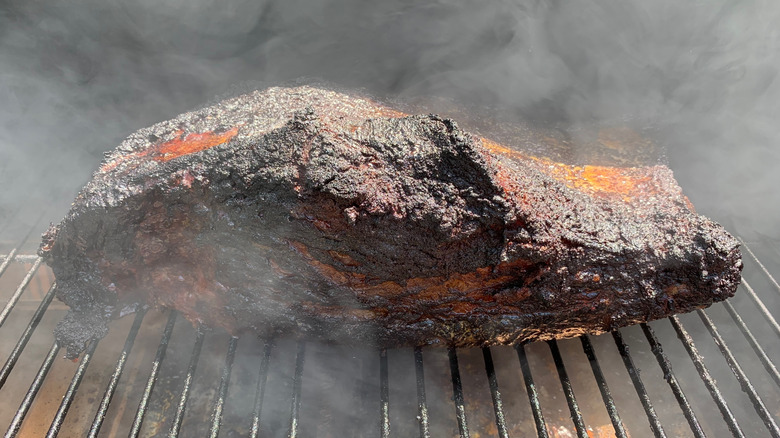
A classic smoked brisket recipe can take significantly longer than the six hours required for the 3-2-1 rule, and Johson says the perfect smoked brisket requires a bit of pitmaster intuition, so it may not be the ideal cut to practice on for a beginner. "Fat content and marbling decide how forgiving your cook will be. A heavily marbled brisket can take more heat and a longer time and still be juicy." She explains that there is definitely a time to wrap your brisket on the grill or smoker, but it can't simply be timed. "[B]risket is all about internal temp and feel, not timed phases. Trying to run brisket on a schedule like ribs usually ends in overcooked flat or underdone point."
When you're smoking or cooking large pieces of meat, they will usually reach a stall or plateau temperature, as the meat sweats internal moisture. With brisket, this happens at about 165 degrees Fahrenheit, and Johnson says this is the perfect time to wrap it. "Once it hits [165 degrees] and stalls, I wrap, then cook until probe tender and jiggly in the middle, usually around [200 to 205 degrees Fahrenheit]." Finishing with a wrap will help hold in moisture and allow the temperature to rise. After it's reached 200 to 205 degrees, Johnson says you'll need to let it rest, ideally for a few hours. Letting it rest will redistribute the juices, so they won't spill out onto the cutting board when you slice it. And while it may not be as simple as 3-2-1, when you follow some expert advice and keep a careful eye, you'll get a perfectly juicy, smoky brisket every time.
Mashed and Food Republic are both owned by Static Media.