

What Is Cream-Top Milk And How Do You Drink It?
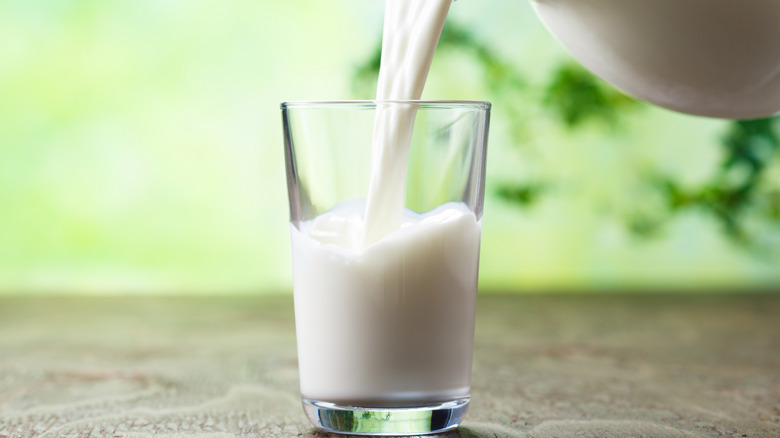
Whether you associate the words with wrestling legend "Macho Man" Randy Savage or heard them elsewhere, the saying "the cream always rises to the top" likely rings a bell. Although it's about the success of excellence, the expression references the development of cream-top, or non-homogenized milk. This variety differs both in appearance and texture from the homogenized versions at the store.
Conventionally, the milks sold by popular brands undergo homogenization, a process that utilizes heat and pressure to break down the naturally occurring fat in the product. This allows the liquid to have a pleasing, uniform appearance and has been a manufacturing standard since at least 1932. However, in its original state, the fat in cow's milk tends to separate in a process similar to how heavy cream is made. Over time, it rises to the top of the liquid, creating a layer of congealed cream. While some may find the thickness odd, the product is actually enjoyed just like regular milk. Only, it requires the additional step of dispersing the cream by mixing with a spoon or shaking the carton.
Those who prefer cream-top milk's texture and taste believe it's richer and sweeter than its more processed counterparts. They may also view it as closer to a farm-to-glass experience as it hasn't been altered, aside from being pasteurized.
The uses for cream-top milk and how it differs from homogenized milk
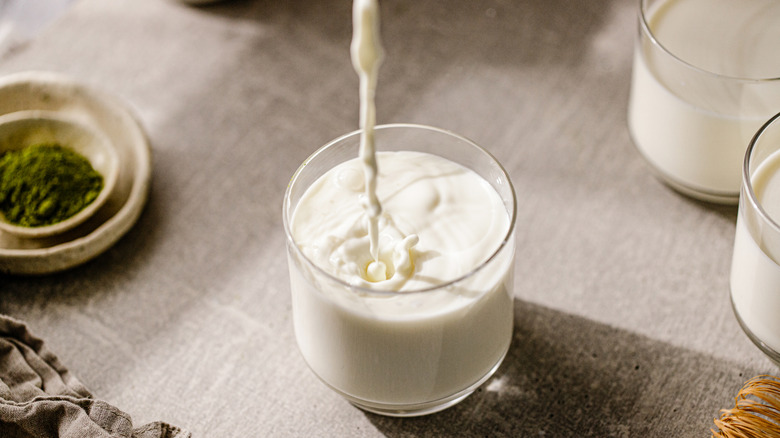
At least some fans of cream-top milk feel that its unaltered fat cells better assist in the absorption of the drink's nutrients, making it an easier choice for folks with sensitive stomachs. Additionally, some believe that it's the superior choice for nutrition and cooking since it's minimally processed. However, it's important to note that the evidence for or such positions is mixed. A number of people on team cream-top have expressed concerns that homogenized milk contributes to health issues like milk allergies, cancer, and heart disease, but such claims are either debunked entirely or lack evidence. If anything, while their texture and appearance may differ, homogenized and non-homogenized milk carry the same nutritional value, and there are plenty of reasons for favoring both.
Ultimately, whether it's better to drink cream-top milk comes down to a matter of preference. With that said, there are plenty of ways to enjoy it. Aside from drinking it straight after shaking, the creamy top can be dolloped into a cup of any coffee-lover's go-to coffee pod brand. As it's naturally high in fat, adding it to a savory sauce or a milkshake could provide a velvety texture. It's also perfect for adding richness to a baked good or a basic bowl of cereal. Moreover, there's the option of spooning the cream right off the top and enjoying it with just a dash of sugar.