

Should You Cook With Wine That's Been Sitting Out?
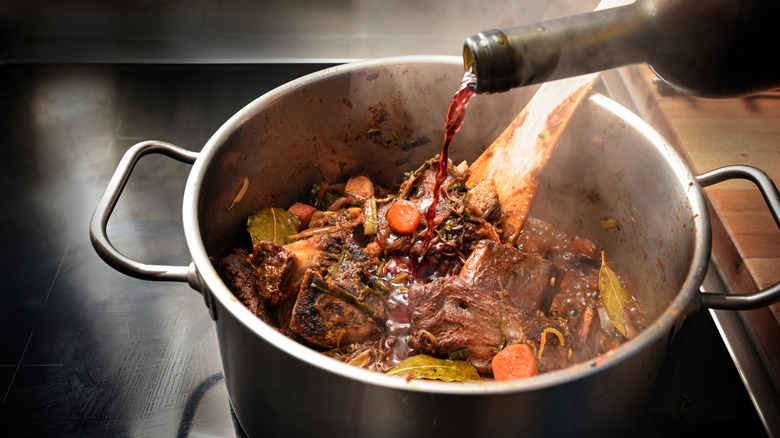
We've all left a bottle of wine sitting out for a day or a week or longer. Maybe you had a party and didn't get through a bottle, or maybe you had a few glasses solo and forgot to refrigerate the leftovers. Is the best course of action simply pouring this wine down the drain? Don't throw away your old wine before reading this: You may still be able to use that wine for cooking.
It's recommended that you refrigerate all wines after opening to avoid that vinegar-y flavor. If you do leave wine out, however, it can still function as a cooking wine. Among many myths about wine you can stop believing is the notion that sour wine makes sour food. Just because your wine might look and taste a bit off does not mean this will translate during the cooking process. In addition to losing much of its alcohol content when heated, wine loses a considerable amount of flavor. Old wine will still maintains some hints of the acidic, semi-sweet notes that make it a great addition to many dishes, but you're unlikely to notice any of the unpleasant tastes associated with past-its-prime wine.
While a big mistake people make when cooking with wine is tossing wine that's been left out, keep in mind that wine is not safe indefinitely. At some point, the sour taste and smell become insurmountable as it oxidizes after being exposed to air. Wine that has been left sitting out is generally only good for three to five days.
When should you avoid using old wine for cooking?
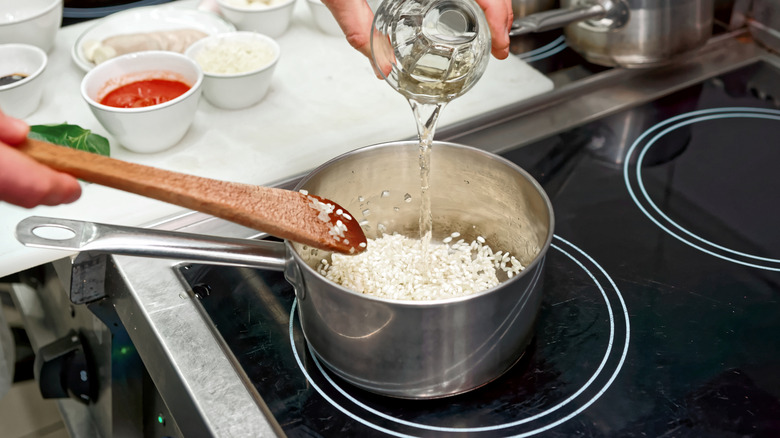
Just because your wine is within the three- to five-day window does not necessarily mean it's good to pour into your food, especially if it's been left unrefrigerated the whole time. You should always avoid cooking with wine that shows signs of spoilage. Dramatic changes in color indicate that your wine is spoiled. For instance, a white wine may take on a brassy, darker shade, or red wine may turn dark brown. An overly-acidic smell, often compared to vinegar, also indicates wine is no good. These kinds of extreme flavor changes can translate to your food, making for a less-than-appetizing final product.
A good way to avoid this issue is by storing wine correctly. The best way to store wine is in the fridge lying on its side with the original cork in place. If you do end up leaving wine out in your kitchen, avoid storing it anywhere where it's likely to get exposed to high levels of heat, such as near your stove. Higher heat makes wine go bad much faster, so storing wine in a cool, dry place is ideal.