

Before Ketchup, Heinz Built Its Empire On A Completely Different Condiment
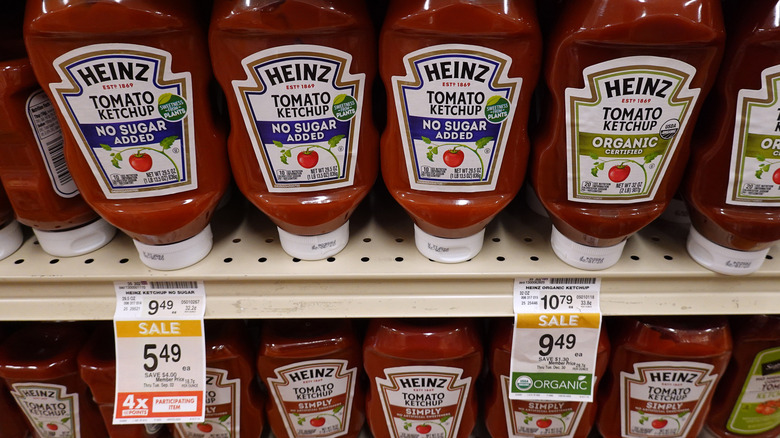
The Heinz brand is one that most American households know well. It is, of course, most famously associated with ketchup, which Heinz has been producing since 1876. Back then, it was known as "catsup," a condiment that's not so different from ketchup. Since the introduction of this tomato-based sauce favorite, Heinz has produced dozens of food products and condiments. While many may assume that ketchup was the company's O.G. product, that distinction actually belongs to horseradish, which founder Henry J. Heinz began bottling in 1869.
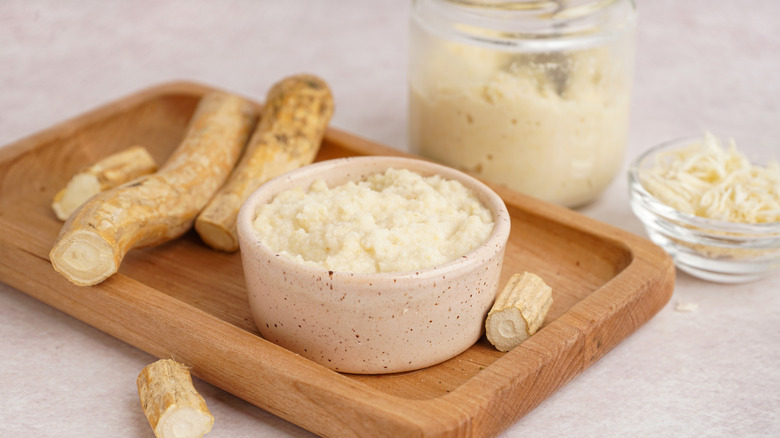
At his family home in Pittsburgh, Pennsylvania, Heinz grew a patch of horseradish (which really has nothing to do with actual horses) in the garden. This wasn't surprising, considering that his parents had immigrated to the United States from Germany, where horseradish is heavily used in the cuisine. Using his mother's recipe, Heinz bottled the potent homegrown root. The Heinz brand came in clear bottles, as opposed to dark, opaque bottles that horseradish was usually sold in. By using clear bottles, Heinz was able to show potential customers that there were no unsightly or low-quality ingredients hidden inside. The horseradish became a tremendous success, and it wasn't long until Heinz set his sights on producing even more products. However, plenty of obstacles stood in his way, even before the creation of Heinz ketchup.
The road from horseradish to ketchup was not a smooth one
After Henry J. Heinz launched his successful bottled horseradish, his company began to swiftly expand its presence across the nation. Unfortunately, the inexperienced businessman had little cash and assets to secure the company, and it ended up going out of business in 1875. Even worse, creditors sued Heinz for fraud, and he was arrested on these charges. Despite that, this proud and determined Pittsburgher rallied help from family members and launched a new company, with Heinz working somewhat under the radar as the company manager. The next year, Heinz "catsup" entered the market and was a hit, partially due to a successful marketing campaign. Over time, the company would produce many types of ketchup, including habanero, which received high marks when we ranked Heinz ketchup flavors from worst to best.
By 1888, the newly renamed H.J. Heinz Company was drafting plans for a large production plant in the City of Bridges, where Heinz had first begun bottling his horseradish. Part of his research involved a trip to Germany. There, he witnessed well-treated, well-paid, and happy factory workers. Heinz wanted to mimic these kinds of amenities in his Pittsburgh factory, so his enormous structure included perks like horse stables for transportation, a gym, restaurant, hospital, a rooftop garden, and even self-improvement lessons in areas such as singing and tailoring. During Heinz's lifetime and leadership, his employees never once went on strike due to poor working conditions or any other reason. By the turn of the 20th century, the Heinz factory was a bustling one, producing and packaging ketchup, horseradish, vinegars, pickles, and sauerkraut, with much more to come.